Overview
If the backyard chicken has a default setting, it is the Rhode Island Red: a tough, productive, dual-purpose American breed developed for farmyards where a hen had to earn her keep twice — eggs through the year, and a respectable carcass at the end of it. Expect five or six brown eggs a week from a young hen, a bird that shrugs off winter, and a flock personality best described as management.
Temperament & personality
Confident, curious, and at the top of the pecking order. Hens are friendly enough with people and famously businesslike — first out of the coop, first to the food. Roosters are the caveat: the breed carries a real incidence of human-aggressive males. In a mixed flock, Reds often rule, so pair them with equally robust breeds rather than silkies or polish.
Appearance
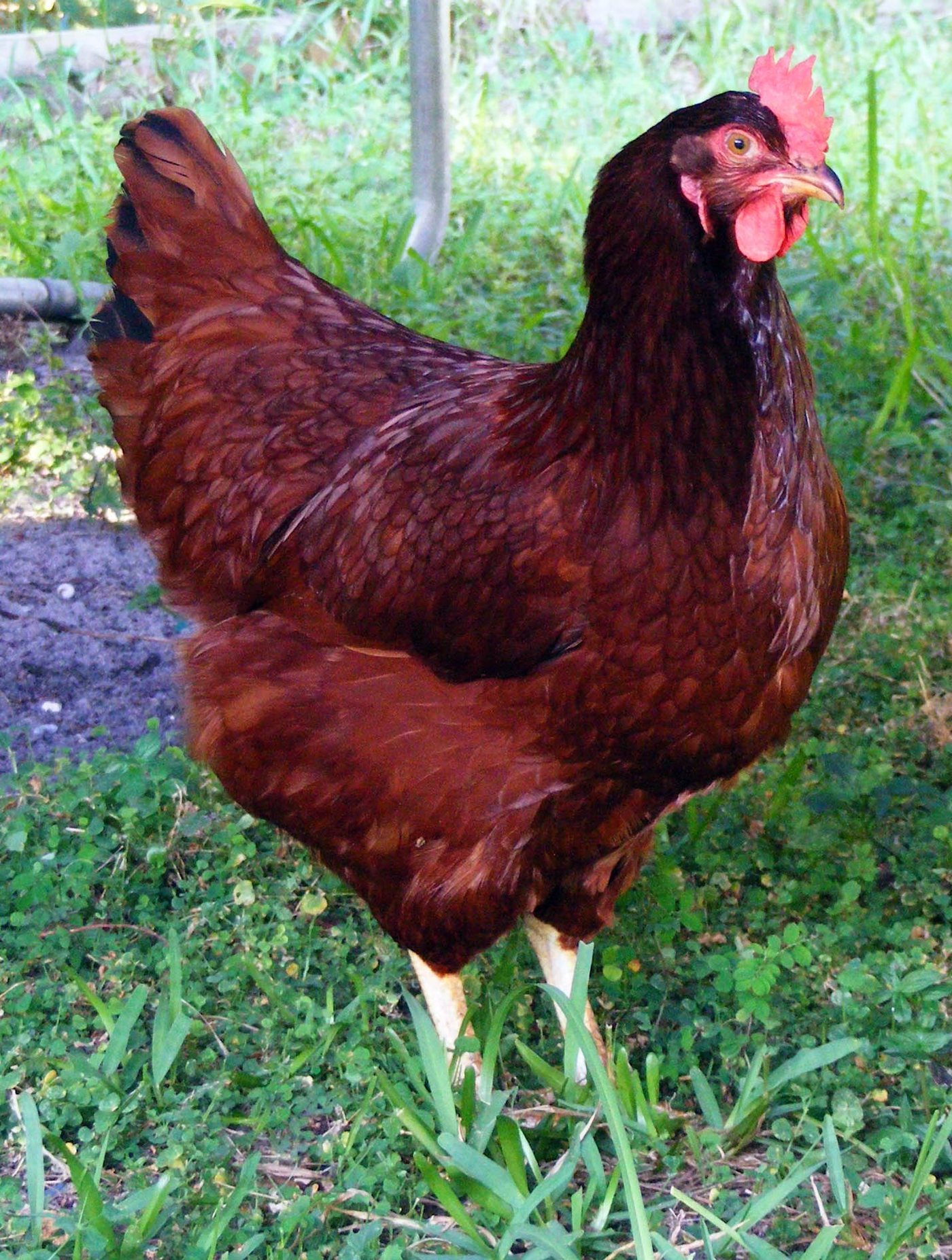
A handsome, deep-bodied bird in rich mahogany-red — the darkest reds are prized in show birds, while commercial 'production reds' are lighter and leaner. Single or rose comb (two varieties), yellow legs, and a rectangular, brick-shaped body that signals its dual-purpose build. Hens and roosters share the colour; roosters add glossy green-black tail feathers.
Care & daily life
A straightforward hardy breed: standard layer feed, grit and oyster shell, clean water, and a secure coop with 3–4 sq ft per bird indoors and 8–10 sq ft in the run. Reds are confident free-rangers and excellent foragers, which cuts feed bills. Their one management note is social: in mixed flocks, monitor for bullying of timider breeds, and think twice before keeping a Rhode Island rooster around small children.
Health & lifespan
The Rhode Island Red is generally known for the following health watch-points:
- Marek's disease — vaccinate chicks or buy vaccinated stock, as with all backyard breeds
- External parasites: red mite in the coop and scaly leg mite on the legs
- Crop problems in enthusiastic foragers (impacted or sour crop)
- Reproductive disorders (egg binding, internal laying) in heavy-laying older hens
- Bumblefoot on hard or muddy ground, given their size and activity
Living with a Rhode Island Red
Reds suit keepers who want a productive, low-maintenance flock and have room for birds to range. They are ideal for smallholders and serious egg producers; less ideal for tiny gardens with gentle ornamental breeds, or for families counting on a sweet-natured rooster. They live 5–10 years, laying best in years one to three.
History
Developed in the Adamsville area of Rhode Island and neighbouring Massachusetts in the mid-to-late 1800s, from Malay, Shanghai, Java, and Leghorn crosses selected for one job: a farm hen that laid heavily and still made a table bird. It became so emblematic that Rhode Island made it the state bird in 1954. Modern birds split into dark, slow heritage lines and lighter high-production strains bred from them.