Overview
The German Shepherd is the archetypal working dog: police and military service, search and rescue, guide work, and herding all sit in its resume. That capability comes with intensity — this is a breed that bonds deeply to its family, thinks constantly, and needs a job to do. In the right hands it is steady, brave, and devoted; in idle hands it can become anxious and difficult.
Temperament & personality
Aloof with strangers but not hostile, and utterly committed to its own people. German Shepherds are highly trainable and rank among the most intelligent breeds, which is a double-edged sword: they learn routines — including bad ones — fast. Early, thorough socialization is not optional; it is what turns natural watchfulness into calm confidence rather than reactivity.
Appearance
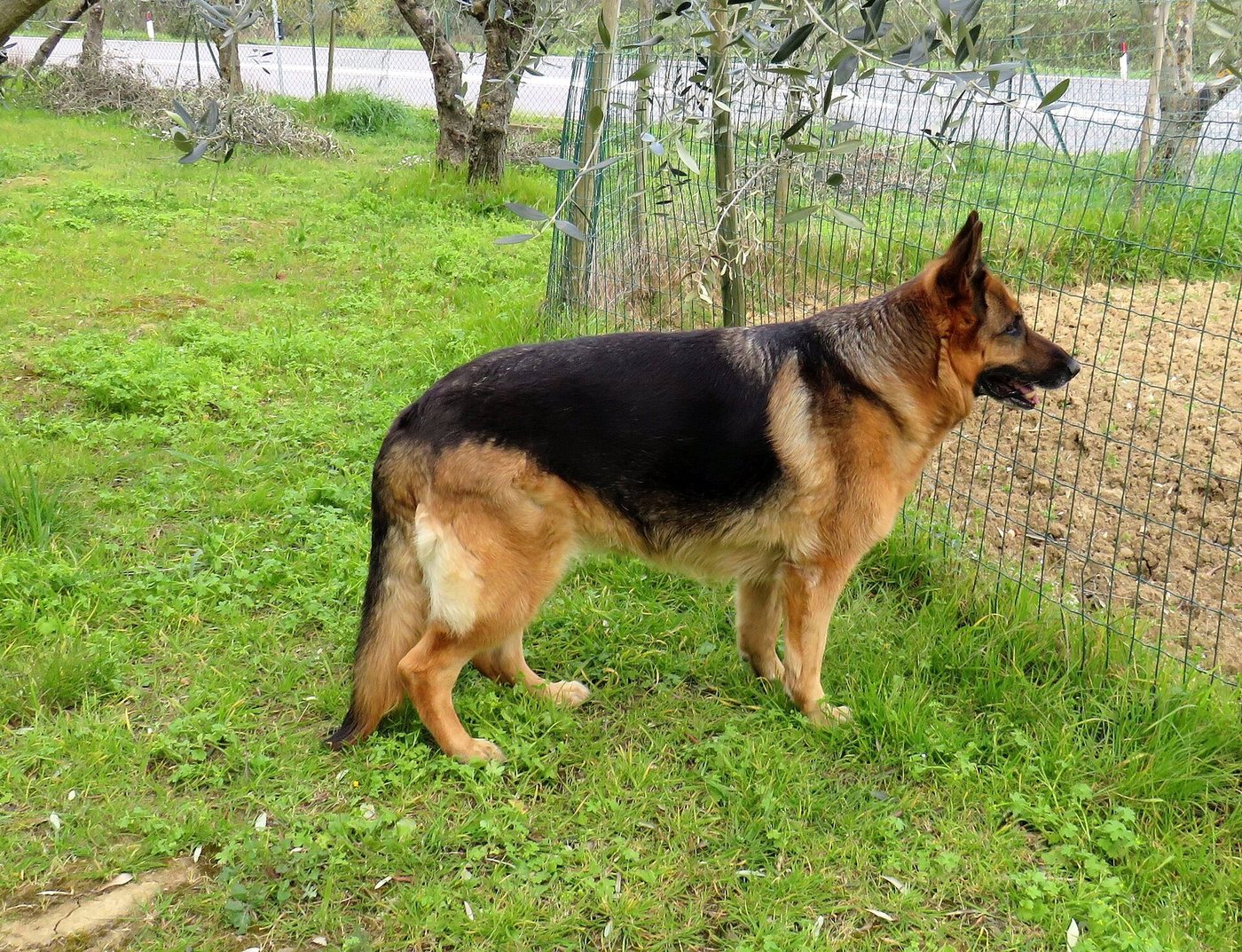
A large, athletic, elongated dog with erect ears, a bushy tail, and a dense double coat, most often black and tan but also sable, all black, or bi-colour. The breed standard calls for a strong, muscular build with a notably sloped topline in show lines; working lines tend to be straighter-backed.
Care & daily life
Budget one and a half to two hours daily of combined exercise and training — this breed measures a good day in work done. Training should be consistent, reward-based, and ongoing; advanced obedience, tracking, and scent games suit them well. The double coat sheds constantly and blows out twice a year; brush several times weekly.
Health & lifespan
The German Shepherd is generally known for the following health watch-points:
- Hip and elbow dysplasia
- Degenerative myelopathy, a progressive spinal condition
- Bloat (gastric dilatation-volvulus) — a life-threatening emergency in deep-chested breeds
- Exocrine pancreatic insufficiency and allergies occur more often than average
Living with a German Shepherd
Best in an active home with space, structure, and an owner who enjoys training. German Shepherds can adapt to many living situations if their physical and mental needs are met, but they are a poor match for sedentary households or first-time owners who want an easy dog.
History
The breed was standardized in Germany at the end of the 1890s by Captain Max von Stephanitz, who bred the versatile herding dogs of Germany into a single, capable working breed under the motto 'utility and intelligence.' Its service in both World Wars spread it worldwide, and it has been among the most popular breeds ever since.