Overview
Mollies are the livebearer's aristocrats and its cautionary tale. The sailfin male, parading a vast flag of a dorsal fin, and the jet-black molly — a colour so complete it looks carved from coal — are among the most handsome fish in a community tank. But mollies carry a physiology tuned to hard, alkaline, mineral-heavy coastal water, and the hobby's dirtiest open secret is that the 'easy beginner molly' wasting away in a soft-water community tank is usually a water-chemistry casualty, slowly shimming and fading in conditions its cousins the guppy and platy merely tolerate. Give mollies the water they actually evolved for and they are tough, personable, and long-lived.
Temperament & personality
Mollies are deliberate, grazing fish with a social ease about them: they pick at algae films, attend the surface at feeding time, and hold mild, mostly theatrical hierarchies — sailfin males erect that great fin and sidle at each other rather than fighting seriously. They are noticeably calmer than guppies and more interactive than platies, often learning feeding routines and faces. Kept short of minerals they turn sulky and still, which keepers learn to read as a water complaint, not a mood.
Appearance
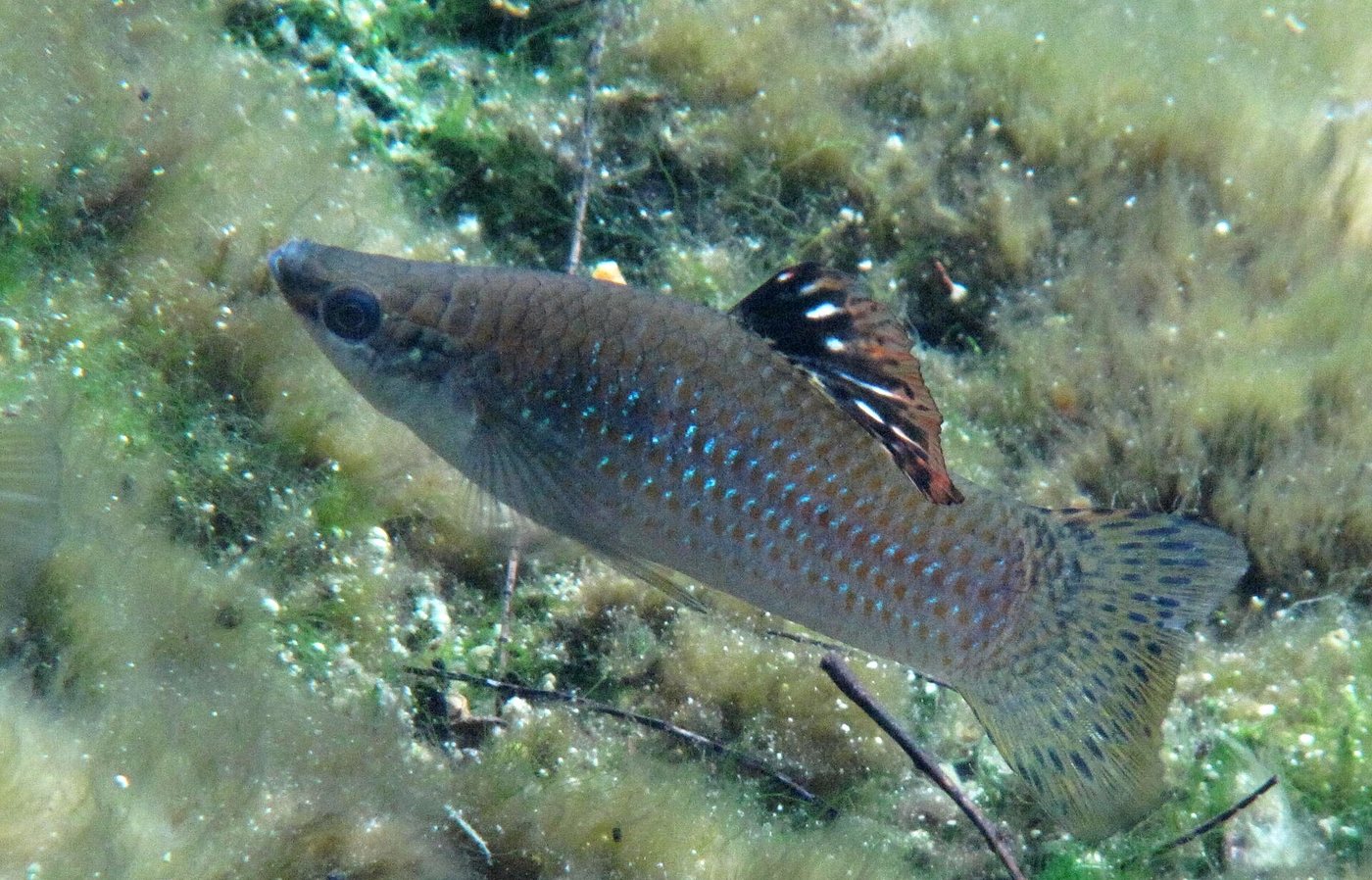
Three species wear the name: the short-finned common molly, the sailfin with the male's enormous rectangular dorsal fin, and the giant Mexican sailfin. Aquarium colours run from the founding wild silver-green through the famous velvet black, dalmatian spotting, gold dust, silver lyretails, and balloon forms (the last a spinal deformity bred into a shape — cute to some, a welfare debate to many). Females are rounder and duller, males in sailfin strains genuinely splendid: broadside displays of fin that can exceed the body in area.
Care & daily life
The molly rulebook starts with water: hard, alkaline — pH 7.5–8.5, substantial mineral content — at 75–82°F. Keepers with soft tap water have honest options: raise hardness with crushed coral or a mineral buffer, or choose different fish. A 20-gallon tank minimum (30 for sailfins) with a snug lid, moderate filtration, and some open swimming room. Feed a vegetable-leaning diet — spirulina flake, algae wafers, blanched spinach and peas — with occasional daphnia or bloodworms; mollies graze algae all day and their guts are built for greens. Salt is genuinely optional in freshwater with proper mineral hardness — the old 'mollies need marine salt' advice confuses hardness with salinity. Livebearer arithmetic applies: fry every month or so, and mollies eat their own young less diligently than most, so planted tanks fill up.
Health & lifespan
The Molly is generally known for the following health watch-points:
- The 'shimmies' — rocking in place, clamped fins — the signature of mollies in soft, acidic, or cold water; a condition report, not a disease
- Columnaris and fin rot in poor or wrong chemistry
- Ich and velvet, especially after chilling
- Livebearer wasting/internal parasites in stressed stock
- Balloon-molly deformities bring chronic swim-bladder and gut problems with them
Living with a Molly
Mollies suit keepers whose tap water runs hard and alkaline (or who will buffer it), with 20–30 gallons and a taste for stately fish. They thrive alongside platies, swordtails, and other hard-water companions, and adapt to brackish setups, which opens a whole specialist world. They are a poor bet for soft blackwater communities of tetras and discus — someone in that marriage will always be compromising, and it is usually the molly that pays.
History
Mollies come from the coastal lowlands of Mexico and Central America — lagoons, marshes, and river mouths where fresh and salt water mingle, which is the whole story of their chemistry demands. The black molly, the fish that made the group famous, was developed in the United States in the 1920s–30s from selectively bred short-finned stock. Sailfins joined from wild Mexican and US Gulf coast populations. Their scientific home, Poecilia, is shared with the guppy — a reminder that the livebearer family's success spans waters from soft streams to near-marine lagoons, and mollies drew the salty end of the ticket.