Overview
The otocinclus is the hobby's favourite small print. Shops sell it as a living algae scrubber, an inch-long janitor; the reality is a shy, wild-caught, group-living grazer whose natural food is the film of biofilm and soft algae on plant leaves — and whose quiet, unglamorous deaths in new tanks built the myth that otos are fragile. In a mature planted tank, in double figures, with vegetables actually offered, otos are active, long-lived, and constantly busy at a scale that rewards a close look. The algae control is real but incidental: it is what a well-fed oto does between meals.
Temperament & personality
Otos are gentle herd animals in miniature. Alone, a single oto parks motionless and fades; in a group they graze the same leaf in twos and threes, drift between perches, and shoal loosely along the glass at dusk. They startle into brief dashes and then freeze into their camouflage. Nobody has ever been bullied by an otocinclus, and almost nothing in a peaceful tank bullies them — their whole social strategy is to be beneath notice, and in a good group they visibly relax out of it.
Appearance
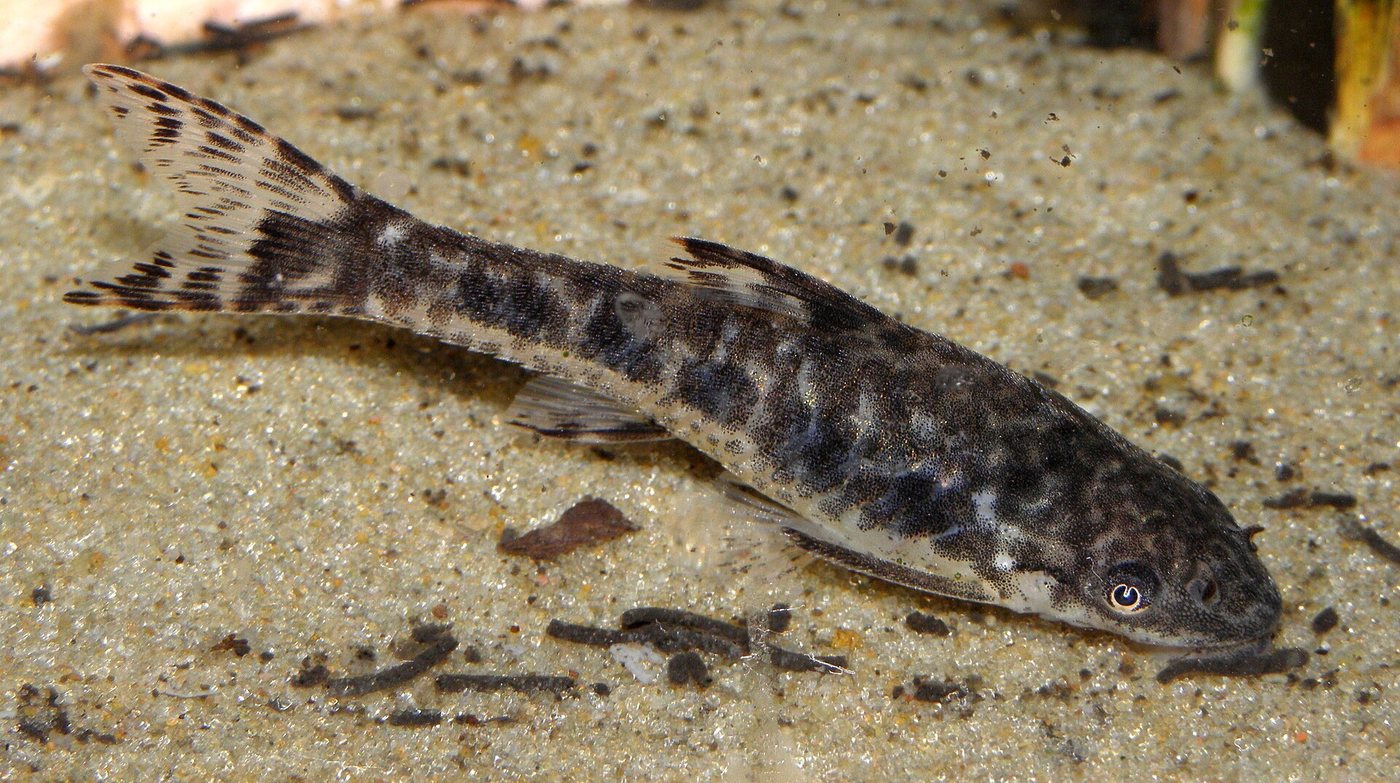
An oto is a whisker of a fish: 1 to 1.5 inches of mottled brown-grey camouflage with a dark lateral stripe running from snout through the eye to the tail, and a pale sucker mouth underneath built for rasping. Seen against an algae-filmed leaf or glass pane, it simply disappears — which is rather the point, in Amazonian streams full of things that eat small catfish. Species in shops vary (several near-identical Otocinclus species are traded interchangeably), but all share the same thumbnail size, the same drab elegance, and the same fringe-tailed, stick-tight silhouette.
Care & daily life
Otos are a mature-tank fish: add them only to an established aquarium with visible algae and biofilm growth, never to a brand-new sterile setup. Keep a genuine group — six is the floor, ten is visibly better — in 20 gallons or more at 73–79°F, with gentle filtration and plenty of plant surface. Then feed them as if the algae were not there, because within weeks it mostly won't be: blanched zucchini and cucumber weighted down, algae wafers, repashy-style grazing gels, and soft vegetables should arrive several times a week, ideally at lights-out, and uneaten food removed before it fouls. Their mouths are too small and their grazing too slow to compete with boisterous tankmates; pair with small peaceful fish and other gentle bottom species.
Health & lifespan
The Otocinclus is generally known for the following health watch-points:
- Starvation and emaciation — sunken belly on arrival or within weeks is the species' number one killer
- Bacterial infections exploiting depleted, stressed wild-caught fish
- Ich and velvet after shipping stress
- Sensitivity to copper-based medications and salt — dwarf catfish tolerate both poorly
- Sudden losses after large water changes in the first weeks — acclimate slowly, change gently
Living with a Otocinclus
Otos suit mature planted tanks, peaceful shrimp-and-small-fish aquascapes, and keepers who enjoy a fish that must be looked for. They are a disastrous impulse buy 'to clean the tank' — the classic otocinclus purchase is into a two-week-old aquarium with nothing to eat. Plan them as what they are: a social grazing species added last to an established tank, with a zucchini budget.
History
Otocinclus are small suckermouth catfish of slow South American streams and flooded margins, where they graze the film of algae and microorganisms coating plants and wood. Collected in Peru, Brazil, and Colombia, they flooded the hobby as planted tanks boomed and aquascapers wanted a cleaner that would neither uproot stems nor outgrow the layout. The trade name conceals a complex: a dozen-plus species, hard to tell apart, are sold under a few labels, all with the same requirements. Their delicate reputation is really a supply-chain reputation — the fish themselves, fed and grouped, are tougher than their first month suggests.