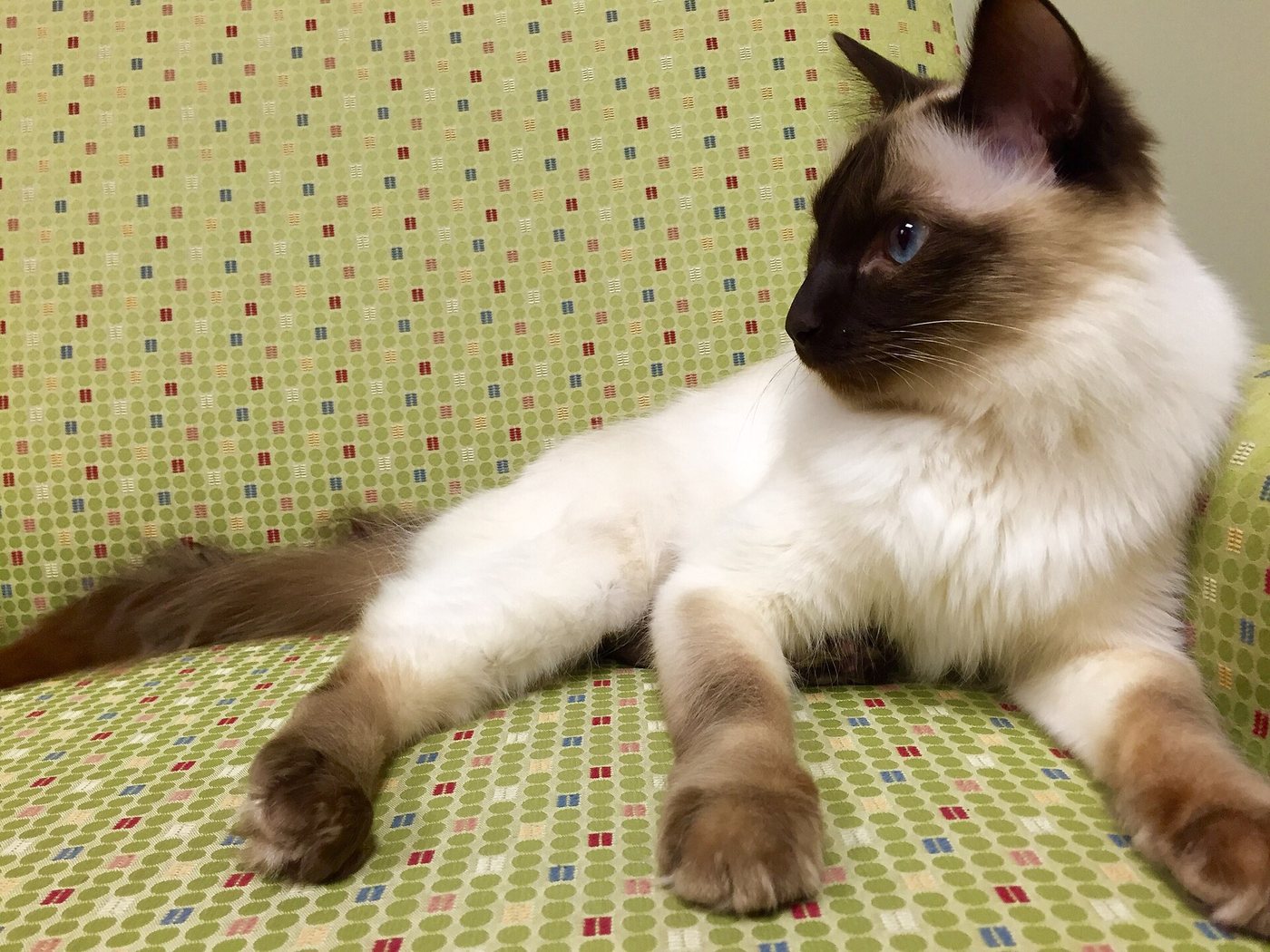
Overview
The Balinese is what happens when you take the Siamese — the most extroverted, intelligent, and talkative of cats — and dress it in a flowing silk coat. Everything else is unchanged: the wedge head, the sapphire eyes, the dog-like devotion, and the running commentary on household life. Developed in the United States in the 1950s from longhaired kittens in Siamese litters, the breed offers Siamese personality with softer edges and a coat that is far easier to keep than it looks.
Temperament & personality
Intelligent, affectionate, and endlessly interactive. Balinese follow their people, supervise every task, fetch toys, learn their names and a repertoire of tricks, and hold forth on all of it in a musical, slightly softer version of the Siamese voice. They are sensitive readers of mood, bond intensely, and can be demanding when bored or lonely — this is a cat that wants a job in your household and will invent one if you don't provide it.
Appearance
Pure Siamese architecture in evening dress: a long, tubular body on fine legs, a wedge-shaped head with oversized ears, and slanted almond eyes of vivid sapphire blue. The coat is the difference — a single, silky, flowing layer with no woolly undercoat, lying close on the body and extending into a beautiful plume of a tail. In CFA the Balinese comes in the four classic point colours (seal, chocolate, blue, lilac); the additional colours once called 'Javanese' were folded back into the breed in 2008.
Care & daily life
The flowing coat is surprisingly easy: it has no undercoat to mat, so a comb-through once or twice a week keeps it gleaming. The real care priorities are social and dental — Balinese need company and interaction for much of the day, thrive on play sessions, puzzle feeders and training games, and share the Siamese family's vulnerability to dental disease, so tooth brushing pays off. Provide height, warmth, and conversation, and the breed thrives.
Health & lifespan
The Balinese is generally known for the following health watch-points:
- Shares the Siamese health profile — breed within that context, not as a separate risk pool
- Amyloidosis, a protein-deposition disease affecting mainly the liver, occurs in some Siamese-family lines; ask breeders whether it has appeared in their pedigrees
- Feline asthma and bronchial disease are seen more often in the Siamese family than in cats generally
- Progressive retinal atrophy (PRA) — a DNA test exists and responsible breeders screen breeding cats
- Dental disease, including tooth resorption, is a common everyday issue; preventive dental care matters
Living with a Balinese
Balinese suit lively, interactive homes where someone is around for much of the day, or where a second cat provides company — they pine when left alone for long stretches. They are wonderful with children and other pets, adapt to apartments given climbing space, and should be kept indoors. If you want a quiet, independent cat, choose another breed; if you want a witty, devoted conversationalist, few cats compete.
History
Longhaired kittens had appeared sporadically in Siamese litters for decades — a recessive gene possibly dating to early outcrosses in the breed's history — and were long dismissed as faults. In the 1950s two American breeders, Helen Smith in New York and Sylvia Holland in California, decided the elegant longhairs deserved developing in their own right. Smith named them Balinese, after the graceful temple dancers of Bali, reasoning that 'longhaired Siamese' undersold their refinement. CFA granted championship status in 1970, initially for the four classic point colours only; cats in the newer colours were registered separately as Javanese until CFA reunified the two in 2008.