Overview
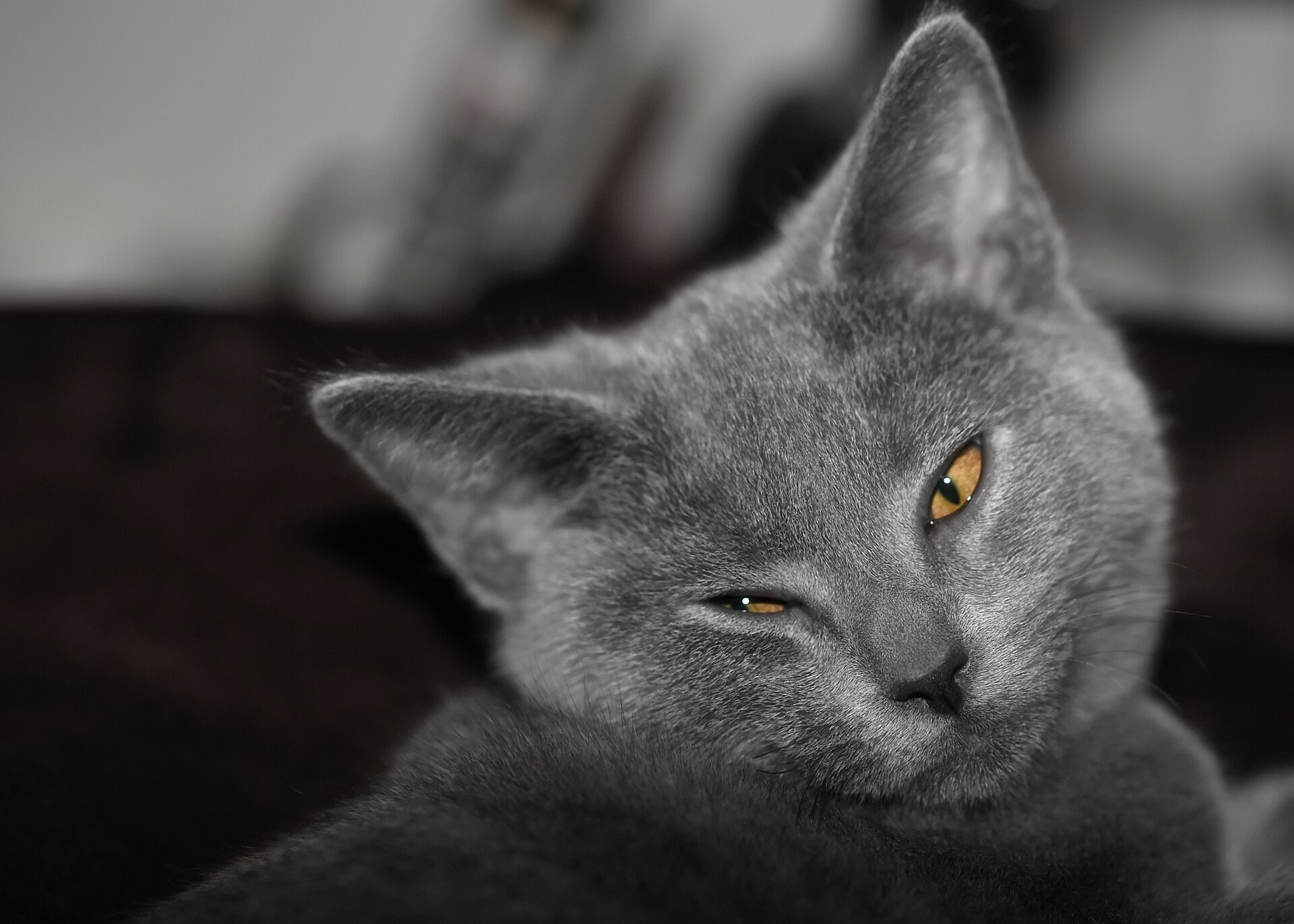
The Chartreux is France's smiling blue cat: an ancient, natural breed with a woolly grey-blue coat, copper eyes, and a reputation as the strong, silent type. Muscular and capable outdoors in its past life, it is now a calm, devoted house cat that bonds deeply, hunts toys with serious intent, and barely ever raises its voice.
Temperament & personality
Gentle, observant, and quietly devoted. Chartreux follow their people, attend every activity with grave interest, and communicate in chirps and looks rather than meows. They are playful in bursts with a strong hunting drive, then settle into long, companionable silences. Intelligent and routine-loving, they learn doors, fetch, and the household schedule — and they tend to choose one favorite human while remaining gracious to all.
Appearance
Unmistakable: a solid blue-grey coat of short, dense, woolly fur — like a sheep's fleece, with a texture compared to sheared sheepskin — over a powerful, semi-cobby body with a broad chest and surprisingly heavy muscle. The head is a broad wedge with full cheeks, a slight 'smile' created by the upturned mouth corners, small-to-medium ears, and large, round eyes in shades from deep gold to orange and copper. No markings, no other colors: the blue Chartreux is all there is.
Care & daily life
The woolly double coat should be combed — never brushed hard — once a week, and more during the twice-yearly coat blows when it sheds in volume. Chartreux are fastidious, moderate in appetite, and prone to putting on weight in middle age, so measure food. Care is otherwise minimal: this is a rustic, hardy constitution. They appreciate routine, scratching posts, and a warm place to sleep.
Health & lifespan
The Chartreux is generally known for the following health watch-points:
- Patellar luxation (slipping kneecaps) is the breed's best-documented inherited issue — responsible breeders screen breeding stock
- Hip dysplasia can occur, particularly in large males
- Polycystic kidney disease has appeared in lines that used Persian outcrosses; ask about screening history
- Otherwise a hardy, rustic breed with few problems; weight gain in neutered adults is the routine concern
- Sensitivity to some anaesthetics and a tendency to stress-related digestive upset are occasionally reported by owners
Living with a Chartreux
Chartreux suit calm households of almost any shape — families, singles, apartments included. They are indoor-leaning homebodies who form strong routines, travel reasonably well, and do best with predictable, gentle handling. Their quietness and tidiness make them excellent apartment cats; their hunting heritage means toys and window perches earn their keep.
History
The Chartreux is one of France's oldest natural breeds — blue cats with woolly coats were described in French texts from the 1500s onward, kept for their hunting skill and prized pelts. Legend links them to the Carthusian monks of the Grande Chartreuse (makers of the liqueur), though documentary proof is thin. The modern breed was gathered from free-roaming blue cats on Belle-Île and mainland France in the 1920s–30s by the Léger sisters; after the Second World War nearly wiped the breed out, breeders rebuilt it with careful outcrosses. It reached America in 1970 and remains uncommon outside France.