Overview
The Cymric (pronounced 'kim-rick') is simply the Manx in a longer, plusher coat — the same round, tailless body, the same rabbit-like gait, the same devoted, dog-like temperament, and, it must be said with the same honesty this site gives the Manx, the same health conversation. The gene that removes the tail demands knowledgeable breeding in either coat length. From a responsible breeder, a Cymric is a sound, sturdy, deeply loyal companion that happens to look like a small, tailless sheepdog in fancy dress.
Temperament & personality
Playful, calm, and deeply loyal — the Cymric shares the Manx temperament in full. Cymrics choose their family and commit: they follow, supervise, fetch toys, and greet at doors, all in a soft trilling voice. They are intelligent, trainable, unusually relaxed around dogs, and kittenish in play while dignified at rest. The longer coat adds nothing but softness; the personality is the classic Manx blend of hunter's athleticism and homebody devotion.
Appearance
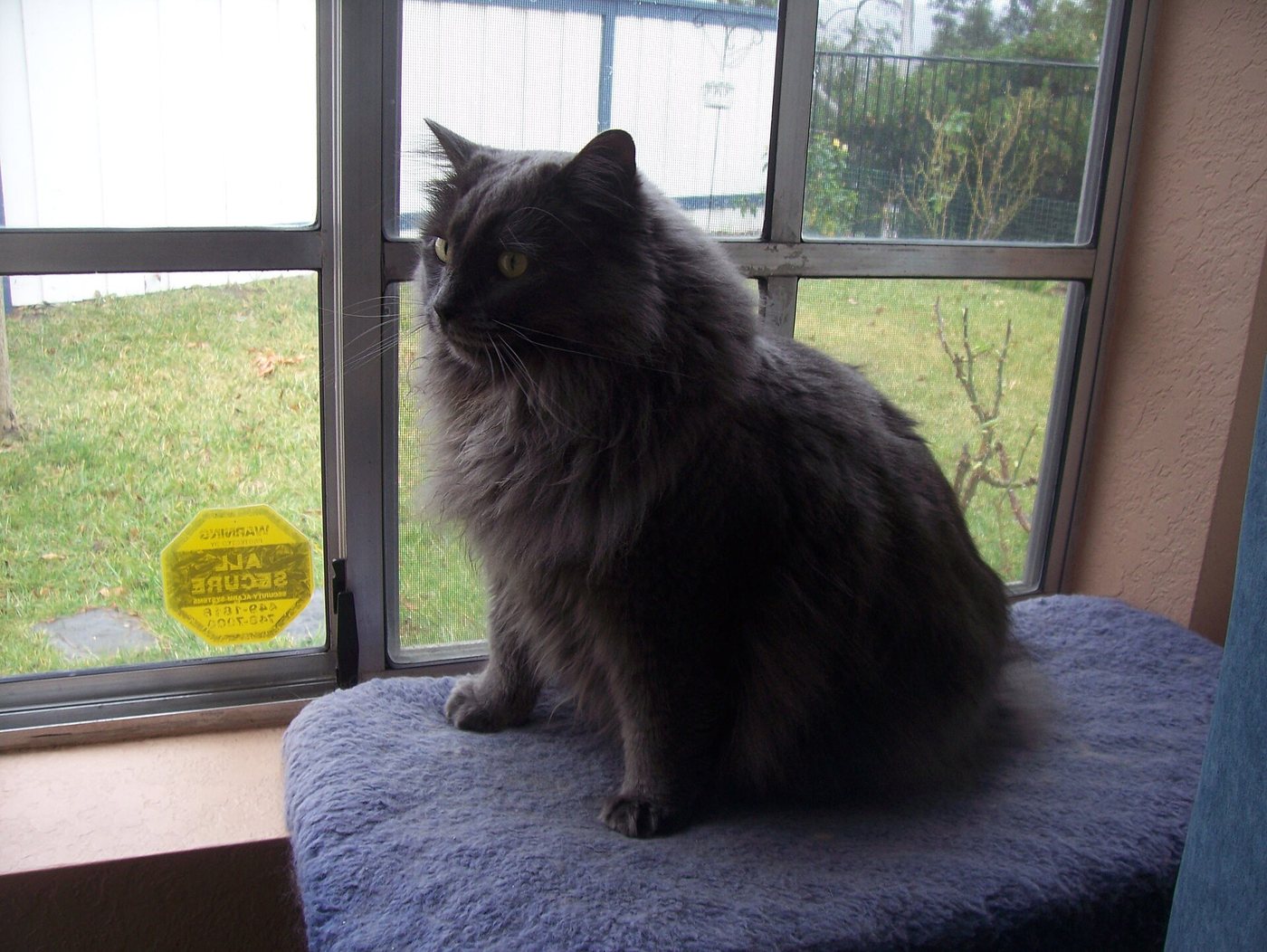
A Manx in a longer coat — everything else is identical. Expect the same round silhouette: round head, round rump, deep chest, and hind legs noticeably longer than the front, producing the characteristic rabbit-like hop. The tail is absent in the classic 'rumpy,' a small stump in the 'stumpy,' or near-normal in the 'longy,' all from the same litters. Over this frame flows a double coat of medium-long, silky hair — plumed britches, a neck ruff, ear furnishings, and a softer texture than the shorthaired Manx — in virtually any colour or pattern.
Care & daily life
Budget more grooming than for a Manx: the long double coat needs thorough brushing and combing two or three times a week, with extra attention to the britches and belly where mats form, and more during seasonal shedding. The Manx rules of handling apply unchanged — support the whole body when lifting, and avoid rough play around the rear spine. Cymrics are athletic jumpers and retrievers who need sturdy furniture, climbing space, and daily interactive play. Keep indoors or in secure outdoor space.
Health & lifespan
The Cymric is generally known for the following health watch-points:
- Manx syndrome — the serious side of the tailless gene: a spectrum of spinal and nerve defects (including spina bifida, fused vertebrae, and bladder or bowel nerve problems) that can affect kittens when the gene is inherited from both parents; ethical breeders never breed two fully tailless ('rumpy') cats together
- The long coat changes nothing about spinal risk — every Cymric health question is a Manx health question
- Megacolon can develop in cats with spinal nerve involvement and needs veterinary management
- Corneal dystrophy has been reported in the Manx breed group
- Arthritis of the tail stump and spine can appear in older cats
- Otherwise generally robust — a sound adult Cymric from screened lines is a healthy cat
Living with a Cymric
Cymrics suit the same homes as the Manx: families and multi-pet households wanting an involved, playful, dog-friendly companion. They need activity, climbing space, and regular coat care, and they are best kept indoors or in secure outdoor areas. The one non-negotiable piece of homework is the breeder interview: choose someone who explains their Manx syndrome prevention clearly and without defensiveness, because that single factor decides this breed's health story. Do that, and you get a loyal, entertaining cat for well over a decade.
History
Longhaired kittens had been turning up in Manx litters for as long as the breed existed — the Isle of Man's cats had absorbed longhair genes over the centuries — but they were treated as by-products until the 1960s, when longhaired Manx kittens born in Canada caught fanciers' attention. Canadian and American breeders, among them Leslie Falteisek and Blair Wright, developed the variety deliberately in the 1970s and named it 'Cymric' — from Cymru, the Welsh word for Wales — to keep the breed's Celtic flavour. CFA registered the Cymric in 1994 as the longhair division of the Manx, and TICA likewise handles it within its Manx breed group: one breed, two coats.