Overview
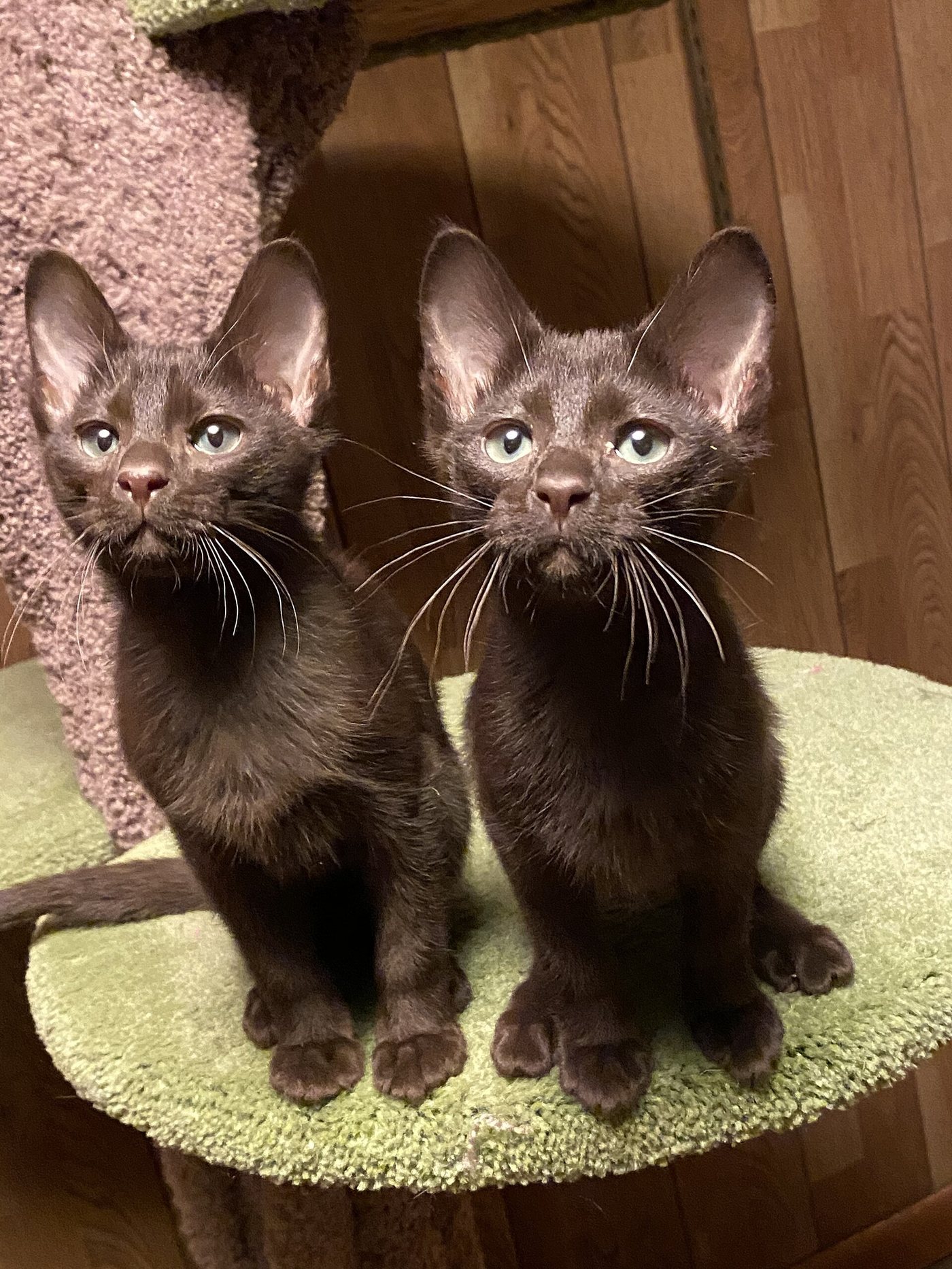
The Havana Brown is one of the rarest cats in the world: a glossy, chocolate-brown breed engineered in 1950s England, with brown whiskers, expressive green eyes, and a habit of reaching out a paw to touch whatever — or whoever — interests it. Playful, adaptable, and people-centered, it combines Siamese cleverness with a softer voice and an easier temperament.
Temperament & personality
Inquisitive, playful, and companionable. Havana Browns investigate life with their paws, fetch toys, greet you at the door, and settle close without being clingy. They are adaptable cats — famously unfazed by moves and travel compared with other breeds — and they talk in a soft, agreeable voice. The overall impression is of a bright, affectionate cat that wants to participate in everything, politely.
Appearance
A cat dipped in chocolate: the entire coat — including, uniquely, the whiskers — is a warm, glossy chestnut brown, lying short and close over an elegant, medium-sized body. The head is a rounded wedge, longer than wide, with a distinct nose break, almond eyes in gold to vivid green, and large ears that tilt slightly outward. Havana Browns use their paws like hands, and the deep brown, almost mahogany sheen of the coat in sunlight is the breed's signature.
Care & daily life
Grooming is easy — a weekly brush or wipe keeps the short coat glossy, and shedding is light. The Havana's needs are social and mental: daily play, things to investigate with those busy paws, and people who are around. They adapt well to harness walks. Feed measured meals (they're enthusiastic eaters) and keep up routine vet and dental care — the breed can be prone to gum disease, so teeth deserve attention.
Health & lifespan
The Havana Brown is generally known for the following health watch-points:
- Generally considered a healthy, robust breed with no dominant inherited disease
- Calcium oxalate urinary stones have been reported; keep water intake up and watch litter-box habits
- Gingivitis and dental disease occur — dental checks are worthwhile from middle age
- Upper respiratory infections can circulate in catteries; vaccinated, vet-checked kittens are the norm from good breeders
- The gene pool is small — reputable breeders use sanctioned outcross programs to maintain diversity; ask about pedigree diversity
Living with a Havana Brown
Havana Browns suit homes that want an interactive, mid-energy companion: families, singles, and apartments all work, provided the cat gets daily play and company. They travel and adapt unusually well for a cat, and their paw-tapping greetings win over most visitors. They do not thrive on long, empty days — pair them with another pet if you're out at work.
History
Chocolate-brown cats were shown in England in the 1890s as 'Swiss Mountain Cats' but vanished as Siamese rules tightened. In the early 1950s a group of English breeders — including Baroness Miranda von Ullmann and Mrs. Anne Judd — deliberately recreated them, crossing chocolate-point Siamese with black domestics (with touches of Russian Blue and Persian), producing Elinor of Laurentide in 1952, the breed's foundation. Named for the cigar (or the rabbit) of the same color, Havanas reached America in 1956; the American line was later protected by limited outcrossing back to Siamese and domestics. Numbers have never been large — the breed remains one of the fancy's rarities.