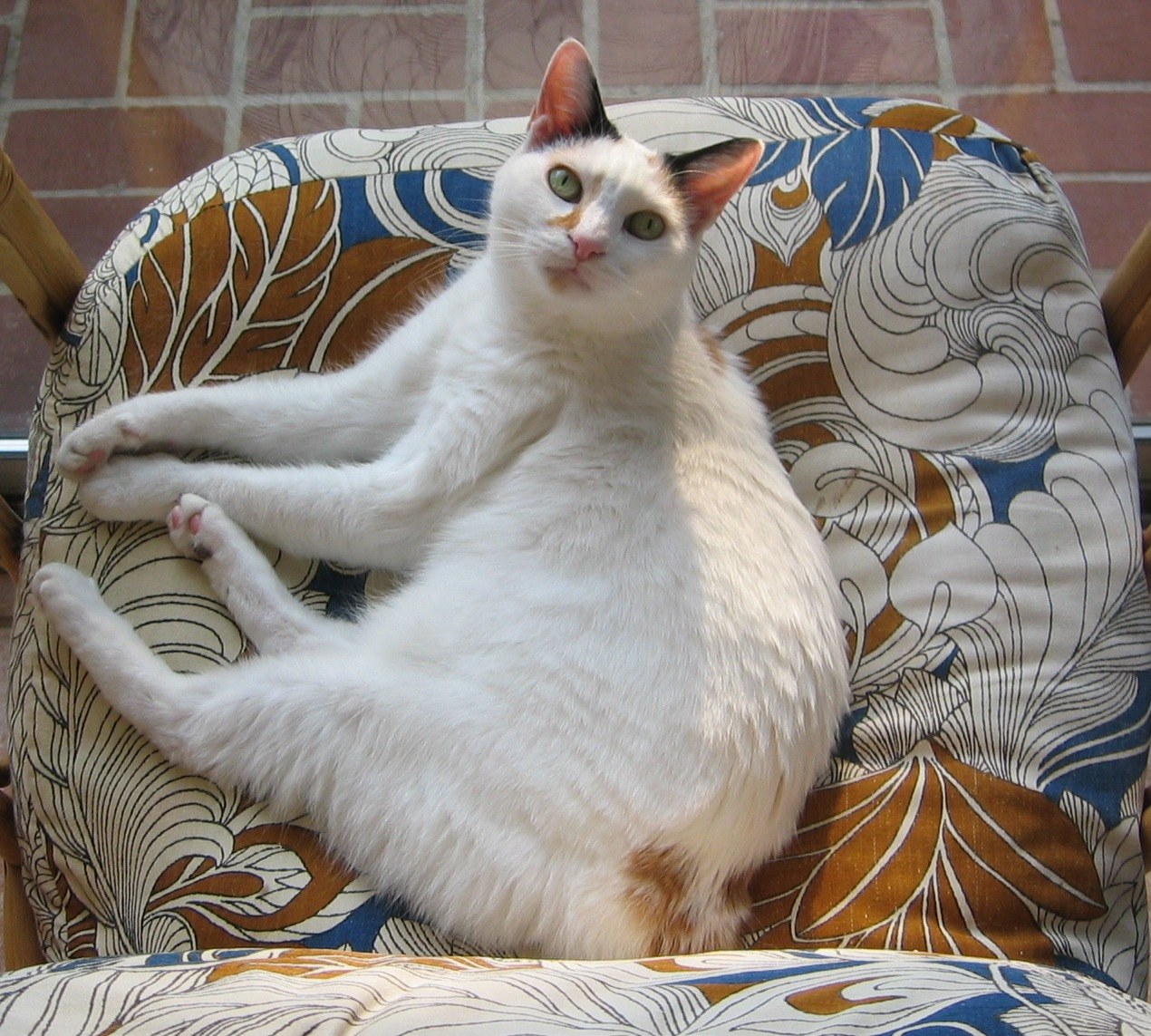
Overview
The Japanese Bobtail is living history: a natural breed refined over a thousand years in Japan, immortalised as the beckoning maneki-neko, and still exactly what it has always been — a lean, athletic, bright-eyed cat with a pom-pom tail and a musical voice. Where many pedigree breeds were engineered in a few generations, the Bobtail was shaped by centuries of ordinary life as Japan's household and warehouse cat, which shows in its health, intelligence, and bold, friendly character.
Temperament & personality
Active, intelligent, and remarkably bold. Japanese Bobtails are greeters and joiners — first to the door, first into any game, happy to play fetch, carry toys, and converse in a surprisingly wide range of soft, chirping tones. They bond with the whole family rather than one person, tolerate household commotion cheerfully, and are confident with children and other animals. Owners call them perpetual entertainers with impeccable manners.
Appearance
Elegance on stilts: a lean, muscular body on long legs, a refined head with high cheekbones, large ears, and oval eyes set at a characteristic slant. The signature tail is short — roughly 3–4 inches — and carried as a fluffy, kinked pom-pom; no two tails are shaped alike, as the bones within bend in their own directions beneath the fur. The coat lies silky and close, with more length and a fuller tail in the longhair variety. The most prized colour in Japan is mi-ke — the tricolour calico — though nearly all colours and patterns occur.
Care & daily life
A once-weekly comb-through keeps the silky coat in order; longhairs benefit from slightly more. The breed's real requirement is engagement: these are bright, athletic, social cats who want interactive play, climbing territory, games of fetch, and a place in the family's daily business. Routine dental care and normal preventive vet visits complete the picture. Bobtails are generally happier with company — human or feline — than alone for long hours.
Health & lifespan
The Japanese Bobtail is generally known for the following health watch-points:
- One of the healthiest of all breeds — no breed-specific genetic diseases are known
- The bobtail gene (involving the HES7 gene) produces only the shortened, kinked tail; unlike the Manx gene, it is not associated with spina bifida or any spinal or skeletal defect
- Centuries of natural selection as Japan's street and household cats left an exceptionally robust constitution
- Typical lifespans of 15–18 years reflect that soundness; even senior Bobtails tend to stay active
- Routine care only: dental checks, weight monitoring (moderate risk, as they are enthusiastic eaters), and standard preventive medicine
Living with a Japanese Bobtail
Japanese Bobtails suit active, sociable households — families, multi-cat homes, and anyone who wants a participatory cat rather than a decorative one. They greet guests, join games, and do well with children and dogs. Keep them indoors with climbing space and daily play. Owners who travel or work long hours should provide a feline companion, because this breed genuinely dislikes being left out of things.
History
Bobtailed cats have lived in Japan for at least a thousand years, most likely arriving from mainland Asia — tradition holds they came from China or Korea, some as imperial gifts. They were working cats as much as companions, guarding silkworm stores and grain warehouses from rodents, and they appear throughout Japanese art and folklore; the beckoning maneki-neko is a bobtail. Long common cats in their homeland, they drew Western attention after the Second World War: Judy Crawford, an American living in Japan, championed the breed and sent cats home, and Elizabeth Freret imported the first trio to the United States in 1968. CFA recognised the shorthair in the 1970s (championship 1976) and the longhair followed in 1993.