Overview
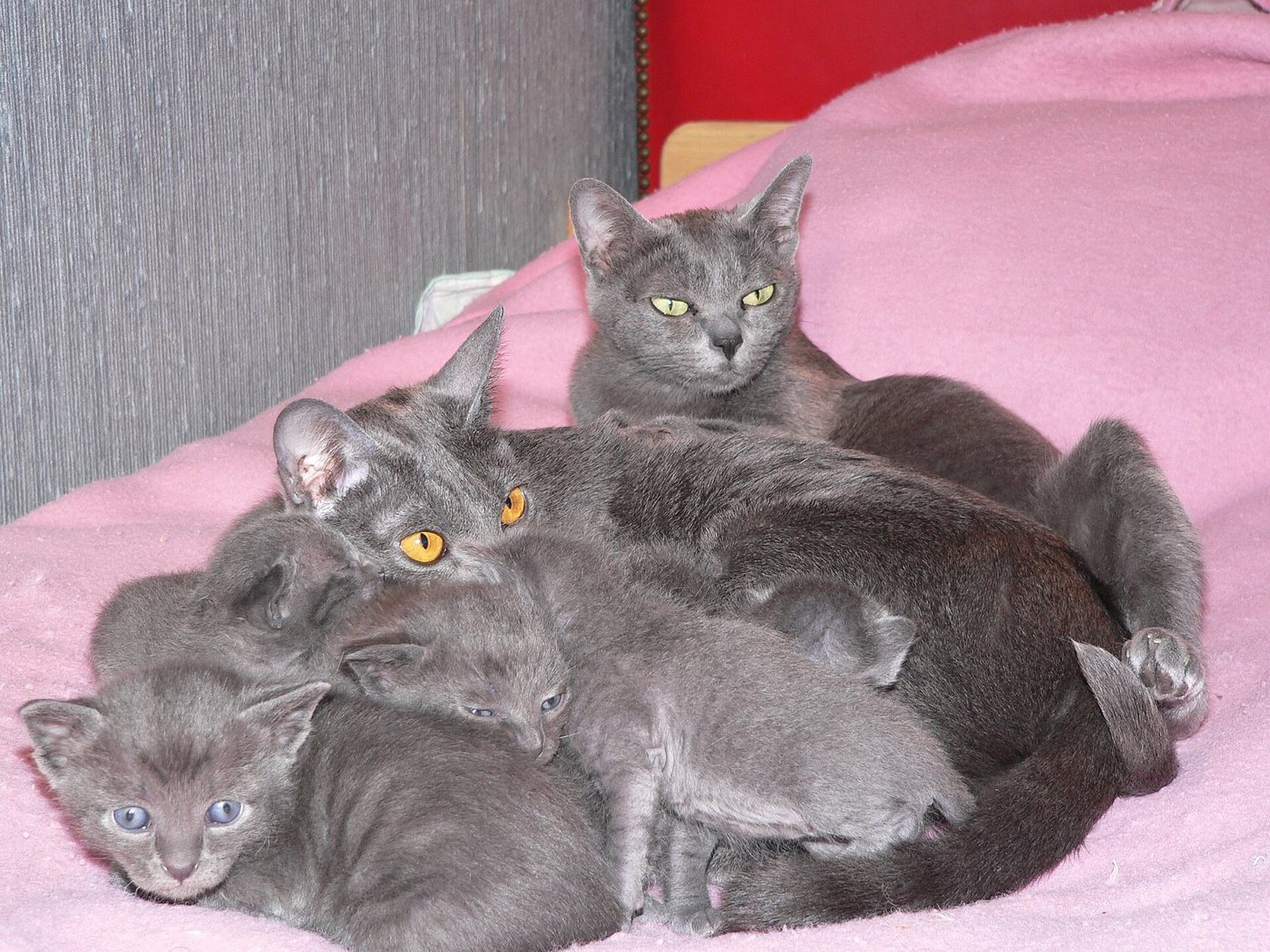
The Korat is living history: an unchanged natural breed from Thailand, shimmering blue-grey from nose to tail, with some of the most striking green eyes in the cat world. Korats are gentle, intelligent, and form some of the deepest bonds of any breed — but on their own terms, with a quiet insistence that their routines and their people stay put. For a calm household wanting a beautiful, long-lived, low-shedding cat with real presence, the Korat is a superb and still-rare choice.
Temperament & personality
Gentle, intelligent, and deeply loyal, with a streak of quiet possessiveness. Korats bond strongly, often singling out one favourite human, and they like to supervise everything from the centre of the household. They are playful well into old age, fond of interactive toys, and famously fond of warmth and laps — but they dislike being grabbed, loud noise, and rough handling, and will simply remove themselves from situations they disapprove of. With their own people they are affectionate, communicative in a soft voice, and remarkably attuned to mood.
Appearance
The Korat is a study in silver and blue: a fine, single-layer coat of blue-grey fur, each hair tipped with silver, producing a shimmering halo effect in the light. The head is distinctly heart-shaped — broad across the eyes with a gently curved forehead — and the eyes are oversized, luminous green, and almost too big for the face. The body is compact and surprisingly heavy for its size: semi-cobby, muscular, and low-slung, usually with a slightly arched back and powerful hindquarters.
Care & daily life
That single, close-lying coat is nearly maintenance-free — a weekly brush or even a wipe with a chamois cloth keeps the silver sheen, and Korats shed very little. They are playful cats who love interactive games and puzzle feeders, and they need their people's company more than elaborate equipment. Because Korats have very little body fat, they feel the cold and appreciate warm spots and heated beds in winter. Keep them as indoor cats — their trusting, home-centred nature does not suit roaming.
Health & lifespan
The Korat is generally known for the following health watch-points:
- GM1 and GM2 gangliosidosis — two fatal inherited storage diseases once found in the breed; DNA testing is available and responsible breeders test, so the conditions are now rare
- Very low body fat — Korats can be more sensitive to cold and to some anaesthetic protocols; mention the breed to your vet
- Otherwise one of the hardiest pedigree breeds, with no other established inherited diseases
- Dental disease and weight gain are the routine management issues in middle age
Living with a Korat
Korats are homebodies who bond intensely — often to one chosen person — and follow their humans with quiet devotion. They prefer calm, settled households and can be unsettled by noise and upheaval, so they fit adults, gentle older children, and multi-cat homes where they can hold a senior rank. They dislike long hours alone; a household where someone is home, or a feline companion, keeps them content.
History
The Korat is one of the oldest stable cat breeds in the world, described in Thailand's Tamra Maew, the 'Cat-Book Poems' compiled centuries ago in the Ayutthaya kingdom. Known in Thailand as the Si Sawet, it was treasured as a symbol of good luck and prosperity, traditionally given in pairs to brides, and named for the Korat plateau (Nakhon Ratchasima province) where it developed. The modern breed outside Thailand began in 1959, when Jean Johnson of Oregon received a pair, Nara and Darra, and began breeding them in the United States; championship recognition followed in the later 1960s. Thai Korats today descend from a carefully guarded, naturally occurring population rather than any man-made cross.