Overview
The Nebelung is the Russian Blue's romantic sibling: the same green eyes, blue coat, and devoted nature, softened by a flowing silver-tipped mantle. It is a cat for introverts — shy of strangers, wary of change, and absolutely besotted with its chosen one or two people, whom it follows like a gentle grey shadow. Add exceptional longevity and a near-silent voice, and the Nebelung is one of the most rewarding breeds for a calm, permanent home — if you can find one.
Temperament & personality
Gentle, reserved, and quietly intense. A Nebelung chooses its people and then commits completely: it will wait by the door, supervise baths, and claim a permanent place on the chosen lap. With strangers it is typically invisible, retreating until the house is safe again. Nebelungs are intelligent and playful in private — fetching, carrying toys, playing in water — and they hate change, sulking when furniture moves or schedules slip. Their affection is not given to everyone, which makes it feel earned.
Appearance
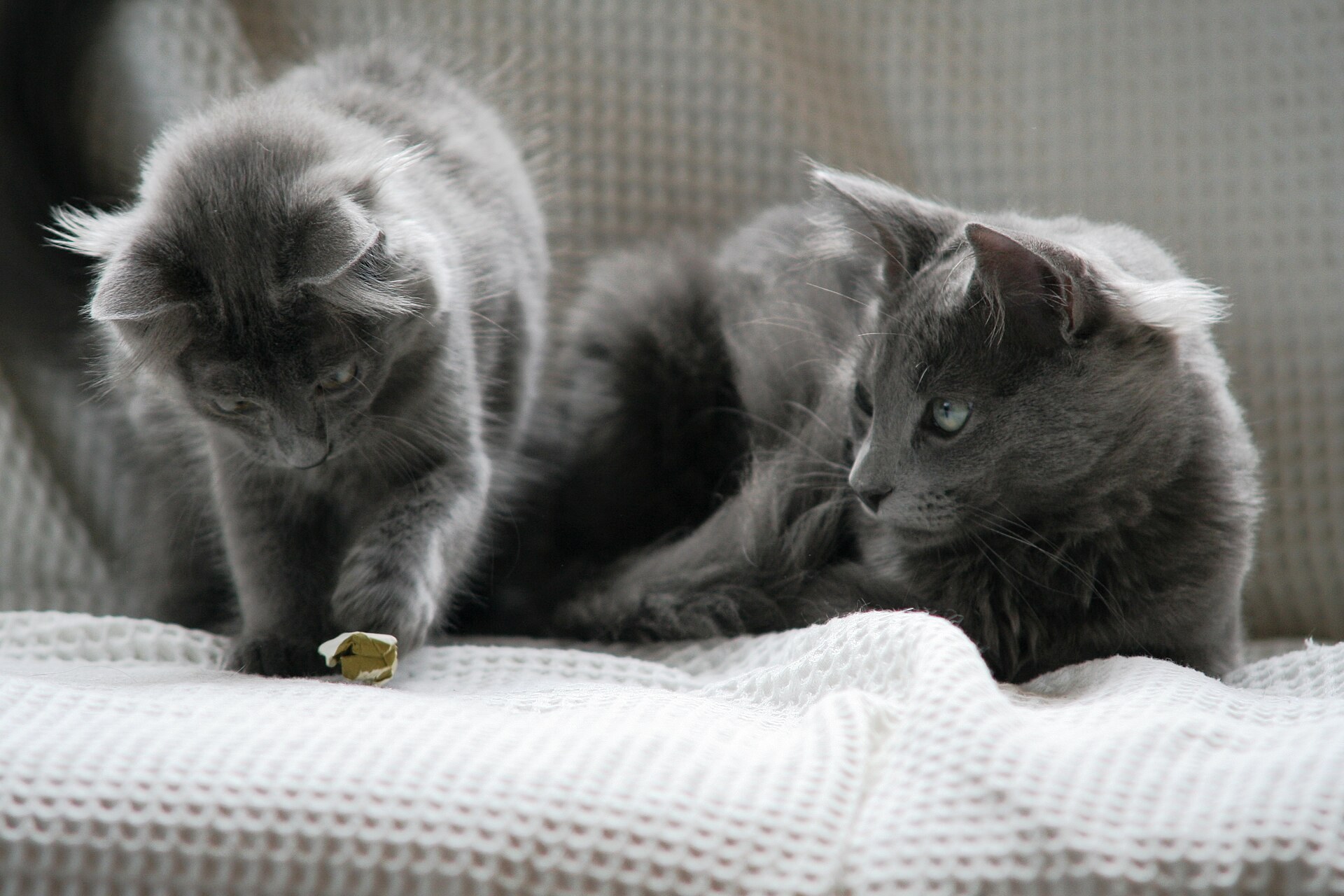
The Nebelung is essentially a Russian Blue in a long, silky coat: a medium-length double coat of blue-grey fur, the guard hairs tipped with silver so the cat seems to glow with a soft mist — the name means 'creature of the mist' in German. The body is long, graceful, and well-muscled under all that fur, with a plumed tail, wide-set ears, and striking vivid-green eyes (young cats' eyes may start yellow and turn). The overall effect is elegant and slightly mysterious, like a cat photographed in fog.
Care & daily life
That glorious double coat needs brushing two or three times a week to prevent mats, especially behind the ears, in the armpits, and along the trousers; expect heavier shedding in spring and autumn coat changes. Nebelungs are creatures of routine who flourish on predictable feeding, play, and quiet — give them stable perches, scratching posts, and a calm corner of their own. They are strictly indoor cats in most breeders' view: their reserve with strangers and sensitivity to upheaval make the indoor life the right one.
Health & lifespan
The Nebelung is generally known for the following health watch-points:
- No breed-specific inherited diseases are established in the Nebelung — it shares the Russian Blue family's reputation for hardiness
- Longevity is a breed strength, so senior care — kidney function, thyroid, and dental checks — becomes the main focus in the second decade
- The long double coat can mat if neglected, which is a welfare issue in itself; keep up the brushing
- Obesity and dental disease are the common everyday concerns, as in most indoor breeds
Living with a Nebelung
Nebelungs are for quiet, stable homes. They bond deeply — often to one person above all — and are happiest with predictable routines, gentle handling, and their own safe hiding places when visitors arrive. They suit adults, calm older children, and peaceful multi-cat homes, and they are a poor match for households with constant change, noise, or travel, since they can take days to forgive a disruption.
History
The Nebelung is a modern American creation with an old soul. In the mid-1980s, Denver breeder Cora Cobb's black domestic longhair produced kittens by a Russian Blue-type male; two of them — named Siegfried and Brunhilde, after heroes of the Nibelungenlied — became the foundation of a deliberate programme to recreate the longhaired blue cats that may have existed in nineteenth-century Russia. TICA recognised the Nebelung in 1987. Numbers have always been small and the breed remains rare; some registries, particularly in Europe, register Nebelungs as a variety of Russian Blue rather than a separate breed, reflecting their shared ancestry and near-identical standards apart from coat length.