Overview
If the Maine Coon is America's forest cat, the Norwegian Forest Cat is Europe's original — a big, strong, slow-maturing breed shaped by Scandinavian winters, Norse legend, and life on farms and in woodland. Wegies combine real athleticism — they are among the best climbers in the cat world — with a notably gentle, patient, and undemanding temperament. They are cats with presence: physically imposing, quietly confident, and deeply attached to their households without being underfoot.
Temperament & personality
Gentle, friendly, and self-possessed. Norwegian Forest Cats bond strongly with their families but keep a measure of northern reserve — they choose their moments for laps and affection rather than demanding constant attention. They are intelligent, observant, and notably tolerant of children and household commotion, and their playfulness stretches well into adulthood. Unlike many large breeds, they are not given to drama; a Wegie supervises the household with calm goodwill.
Appearance
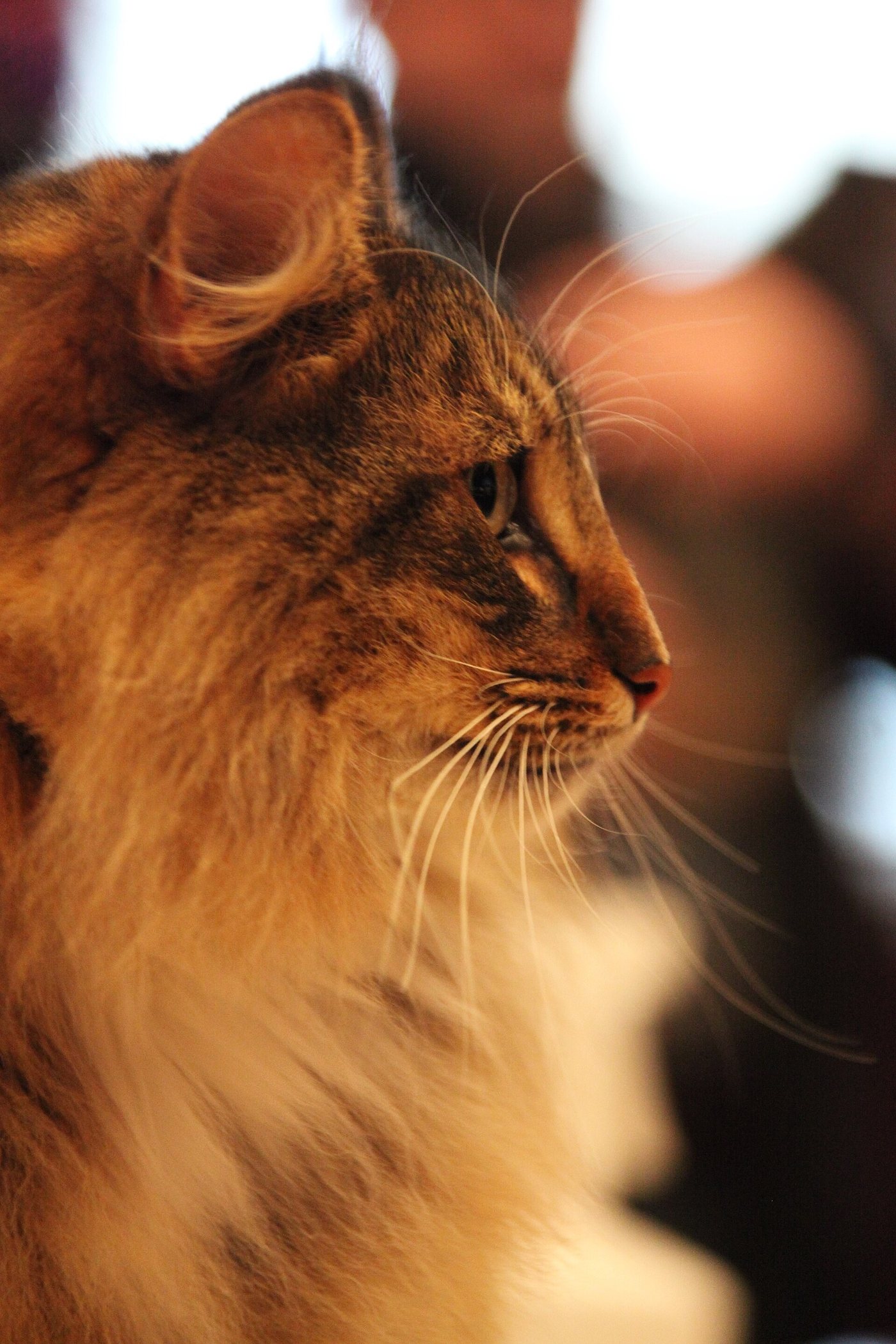
The Norwegian Forest Cat is a strongly built, muscular cat with a long, heavy body, sturdy legs (hind legs longer than the front, giving a distinctive sloping profile), and a long, bushy, flowing tail. The head is an equilateral triangle with a straight profile, almond-shaped eyes, and high-set ears often tipped with lynx-like tufts. The glory of the breed is the coat: a dense, woolly undercoat covered by long, glossy, water-repellent guard hairs, with a full ruff around the neck, 'britches' on the hind legs, and tufts of fur between the toes.
Care & daily life
Despite the long coat, the Norwegian Forest Cat needs combing only about once a week in normal times — the texture resists matting — but expect a dramatic spring moult when the winter undercoat comes out, needing more frequent sessions. This is an athletic, climbing breed: provide tall, sturdy cat trees and shelves that can take real weight. Wegies are slow to mature and stay playful for years; daily play sessions and puzzle feeders suit their capable minds. Feed a quality diet and mind the waistline, as neutered indoor cats gain weight readily.
Health & lifespan
The Norwegian Forest Cat is generally known for the following health watch-points:
- Glycogen storage disease type IV (GSD IV) — a breed-specific inherited metabolic disease; a DNA test exists and responsible breeders screen for it
- Hypertrophic cardiomyopathy (HCM) occurs in the breed; screening by ultrasound is recommended
- Hip dysplasia can occur in this large, heavy breed
- Pyruvate kinase deficiency has been reported and is DNA-testable
- Dental disease and obesity are the routine management concerns, especially in neutered indoor cats
Living with a Norwegian Forest Cat
Norwegian Forest Cats suit families, multi-pet homes, and anyone who wants a substantial, self-assured cat that is affectionate on its own calm terms. They need serious vertical territory — a Wegie denied climbing furniture will improvise on yours. They tolerate other animals well and adapt to indoor life provided they get play and climbing outlets; homes that can offer a secure outdoor enclosure will have a very happy cat.
History
The Norwegian Forest Cat — the 'skogkatt' — is Norway's native farm and forest cat, shaped by centuries of Scandinavian winters rather than by a breeding program. Norse mythology gives it a starring role: the goddess Freya's chariot was said to be pulled by two enormous cats, and folk tales describe fairy cats in the forests too large to lift. The breed was shown in Norway in the 1930s, nearly lost during the Second World War, and rebuilt by dedicated breeders under King Olav, who declared it Norway's national cat. It was exported from the 1970s onward and is now recognised by registries worldwide.