Overview
The Peterbald combines two extremes: the dramatic, nearly naked look of a hairless breed and the personality of the friendliest cat in the building. Where the Sphynx is a sturdy clown, the Peterbald is a slim, graceful Oriental who wants to be involved in every conversation, sit on every lap, and sleep under your duvet. The trade-off is real work: weekly baths, skin and sun management, and a cat who genuinely suffers if left alone too much. For the right home, it is one of the most rewarding breeds alive.
Temperament & personality
Devoted, gentle, and relentlessly sociable. Peterbalds follow their people from room to room, greet visitors at the door, join video calls, and hold proper conversations in a surprisingly talkative voice inherited from their Oriental side. They are peacemakers — rarely aggressive with anyone, excellent with other animals — and they crave physical contact, burrowing into laps, sleeves, and bedding. Sensitive and intelligent, they notice moods and routines and organise their day around yours.
Appearance
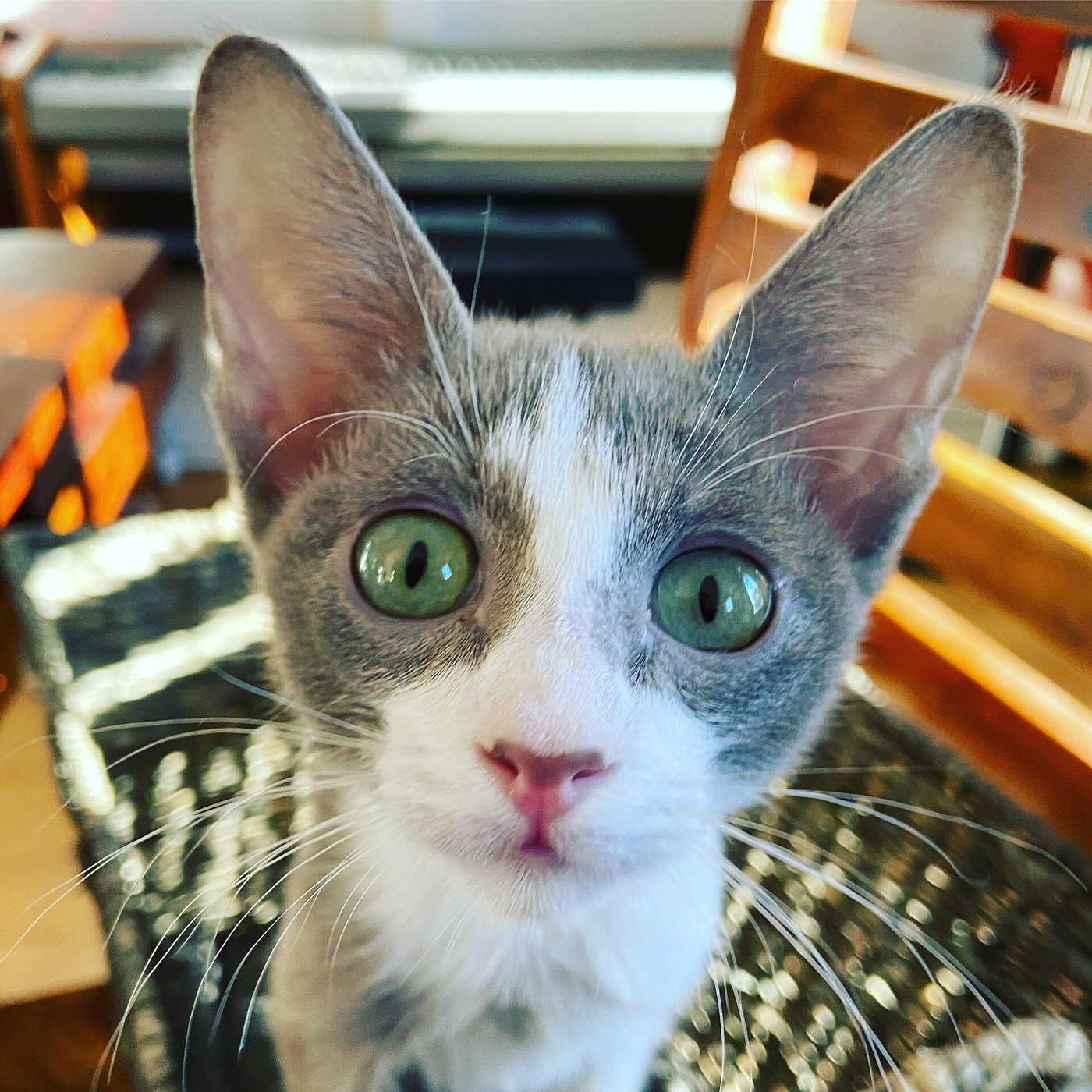
The Peterbald is the Sphynx's elegant Russian cousin: slim, fine-boned, and long, with a narrow wedge head, huge bat-like ears, almond eyes, and a whippy tail. What defines it is the coat — or coats, plural. Peterbalds come in five types, from 'ultra bald' (completely hairless, with a warm, rubbery feel) through flock and velour (fine peach-fuzz) to a short 'brush' coat, and even 'straight' full coats in cats that did not inherit the hair-loss gene. Remarkably, a kitten's coat can change as it matures: some brush kittens lose their hair by age two, while some bald ones grow a light winter flock.
Care & daily life
Hairlessness is high-maintenance, not low. Skin oils that fur would absorb build up on the skin, so most Peterbalds need a gentle bath roughly weekly, plus ear cleaning and attention to grease in the nail beds. They sunburn easily, feel cold keenly, and are indoor-only cats who may need a jumper in winter and shade discipline in summer. Feed generously — hairless cats burn extra calories staying warm, and Peterbalds have hearty appetites. In return they ask for constant company: a Peterbald left alone all day is a miserable Peterbald, and most breeders recommend a companion animal.
Health & lifespan
The Peterbald is generally known for the following health watch-points:
- Skin is the whole management story: sunburn, dryness, greasy build-up, and occasional feline acne if bathing lapses
- Temperature extremes are a genuine welfare risk — heatstroke in sun, chilling in cold homes; indoor-only, always
- No major inherited diseases are established for the breed yet, but it is young and data is limited, so breeder transparency matters
- As with other slender Oriental-type breeds, dental disease deserves attention from kittenhood
Living with a Peterbald
Peterbalds belong in warm, people-rich, indoor homes. They are superb with children, other cats, and dogs — conflict is simply not in their repertoire — and they make excellent therapy-style companions for people who are home a lot. They are a poor choice for anyone wanting a low-interaction pet, anyone whose home is cold, or anyone who cannot commit to the skin-care routine. A companion pet is close to a requirement.
History
The Peterbald is one of the youngest breeds in the world. In 1994, St Petersburg breeder Olga Mironova crossed a hairless Don Sphynx (Donskoy) male, Afinogen Myth, with an Oriental Shorthair female, Radma von Jagerhov; the kittens combined the Donskoy's dominant hair-loss gene with the Oriental's elegance, and the best of them founded the breed. The name joins St Petersburg ('Peter') with 'bald.' Note that the Peterbald's hairlessness comes from the Don Sphynx gene — a dominant mutation entirely unrelated to the Canadian Sphynx's recessive one. TICA recognised the breed in 1997 and granted championship status in 2005; it remains a rarity outside Russia and specialist breeders elsewhere.