Overview
The Pixiebob sells a look — wild bobcat, straight off the mountain — and delivers the opposite temperament: calm, loyal, and thoroughly domestic. It is one of the largest and most dog-like of all breeds, famously patient with children and other animals, quiet-voiced, and blessed with a thick, soft coat and those extraordinary mitten feet. If the wild appearance appeals but a genuine hybrid's demands do not, the Pixiebob is the honest way to get the look: every inch of the wildcat is costume.
Temperament & personality
Calm, confident, and deeply loyal. Pixiebobs bond with the whole family, follow their people about, and are renowned for patience — putting up with children, dogs, and household chaos with a slow blink. They are intelligent and trainable, learning leashes, fetch, and sometimes a vocabulary of chirps for specific people. Despite their bulk they are gentle movers, preferring a dignified pace, punctuated by play sessions and the occasional joyful dash. The overall impression is of a good-natured bodyguard who has decided the family is his life's work.
Appearance
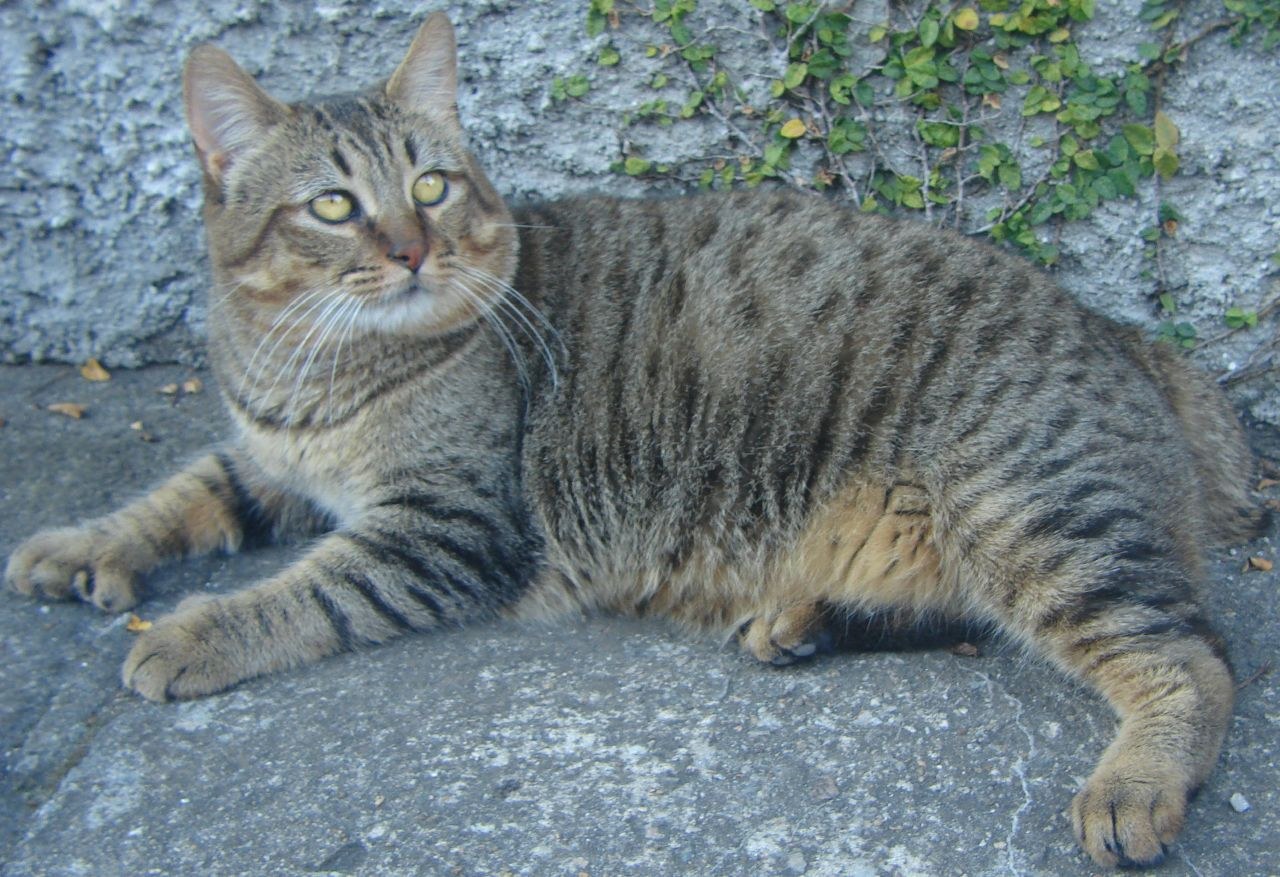
The Pixiebob is built to evoke the North American bobcat: a large, heavy-boned, muscular body on medium legs (the hind legs slightly longer, giving a gentle rise to the back), deep-set eyes under a heavy, hooded brow, prominent cheekbones, and a naturally short tail — anywhere from a couple of inches to a hock-length bob. The coat is a thick, soft, weather-resistant double coat in brown spotted tabby, often with a slightly shaggy belly. Uniquely among pedigree breeds, polydactyly is not just tolerated but written into the standard: Pixiebobs may have up to seven toes on a paw, splaying like mittens.
Care & daily life
That thick double coat needs a thorough weekly brush, more during the spring and autumn sheds. Pixiebobs are active, intelligent cats who enjoy walks on a harness, games of fetch, car rides, and water play — many breeders call them the most dog-like of cats, and they thrive on the interaction. Give them sturdy climbing furniture built for a big cat's weight. Extra toes need normal nail care, with a check that no claw is curling into a pad. Otherwise the breed is straightforward: good food, play, company, and routine veterinary care.
Health & lifespan
The Pixiebob is generally known for the following health watch-points:
- Cryptorchidism (undescended testicles) has been noted at higher rates in some Pixiebob lines — worth asking a breeder about and a routine vet check for male kittens
- The short tail is NOT the Manx gene, so Manx-style spinal problems are not a Pixiebob concern
- Polydactyly is cosmetic and standard-legal in this breed; the only management is keeping the extra claws trimmed so none grows into a pad
- Otherwise a notably robust breed with no established DNA-screened diseases; weight and dental care are the everyday issues
Living with a Pixiebob
Pixiebobs are outstanding family cats — patient with children, friendly with dogs, and bonded to the whole household rather than a single person. They suit people who want a cat with a dog's social style: greeting at doors, joining walks, tolerating travel. Their size and activity level fit houses and larger apartments, provided they get proper climbing furniture and daily play. They tolerate time alone better than clingier breeds but still expect to be part of the family programme.
History
The Pixiebob was founded in 1985 in Washington's Cascade foothills by Carol Ann Brewer, who acquired a polydactyl, bobtailed male kitten and then a second bobtailed cat, Keba; their daughter 'Pixie' — a large, bobcat-looking spotted cat — gave the breed its name and type. Brewer maintained, and many early enthusiasts repeated, a 'Legend Cat' story that the breed descended from natural bobcat × barn-cat matings. Modern genetic testing has closed that question: Pixiebobs carry no bobcat markers and are entirely domestic. TICA recognised the breed in 1994. Its standard remains the only one in the pedigree world that welcomes polydactyl feet.