Overview
If your ideal cat is a big, soft, adoring shadow who wants nothing more than to be near you, the Ragamuffin was purpose-built for you. It takes everything people love about the Ragdoll — the size, the plush coat, the famous floppy sweetness — and removes the restrictions: every colour, several patterns, and a wider, healthier gene pool behind it. Ragamuffins are not athletes or adventurers; they are professional companions, and very few breeds do the job better.
Temperament & personality
Exceptionally gentle, patient, and affectionate — the breed standard could be summarised as 'sweet.' Ragamuffins relax into arms, ride happily in laps for hours, greet family at the door, and play with a soft, kittenish enthusiasm that lasts for years. They are tolerant almost to a fault, which makes them superb with children and other pets, and hopeless as outdoor survivors. Their love is democratic — the whole household gets adored — and their demands are minimal beyond company, comfort, and dinner on time.
Appearance
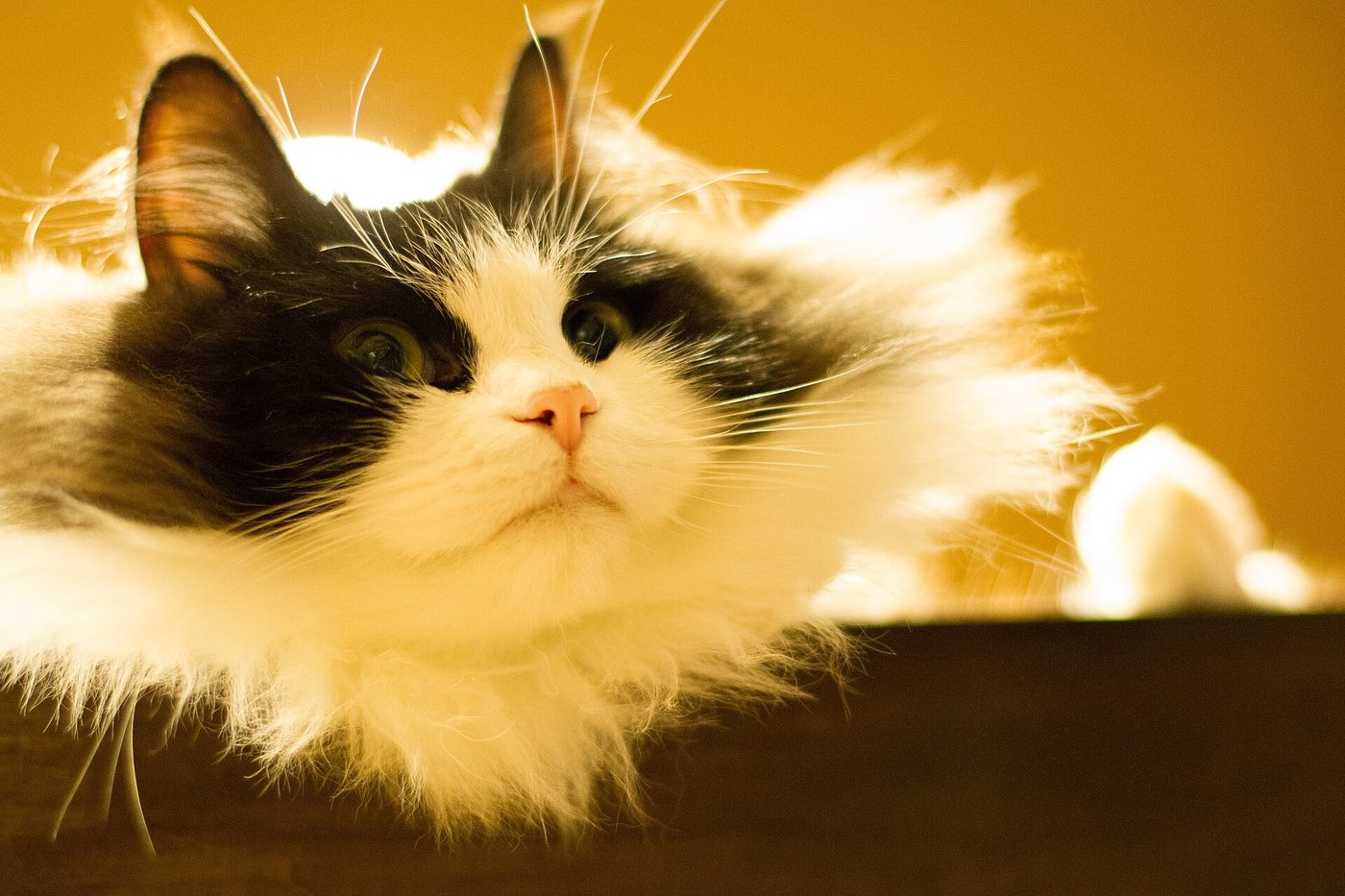
The Ragamuffin is a big, soft rectangle of a cat: a broad, heavily boned body with a padded, plush look, medium-long fur that resembles rabbit fur more than typical cat coat — dense, silky, and remarkably resistant to matting. The head is a broad modified wedge with walnut-shaped eyes in vivid colours, a sweet, almost kittenish expression, and cheeks that give a gentle smile. Unlike its Ragdoll ancestors, the Ragamuffin comes in every colour and pattern, including colourpoint. This is a slow-maturing breed: the full heft and coat may not arrive until age four.
Care & daily life
Despite the luxurious coat, Ragamuffins are low-maintenance: the plush, rabbit-like fur tangles little and needs only a weekly comb-through. The real management issue is their enthusiasm for food and their laid-back nature — weigh portions, schedule active play, and keep this champion lounger lean. They are indoor cats through and through, too trusting for the street. Beyond that: standard care, dental attention, and as much lap time as your schedule allows — a Ragamuffin measures the day in cuddles.
Health & lifespan
The RagaMuffin is generally known for the following health watch-points:
- Hypertrophic cardiomyopathy (HCM) — the Ragamuffin's Ragdoll ancestry includes a known MYBPC3 mutation; a DNA test exists and responsible breeders screen for it, alongside heart ultrasounds
- Polycystic kidney disease (PKD) — Persian outcrosses in the breed's early development make PKD screening a sensible breeder question; DNA testing is available
- Obesity is the breed's everyday enemy — a docile, food-loving, slow-metabolism cat needs measured meals
- Urinary tract issues occur as in other large, sedentary breeds; wet food and water intake help
Living with a RagaMuffin
Ragamuffins are the quintessential indoor family cat: gentle with toddlers, gracious with dogs, and devoted to laps. They suit almost any home where someone is around to be adored by them — families, seniors, first-time owners — and their calm makes them good apartment cats despite their size. What they cannot handle is neglect or the outdoors: too trusting and too home-loving for either. Give them people, soft places, and measured meals, and they return a decade and a half of devotion.
History
The Ragamuffin exists because of a schism. In the 1990s a group of breeders working with Ann Baker's IRCA Ragdolls wanted a broader gene pool and freedom from Baker's tightly controlled franchise system; in 1994 they broke away, and because Baker held rights to the Ragdoll name in her association, the new breed needed a new name — 'Ragamuffin,' chosen for the street-urchin charm of its mixed origins. They outcrossed to Persians, Himalayans, and domestic longhairs to diversify the bloodlines, then closed the studbook as the type stabilised. ACFA and later the CFA (championship status in 2011) recognised the breed, which keeps the Ragdoll's legendary temperament while allowing every colour and a more varied build.