Overview
The Russian Blue is the cat world's quiet aristocrat: a silvered blue coat, emerald eyes, and manners to match. Reserved with strangers and devoted to its own people, it is a breed built on routine, gentleness, and long life. For owners who appreciate a cat that chooses its friends carefully and then commits completely, few breeds are more rewarding — and its reputation as a lower-allergen option brings many people to it in the first place.
Temperament & personality
Gentle, sensitive, and quietly playful. Russian Blues observe before they commit: guests may see only a pair of green eyes from a doorway, while family members get head-butts, fetch games, and a cat that learns the household timetable to the minute. They dislike change and raised voices, and flourish in homes that run on calm routine.
Appearance
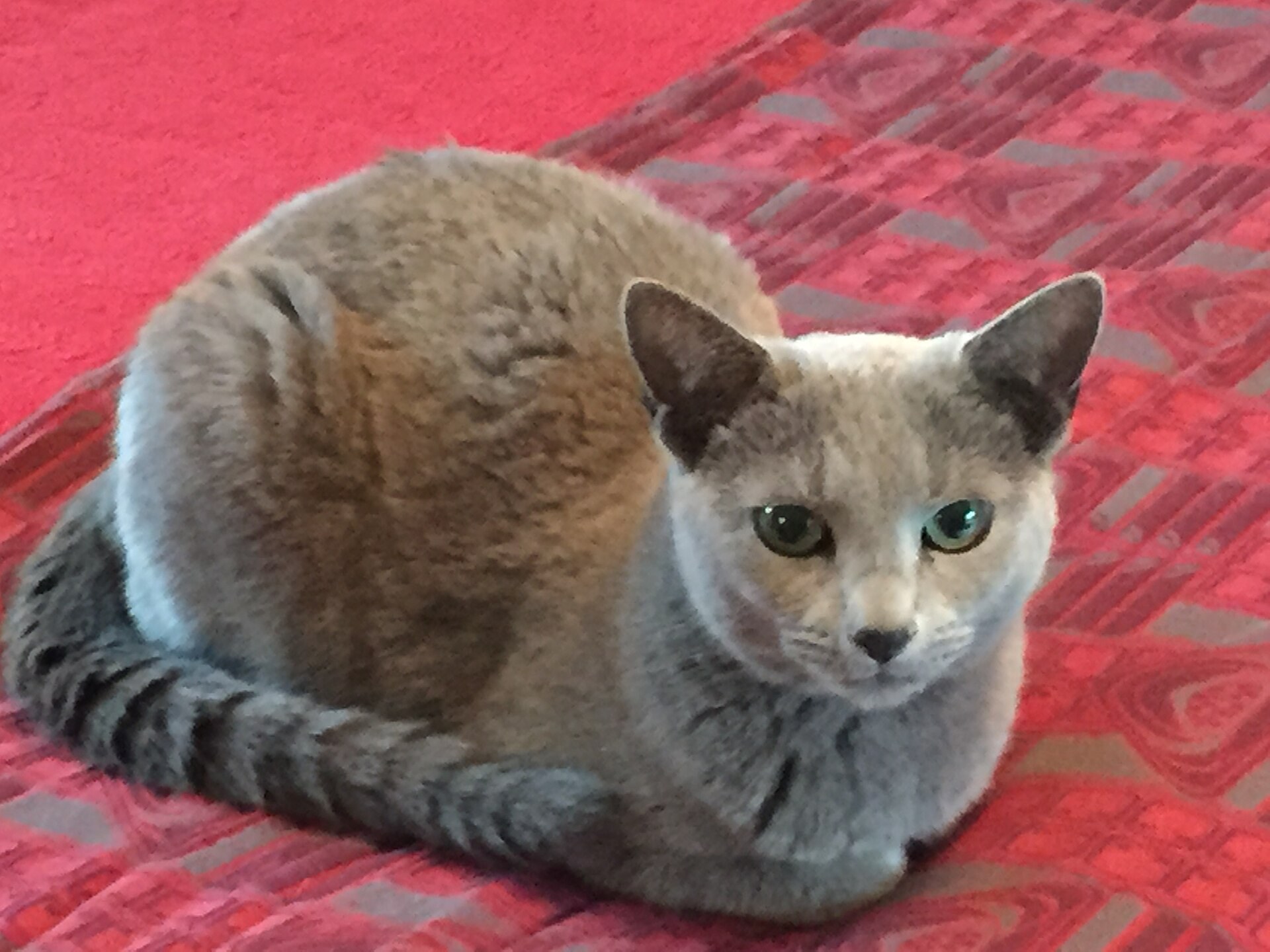
The Russian Blue is elegance in a single colour: a dense double coat of blue-grey, each hair tipped with silver so the cat seems to shimmer as it moves, over a fine-boned, graceful, medium-sized body. The plush coat feels like stroking a seal or a stuffed toy. Vivid green eyes, a 'smiling' mouth line, mauve paw pads, and wide-set ears complete a look that has changed little in over a century.
Care & daily life
The famous double coat is surprisingly easy: a weekly comb keeps it plush and removes loose hair, with a heavier shed in spring. Russian Blues are creatures of routine — regular meal times (they love food and gain easily, so measure it), regular play times, and a calm, predictable home keep them content. Provide a tall scratching post and a warm, quiet retreat they can call their own.
Health & lifespan
The Russian Blue is generally known for the following health watch-points:
- A notably hardy breed with no major breed-specific inherited diseases dominating its profile
- Obesity — Russian Blues love their food and gain readily; weight control is the main health task
- Bladder stones are reported somewhat more often than average; urinary signs deserve prompt vet attention
- Hypertrophic cardiomyopathy (HCM) is seen occasionally, as in many breeds, though it is not a defining breed problem
- Dental disease with age, as in most cats
Living with a Russian Blue
Russian Blues suit calm, orderly homes — quieter families, singles, and seniors — and reward them with deep, lasting loyalty. They are excellent apartment cats, keep themselves immaculate, and cope with working owners better than most breeds, provided routines stay predictable and evenings include play. Noisy, chaotic households with toddlers are their least favourite environment.
History
Sailors' cats from the port of Archangel in northern Russia are said to have reached Britain around 1860, where the striking blue cats — exhibited as 'Archangel cats' at the Crystal Palace in 1875 — were prized, by tradition, at the Russian imperial court and among British royalty. The breed was nearly lost in the Second World War and was rebuilt in Britain and Scandinavia with careful crosses, then developed further in the United States. The CFA recognised the Russian Blue in the late 1940s, and the breed standard has remained remarkably consistent ever since.