Overview
The Scottish Fold may be the most winsome cat alive — round face, folded ears, huge eyes, and a habit of sitting up like a small furry Buddha. It may also be the most ethically complicated breed in the cat fancy, because the very gene that folds those ears also disorders cartilage throughout the body. A fair profile has to hold both truths at once: these are sweet, adaptable, beloved cats, and buying one responsibly means understanding osteochondrodysplasia before you fall for the ears.
Temperament & personality
Sweet-tempered, calm, and adaptable, with a soft voice and a gentle devotion to their people. Folds are famous posers — sitting upright on their haunches, sleeping flat on their backs, flopping into odd positions — and they take household changes in their stride. They are moderately playful rather than hyper, and bond strongly, often choosing one favourite human to shadow.
Appearance
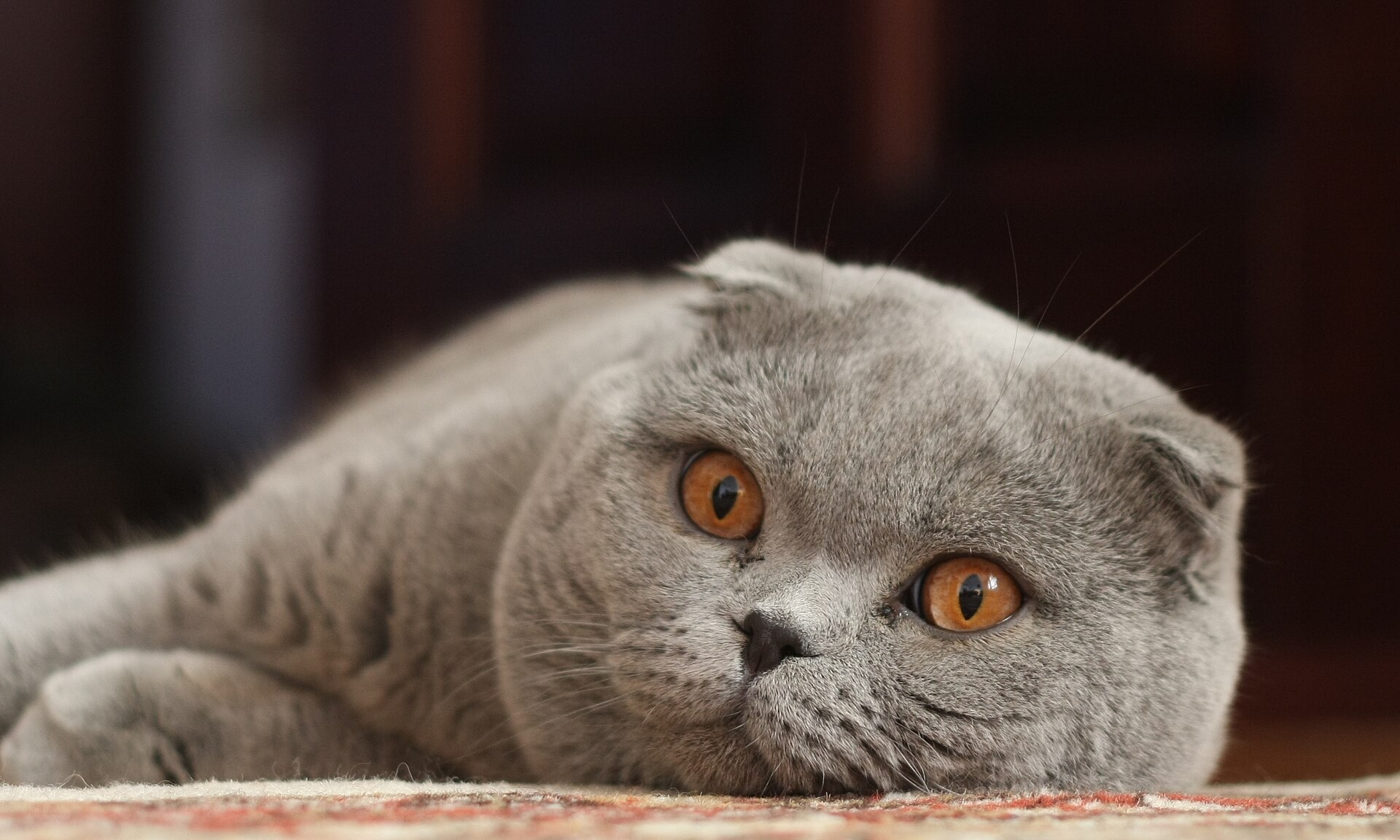
The Scottish Fold is defined by its ears: a genetic mutation folds them forward and down against a notably round head, giving the cat a permanent 'owl in a frightened teapot' charm, as one early description put it. Everything else is round too — round eyes, round cheeks, a medium, well-padded body — on a short to medium plush coat. Folds come in nearly all colours and patterns. Kittens are born with straight ears; the fold, if it comes, appears at around three to four weeks. Cats of the breed with normal ears are called Scottish Straights.
Care & daily life
Coat care is easy — a weekly brush. The care that matters is monitoring: watch movement, jumping willingness, and tail flexibility throughout life, and keep the cat lean, because extra weight stresses already vulnerable joints. Handle the tail gently and never force it. Regular vet checks with honest conversation about pain and mobility are part of responsible Fold ownership, and any stiffness or reluctance to jump deserves prompt attention.
Health & lifespan
The Scottish Fold is generally known for the following health watch-points:
- Osteochondrodysplasia — the cartilage disorder caused by the fold gene itself: it affects joints as well as ears, producing tail stiffness, thickened limbs, and painful arthritis ranging from mild to severe; it is present in all fold-eared cats in some degree and is the reason several registries and countries restrict the breed
- Polycystic kidney disease (PKD) occurs in the breed (DNA-testable)
- Hypertrophic cardiomyopathy (HCM) is reported; screening is advisable
- Obesity worsens joint pain, so weight control is genuinely protective
- Fold-to-fold matings produce severely affected kittens and are considered unethical by every responsible breeder
Living with a Scottish Fold
Scottish Folds suit calm to moderately active homes — families, singles, and seniors alike — and adapt gracefully to apartment life. They are undemanding companions who like their people nearby. The condition of ownership is awareness: an owner willing to watch mobility, manage weight, and budget for joint care if it is needed.
History
The breed began in 1961 on a farm near Coupar Angus in Perthshire, Scotland, where a shepherd named William Ross noticed a white barn cat with folded ears named Susie. Susie's kittens carried the trait, and Ross, with geneticist Pat Turner, established that a single dominant gene caused the fold. The breed was exported to the United States in the 1970s and recognised by the CFA in the late 1970s — but notably, Britain's own GCCF withdrew recognition over health concerns, and breeding Folds is restricted or banned in several countries. The controversy is part of this breed's permanent story, and honest breeders acknowledge it.