Overview
The Sphynx divides opinion at first sight and wins hearts on first touch: warm as a suede hot-water bottle, wrinkled like a tiny elephant, and more affectionate than almost any breed alive. Under the hairless novelty is a substantial, muscular, athletic cat with a comedian's timing and a shadow's loyalty. It is also, honestly, a high-maintenance breed — just in skin care and companionship rather than in brushing.
Temperament & personality
Devoted, clownish, and relentlessly social. Sphynx cats greet their people at the door, ride on shoulders, burrow under blankets, and perform for an audience whenever one is available. They are intelligent, busy, and talkative, and they do not do well emotionally in homes where they are alone all day. Owners describe them as part cat, part dog, part toddler — expect to be followed, sat on, and supervised forever.
Appearance
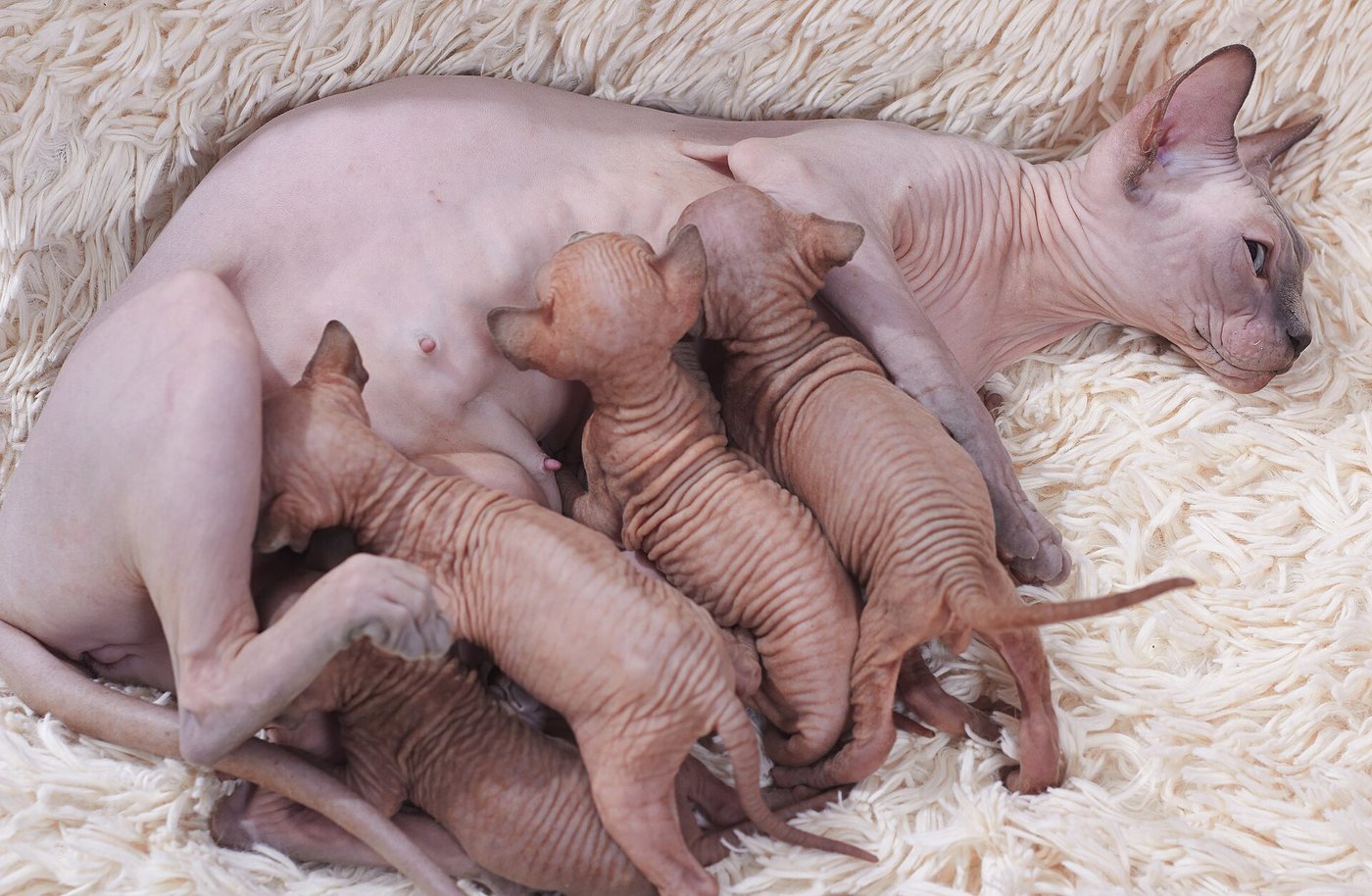
The Sphynx is hairless — or nearly: most cats carry a fine down like warm suede or peach fuzz over a muscular, medium-sized body. The skin is wrinkled, especially around the shoulders and between the large bat ears, and shows the colour and pattern the fur would have had. Add a wedge head with prominent cheekbones, huge lemon-shaped eyes, long toes, and a whippy tail, and the result is the most striking silhouette in the cat world.
Care & daily life
Hairless does not mean low-maintenance. Skin oils that fur would absorb build up on the skin, so Sphynx cats need a gentle bath roughly weekly, regular ear cleaning (they produce abundant dark ear wax), and attention to oil around the nails. They feel the cold and most appreciate sweaters and heated beds in winter; in summer they need shade and cat-safe sun protection, because hairless skin sunburns. Feed generously — a high metabolism keeps that exposed body warm.
Health & lifespan
The Sphynx is generally known for the following health watch-points:
- Hypertrophic cardiomyopathy (HCM) — the breed's leading health concern; there is no DNA test, so responsible breeders scan breeding cats' hearts by ultrasound regularly (ideally yearly)
- Hereditary myopathy (a muscle-weakness condition inherited from the Devon Rex side of its history) occurs rarely and is DNA-testable
- Skin conditions including urticaria pigmentosa and sebaceous issues; oily skin needs routine care
- Sunburn and skin damage — hairless skin has no UV protection
- Dental disease rates are notable; regular dental checks help
Living with a Sphynx
Sphynx cats are indoor cats, full stop, and they suit people who want maximum feline involvement: they ride shoulders, sleep under covers, and 'help' with everything. They are excellent with children and other pets and miserable when left alone for long hours — many owners keep two. Warm homes with someone around most of the day are ideal.
History
Hairless cats appear sporadically in history, but the modern Sphynx began in Toronto in 1966, when a domestic cat produced a hairless kitten named Prune. A second line emerged in Minnesota in the 1970s from barn cats Epidermis and Dermis. Breeders in Canada, the US, and Europe combined these lines with coated cats (often American Shorthairs and Devon Rex) to build a healthy gene pool while keeping the hairless trait (a keratin-gene variant, inherited recessively). TICA granted championship status in 2002 and the CFA followed; the breed's fame has grown steadily ever since.