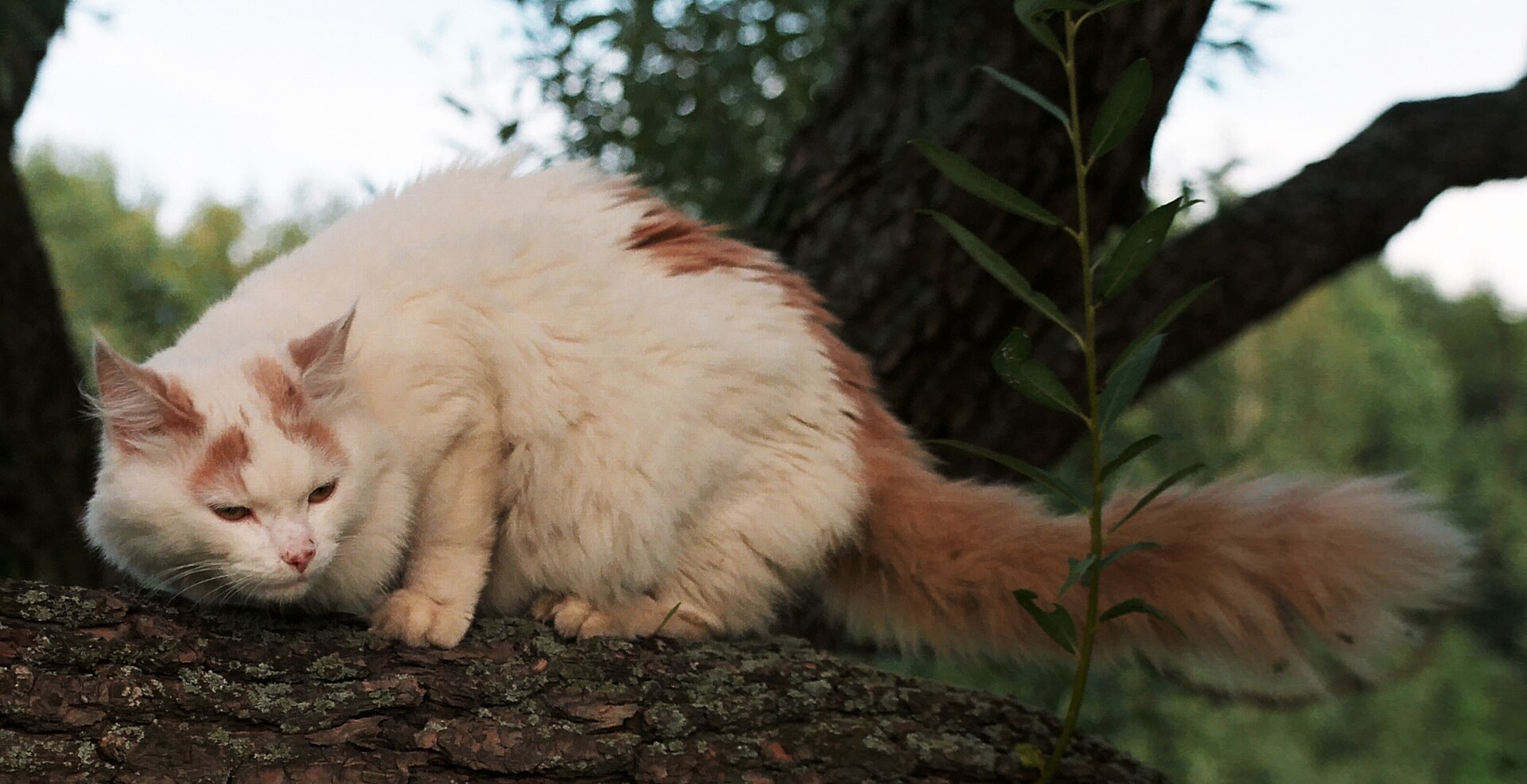
Overview
The Turkish Van is a natural athlete with a signature look and a startling hobby. Everything about it is a little more than other cats: bigger, stronger, cleverer, more energetic, more devoted to its chosen people — and more likely to be found in the bath. Its mostly-white, colour-capped appearance gave cat genetics the term 'Van pattern,' and its hardy landrace constitution gives it a clean health slate. This is not a beginner's ornament; it is a substantial, opinionated companion for people who like their cats with presence.
Temperament & personality
Energetic, intelligent, and charmingly strong-willed. Turkish Vans bond deeply with their families — often with a chosen favourite — but affection is on their terms: they follow, supervise, play hard, and then take themselves off to a high perch to think it over. They are powerful athletes and problem-solvers who learn doors, fetch, and household routines quickly, and their love of water is real, from tap-dripping games to outright paddling. Loyal, funny, and occasionally imperious, a Van runs its household with confidence.
Appearance
The Turkish Van wears one of the most distinctive patterns in cats: a chalk-white body with colour — traditionally rich chestnut red, but also black, blue, cream, or tortie — confined almost entirely to the top of the head and the tail, the so-called 'Van pattern' now named after this breed. The coat itself is unique: a single, semi-long, cashmere-soft layer with no undercoat, water-resistant enough that it dries remarkably fast, growing fuller in winter and shedding down to a shorter summer coat. The body is big, powerful, and slow to mature; the eyes are large and may be amber, blue, or one of each.
Care & daily life
The single, silky coat is one of the easiest long coats to keep: it resists matting, needs one good comb a week, and does not require the daily discipline of a Persian. Expect a pronounced seasonal difference — a full winter mane and a much sleeker summer cat. Turkish Vans are strong, athletic, high-energy animals who need robust climbing equipment, serious play, and — unusually — access to water: a dripping tap, a shallow tray, or supervised paddling will delight most of them. They are indoor cats; their value, rarity, and strong hunting roaming instincts argue firmly for it.
Health & lifespan
The Turkish Van is generally known for the following health watch-points:
- The Turkish Van has no established breed-specific inherited diseases — one of the genuine advantages of a natural landrace with a broad founding population
- Size and appetite make weight and joint care the routine priorities, particularly in neutered indoor males
- White-coated, blue-eyed cats in general can be deaf; in Van-pattern cats (with colour on the head) this is far less of an issue than in solid whites, but hearing is a standard kitten check
- Dental disease is the common mid-life issue, as in most breeds
Living with a Turkish Van
Turkish Vans suit active, experienced households that can channel a big, clever, athletic animal: families with older children, homes with dogs, and people who enjoy an interactive cat with opinions. They are devoted but not deferential — a Van decides where it sits, which is usually the highest point in the room, and expects the household to adapt. They are a poor match for anyone wanting a quiet, ornamental lap cat, and too boisterous for fragile households; in the right home they are magnificent.
History
The Turkish Van is an ancient natural breed from the rugged region around Lake Van in eastern Anatolia, where mostly-white cats with head and tail markings lived for centuries, semi-isolated by mountains and winters — and reputed locally to swim in the lake. The modern breed dates to 1955, when British photographers Laura Lush and Sonia Halliday, working in Turkey, were given two such kittens and brought them home; further imports followed, and the distinctive, consistent pattern convinced British registries (GCCF recognition came in 1969) that this was a true breed, not a random marking. In Turkey the Van cat is a national treasure, with protected breeding programmes at Van itself. The breed reached the United States in the 1980s and remains uncommon worldwide.