Overview
The Easter Egger is the backyard world's favourite not-a-breed: a cross, usually involving Ameraucana or Araucana ancestry, bred for one delightful trait — the blue-egg gene. Hens lay blue, green, olive, or pinkish eggs, wear beards and muffs like Victorian gentlemen, come in every plumage colour going, and bring hybrid vigour and personable temperaments along for free. Sold by almost every hatchery in America, often under confusing names, they deserve their honest one.
Temperament & personality
Varied, in the best way. Easter Eggers are typically friendly, curious, and busy, with a wider range of individual character than pure breeds — one hen is a shoulder-rider, her sister a dignified loner. They are rarely bullies and rarely victims: useful citizens of a mixed flock.
Appearance
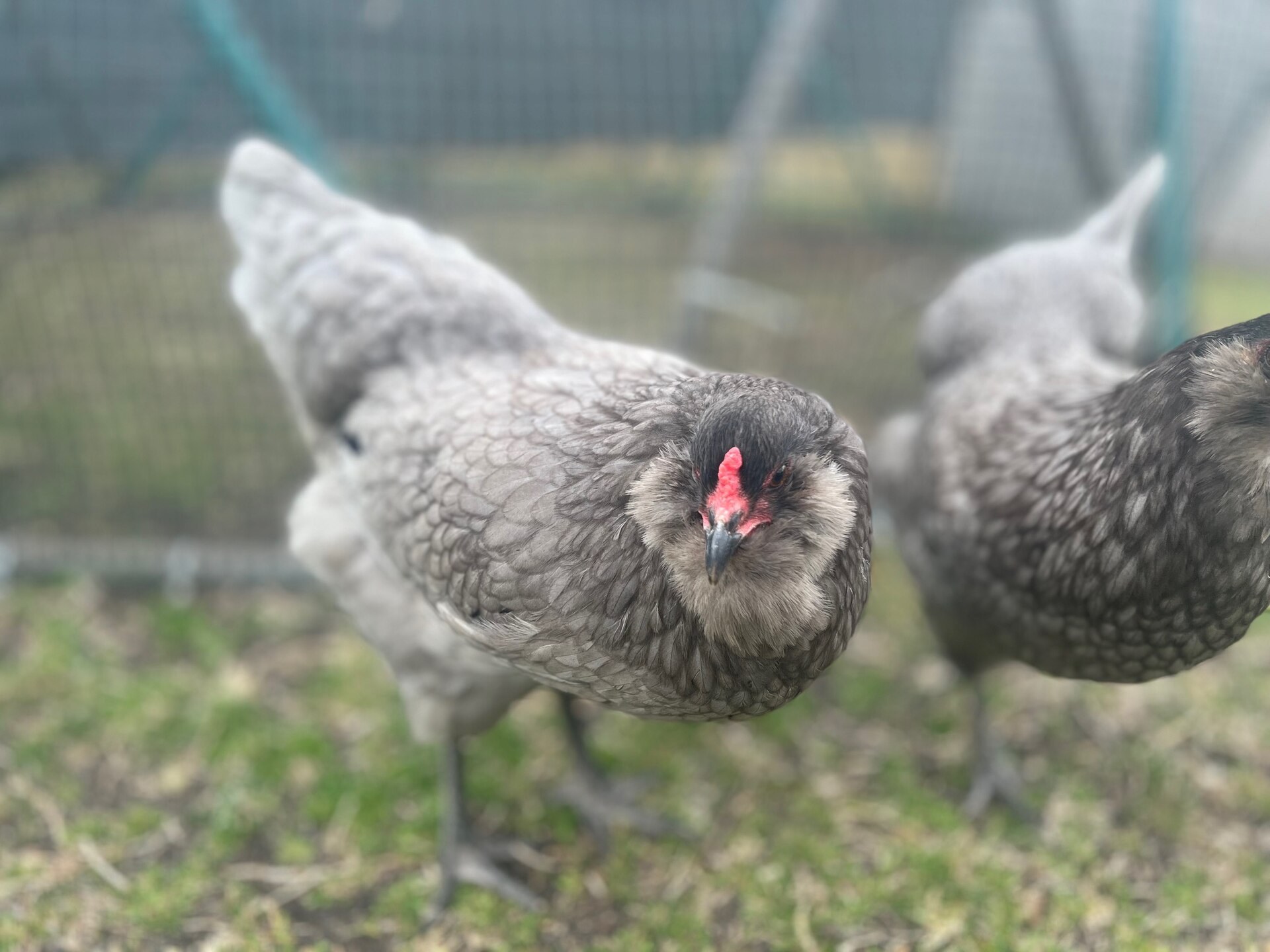
Anything goes. Thanks to their Araucana and Ameraucana ancestry, most Easter Eggers have muffs and beards framing the face, a small pea comb, and often slate or greenish legs — but plumage can be any colour or pattern, and no two hens in a batch need match. That variety is the point: an Easter Egger flock looks like a box of assorted chocolates.
Care & daily life
Care is standard and forgiving: layer feed, grit, water, secure housing. The pea comb is small and frost-resistant, and the mixed genetics bring hybrid vigour — these are generally robust birds. The one piece of honest expectation-setting: egg colour is a lottery per bird. A chick sold as an Easter Egger may lay blue, green, olive, pinkish, or occasionally plain brown; you find out at about 20 weeks, and it is part of the fun as long as nobody promised you blue.
Health & lifespan
The Easter Egger is generally known for the following health watch-points:
- No breed-specific diseases — hybrid vigour is a genuine advantage
- Marek's disease and standard parasites, as for all chickens
- Beards and muffs can harbour mites and get mucky in wet drinkers — keep an eye
- Occasional cross-beak in some hatchery lines; check chicks early
- Reproductive issues in older hens, as with any productive layer
Living with a Easter Egger
Easter Eggers suit backyard keepers and families who keep chickens for joy as much as yield, and children love the daily egg hunt when the basket might hold blue, green, and pink. They mix into any flock, live the usual 5–10 years, and ask little beyond standard care. Buyers wanting guaranteed blue eggs from a defined breed should look at true Ameraucanas or Cream Legbars instead.
History
The blue egg comes from Chilean Araucanas, brought to North America in the early 1900s. Breeders standardised related stock into the Ameraucana in the 1970s–80s — but hatcheries kept selling the colourful, unstandardised crosses under a tangle of names ('Araucana', 'Americana'), and 'Easter Egger' emerged as the honest label for them. Far from being a failed purebred, the Easter Egger became one of the most popular backyard birds in America precisely because every hen is an individual.