Overview
The Akita is Japan's great spitz breed: a big, dignified guarding and hunting dog that forms one of the deepest bonds of any breed with its family. In Japan it symbolizes good health, happiness, and long life, and small Akita statues are traditional gifts for newborns and the ill. That devotion has a flip side — Akitas are reserved with strangers, often intolerant of unfamiliar dogs, and strong-willed enough to need an owner they respect. In the right home, few dogs are more quietly devoted.
Temperament & personality
Dignified, reserved, and intensely loyal to its own people. Akitas are famously quiet — many barely bark — and they watch the world with calm confidence rather than excitement. They tend to choose their family and guard it, which makes early socialization crucial: a well-raised Akita is steady and self-assured, while an under-socialized one can be suspicious and difficult. They are independent thinkers who respond to respectful, consistent handling, never force.
Appearance
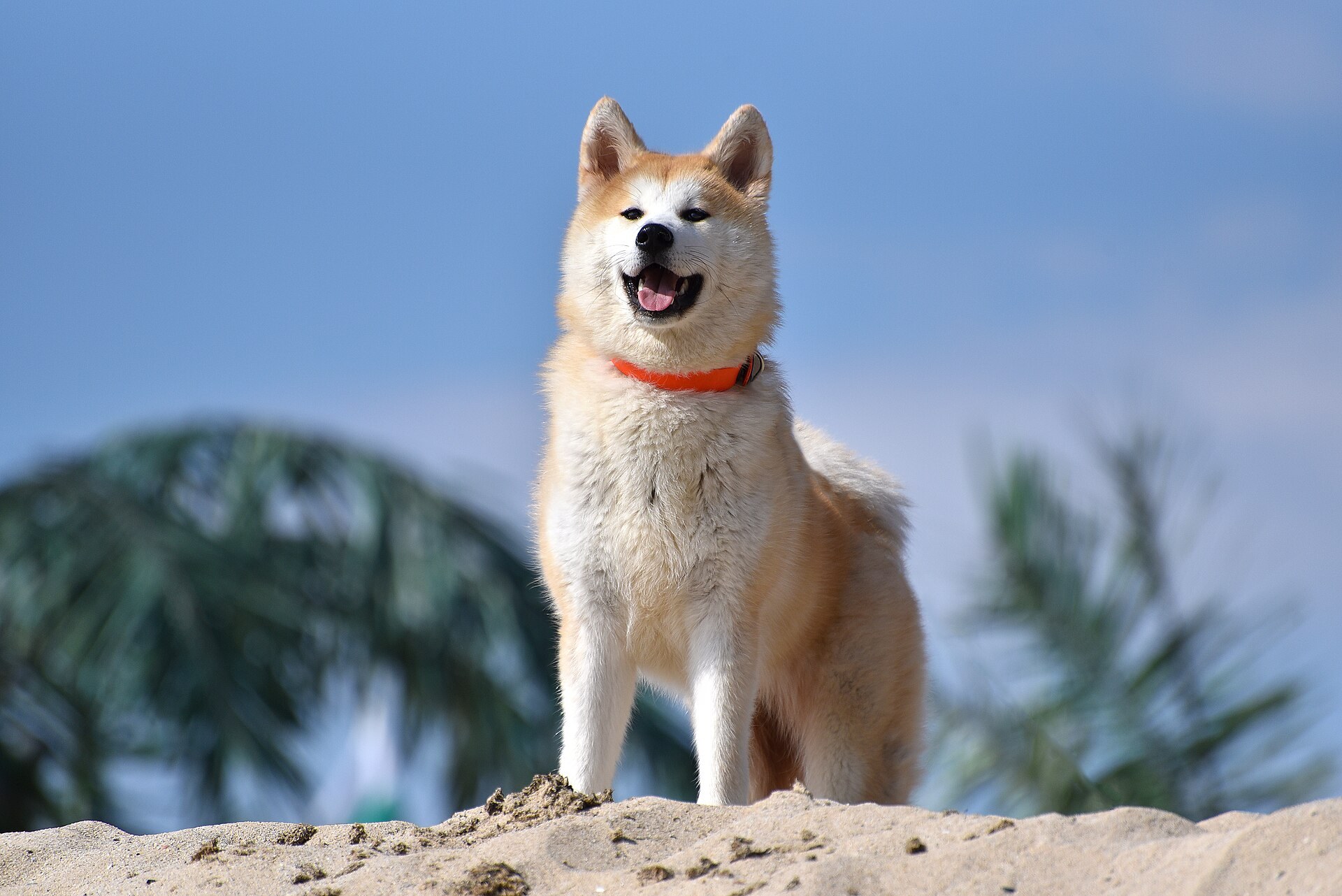
A large, powerful dog with a broad head, small upright triangular ears, deep chest, and a thick plush double coat that curls over the back in a tail carried high. Colours include red, sesame, brindle, and white. Everything about the silhouette — heavy bone, dense coat, dignified carriage — speaks of a northern dog built for cold winters and serious work.
Care & daily life
Akitas need one to one and a half hours of exercise a day and, more importantly, consistent leadership and early, thorough socialization. Training must be firm, calm, and reward-based; harsh methods backfire with this proud breed. The coat needs weekly brushing and serious effort during the twice-yearly blowouts. They do best with experienced owners who want a close bond with a single family dog rather than a social butterfly.
Health & lifespan
The Akita is generally known for the following health watch-points:
- Hip dysplasia
- Autoimmune hypothyroidism — thyroid screening is a breed priority
- Progressive retinal atrophy and other eye conditions
- Sebaceous adenitis, a skin condition that damages hair follicles
- Bloat (gastric dilatation-volvulus), a risk in any large, deep-chested breed
Living with a Akita
Akitas want to be indoor family dogs — silent, clean, and catlike about grooming themselves — with a securely fenced yard. They suit confident, experienced owners, typically do best as the only dog or with an opposite-sex companion, and are a poor choice for first-time owners or busy dog-park households. Their quiet dignity at home hides real strength and guarding instinct, so management around visitors matters.
History
The breed comes from the snowy Akita prefecture of northern Japan, where dogs of this type were used for centuries to hunt bear, boar, and deer and to guard homes. In 1931 the Akita was declared a Japanese natural monument. Its most famous ambassador was Hachiko, who waited at Tokyo's Shibuya station nearly every day for almost ten years after his owner's death in 1925. Helen Keller brought the first Akita to the United States in 1937, and returning servicemen after the Second World War spread the breed in America.