Overview
The Australian Shepherd is a ranch-bred herding machine: intense, brilliant, tireless, and striking to look at. Despite the name it is an American breed, shaped by western cattlemen who needed a dog that could think independently all day in rough country. An Aussie measures life in jobs completed, and it will reorganize your household around that principle if you don't provide structure first.
Temperament & personality
Loyal, eager, and often velcro-close to their people, Aussies are reserved with strangers without being aggressive. Their herding intensity can surface as chasing and nipping at running children or bikes — channel it, don't punish it, and teach a strong off-switch. They are trick-training superstars and thrive on learning new work weekly.
Appearance
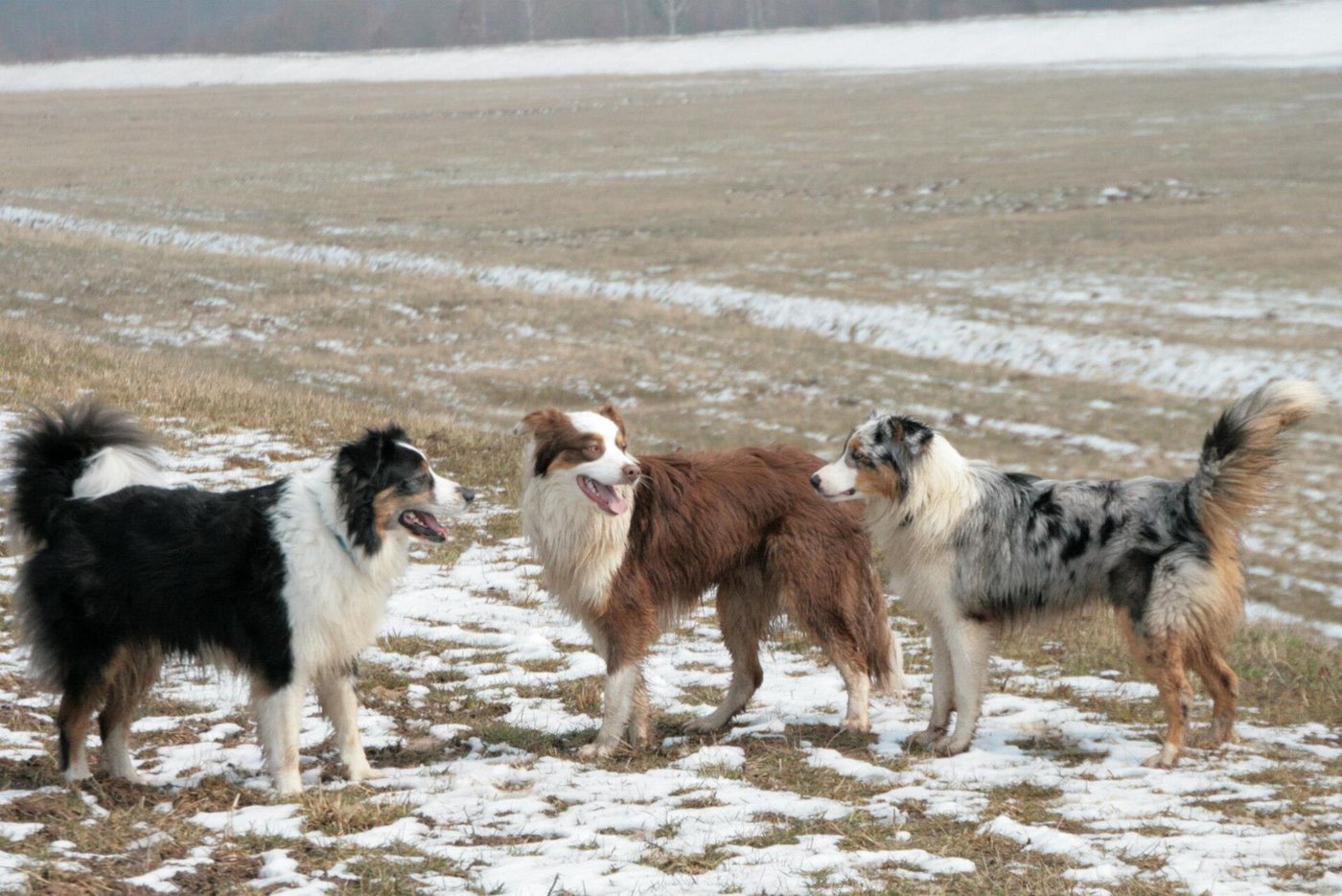
A medium, muscular, athletic dog with keen, almond eyes and a medium-length double coat in striking colours — blue merle, red merle, black, or red, often with white and copper markings. Many have one blue eye or two different-coloured eyes, and tails range from full to naturally bobbed.
Care & daily life
This breed wants one and a half to two hours a day of combined exercise and work — herding, agility, obedience, fetch with rules, anything with a point. A tired Aussie is a good Aussie; a bored one remodels. The coat needs brushing once or twice a week, more when shedding. Reward-based training with variety suits their intelligence.
Health & lifespan
The Australian Shepherd is generally known for the following health watch-points:
- The MDR1 gene mutation — sensitivity to ivermectin and several other drugs — is common; DNA test and inform your vet
- Hip and elbow dysplasia
- Inherited eye conditions including cataracts and collie eye anomaly
- Epilepsy occurs in some lines
- Double-merle breeding can produce deaf and blind puppies — a breeding practice to avoid
Living with a Australian Shepherd
Aussies belong with active people who want a genuine working partner — ranch life is ideal, but suburban agility careers work too. They are intense housemates for sedentary homes and need inclusion in family life, not isolation in a yard. Owners who love projects will find this breed endlessly rewarding.
History
The breed was refined in the ranch country of the American West in the late 1800s and early 1900s, likely from collie-type dogs brought by Basque shepherds — some of whom had passed through Australia, giving the breed its misleading name. Rodeo performances by trick dogs like Jay Sisler's made the breed famous mid-century, and it was recognised by the AKC only in 1991.