Overview
The Beauceron is France's answer to the all-purpose working dog: big enough to guard a flock or a farm, agile enough to herd all day, and biddable enough to serve in uniform. Less famous than its German counterparts, it has the same serious working character wrapped in an elegant, rustic package. Owners who know the breed describe a dog of unusual devotion — calm in the house, formidable outside it, and happiest with a purpose.
Temperament & personality
Faithful, gentle with its family, and quietly confident. Beaucerons are natural guardians who assess before acting; they are not excitable, but they are committed. With their own people — including children they know — they are affectionate and patient. Intelligence runs high, and so does sensitivity to their handler's mood; they thrive on consistent, fair leadership and bore or become pushy without work to do.
Appearance
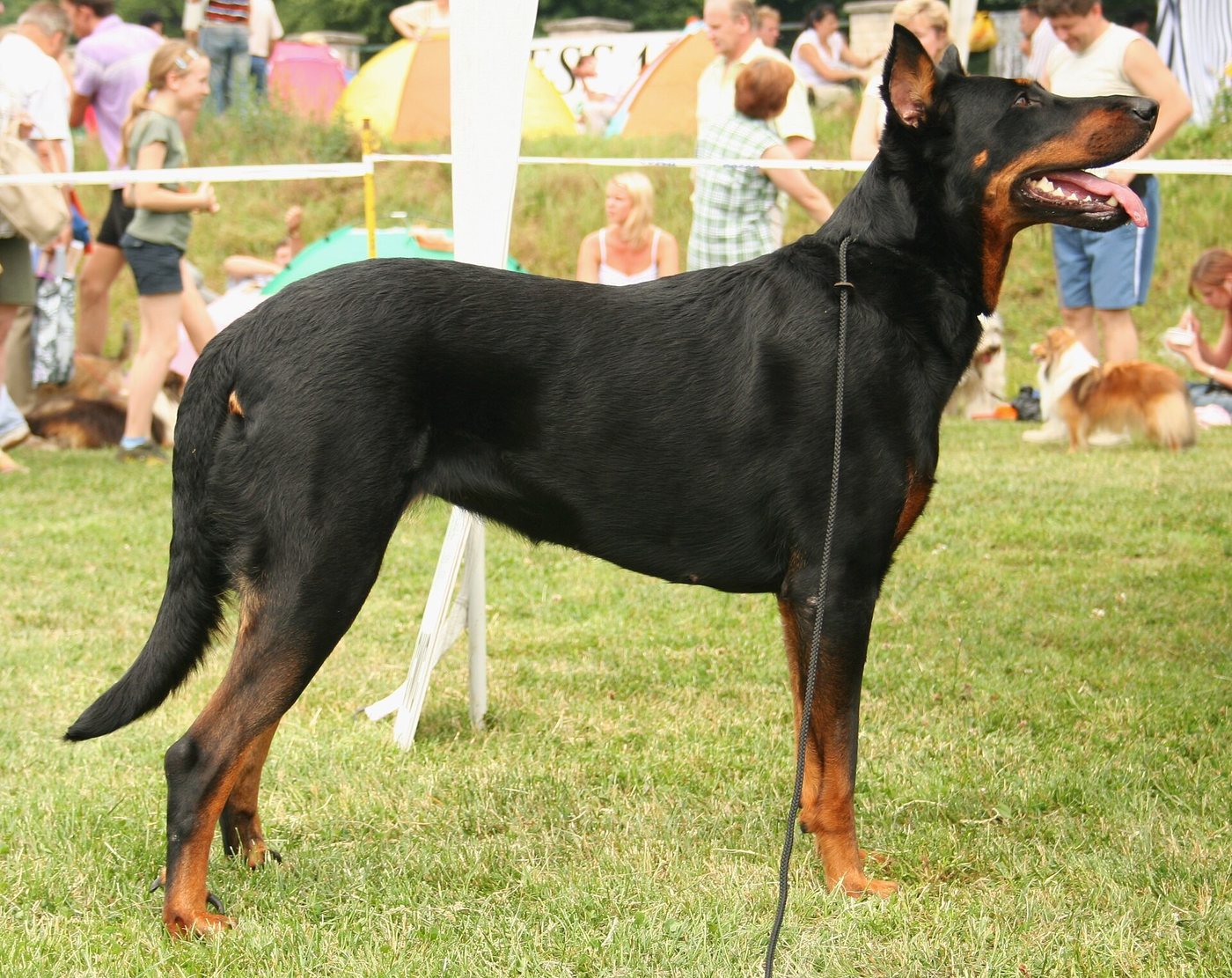
A large, athletic, rustic herding dog: black or harlequin grey coat, tan markings on the legs that give it the nickname Bas Rouge ('red stockings'), a long head with cropped or natural drop ears depending on country, and the breed signature — double dewclaws on the hind legs, required by the standard. The overall impression is of an elegant, powerful French farm dog.
Care & daily life
Beaucerons need one and a half to two hours a day of combined exercise, training, and work — this is a guardian-herder that measures life in duties. They respond to calm, confident, reward-based training and wilt or push back under harshness. Early socialization is essential for a breed with strong guarding instinct. Coat care is simple: a weekly brush, more during shedding seasons; leave the double dewclaws intact and keep their nails trimmed. Best bought from breeders who screen hips and hearts.
Health & lifespan
The Beauceron is generally known for the following health watch-points:
- Hip dysplasia
- Bloat (gastric dilatation-volvulus) — a risk for a large, deep-chested breed
- Dilated cardiomyopathy is reported; heart screening is recommended
- Allergies and skin sensitivities occur in some lines
- Generally a sound working breed when hips and hearts are screened
Living with a Beauceron
Beaucerons need space, structure, and a confident, experienced owner — ideally a home with land or a genuinely active lifestyle and a job in the routine, whether herding, sport, or daily training. They are devoted family guardians who shadow their people, but their size, strength, and guarding instinct make them unsuitable for novice or low-activity homes. Early and ongoing socialization is not optional.
History
Dogs of Beauceron type appear in French manuscripts from the 1500s, working the plains of the Beauce region near Paris as all-purpose shepherds — moving flocks by day and guarding them by night. The breed was separated from the long-haired Briard in the late 1800s. Beaucerons served in both World Wars as messenger, supply, and guard dogs, work the French military and police still use them for today.