Overview
No breed wears a disguise better than the Bedlington: a dog that looks like a freshly groomed lamb and works like a terrier. Developed by Northumberland miners as a fast, fearless hunter, it is now better known as one of the mildest, most charming companion terriers — low-shedding, affectionate, and elegant. Buyers must do one piece of homework: its inherited liver condition is entirely manageable through DNA-tested breeding, and responsible breeders all test.
Temperament & personality
Mild, gentle, and charming is the standard's summary, and it holds — at home. Bedlingtons are affectionate, playful, and notably softer-natured than most terriers, often bonding closely with the whole family. Outdoors the heritage shows: quick, courageous, and interested in small furry things. They are intelligent and trainable with the usual terrier caveat — keep it fun, keep it fair, and expect opinions.
Appearance
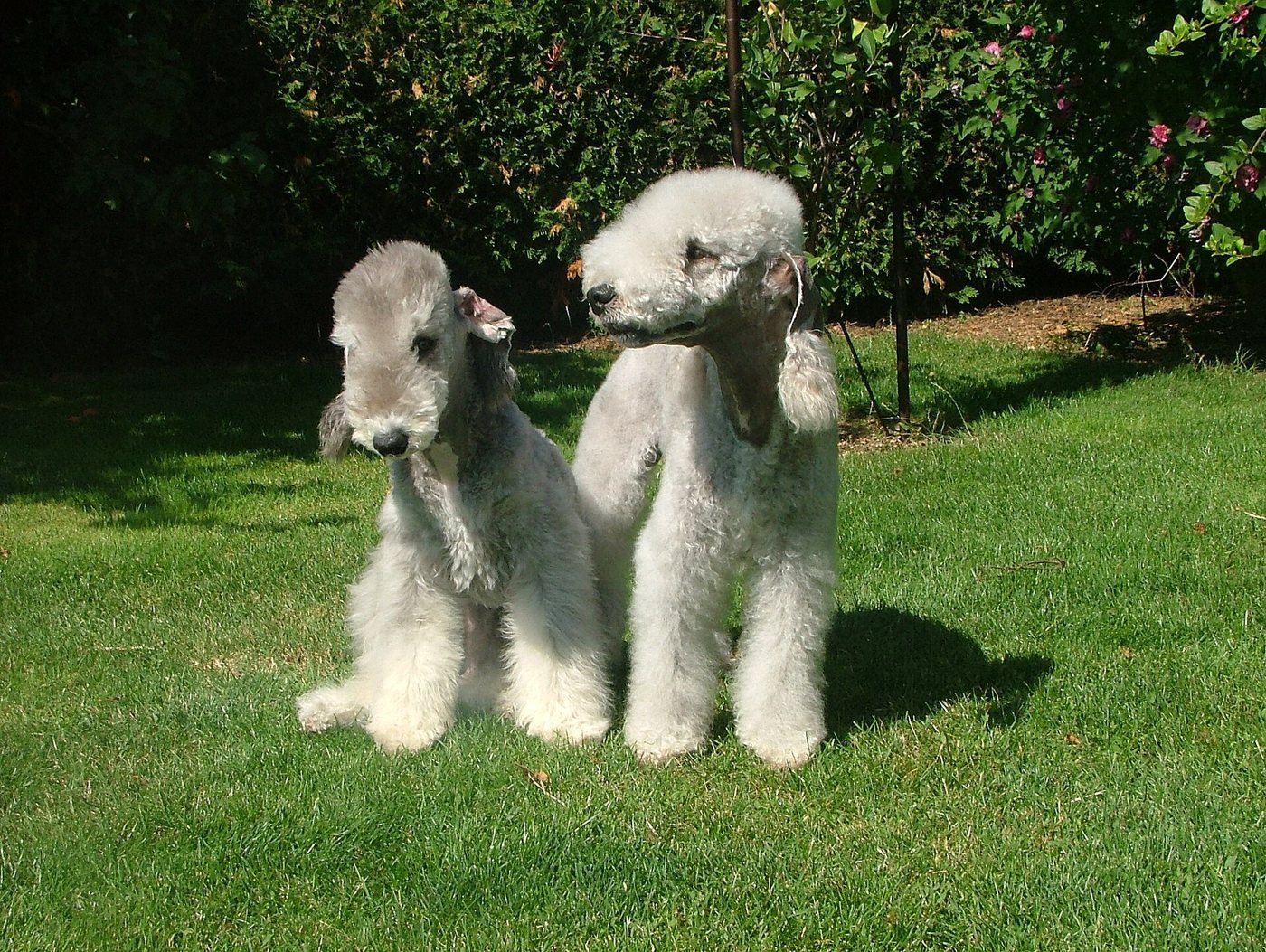
The 'lamb in dog form': a Bedlington carries its curly, crisp coat in a distinctive topknot, with a pear-shaped head, triangular drop ears with silky tassels, an arched loin, and a graceful, almost whippet-like outline. Coat colours include blue, sandy, and liver, often with tan points; puppies are born dark and lighten over the first year or two.
Care & daily life
Bedlingtons need about an hour of exercise a day and enjoy being surprisingly athletic — they were working terriers, after all. Coat care is the main task: the curly coat mats if neglected, so brush every few days and plan a scissor or clipper trim every six to eight weeks to keep the characteristic shape. They dig, chase, and retain a terrier's vermin drive, so supervise around small pets. The crucial purchase question is copper toxicosis: only buy from breeders who DNA-test and can show results.
Health & lifespan
The Bedlington Terrier is generally known for the following health watch-points:
- Copper toxicosis — hereditary copper-storage liver disease; DNA testing (COMMD1) is essential in breeding stock
- Total retinal dysplasia and other inherited eye conditions, including cataracts
- Patellar luxation
- Distichiasis (extra eyelashes) occurs in the breed
- Otherwise a long-lived breed — 11–16 years is typical
Living with a Bedlington Terrier
Bedlingtons adapt well to houses and apartments, suiting families, singles, and retirees who can provide daily exercise and grooming. They are affectionate, people-oriented dogs that enjoy the sofa as much as the walk. Their low shedding suits tidy households, while their terrier instincts — digging, chasing, occasional sharpness with strange dogs — still need normal terrier management.
History
The breed was shaped in the 1800s around the mining town of Bedlington in Northumberland, England, by miners and hunters who wanted a fast, game terrier for otters, badgers, and vermin — and, legend says, for poaching. Earlier it was known as the Rothbury Terrier, after the local forest. Its speed and grace made it a favourite of the gentry as well, an unusual double life for a working terrier.