Overview
The Belgian Malinois is one of four Belgian shepherd varieties, named for the city of Malines — and it has become the world's premier military and police working dog, serving in roles from detection to special operations. That capability comes with a warning label every honest breeder repeats: this is not a pet for an average household. A Malinois is a full-time project — brilliant, driven, athletic, and relentless — that rewards expert handlers like almost no other breed and overwhelms everyone else.
Temperament & personality
Confident, intensely loyal, and always switched on. Malinois bond fiercely to their handlers, learn at remarkable speed, and possess powerful chase and grip drives inherited from herding and refined by protection work. They are sensitive to their handler's mood and harsh handling backfires; they need clear structure, huge amounts of training, and a real job — sport, service, or serious daily work. Without that, their energy and intelligence turn to anxiety, reactivity, and destruction.
Appearance
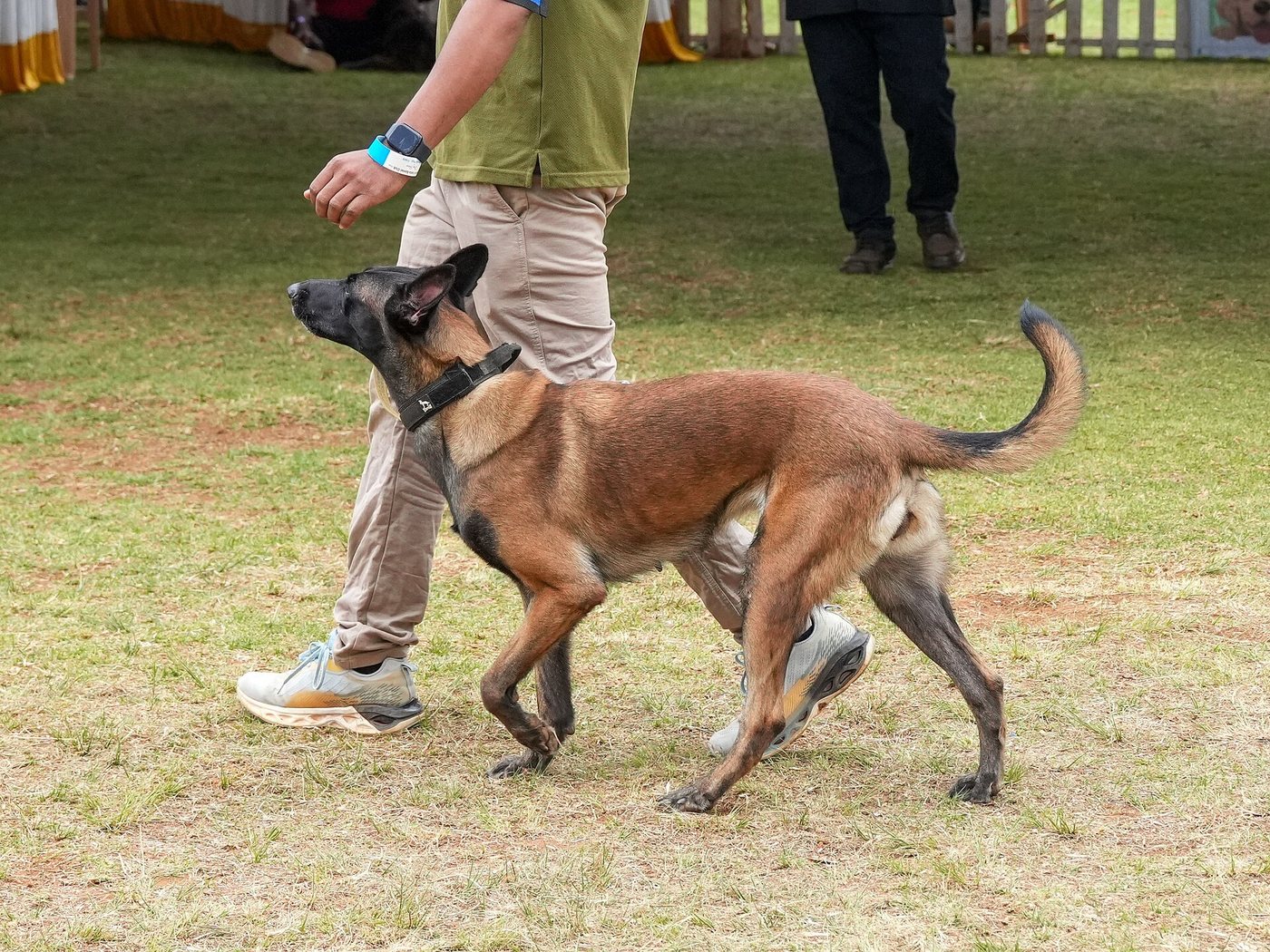
A square, elegant, medium-large dog that looks like a slightly smaller, finer German Shepherd: short fawn-to-mahogany coat with black overlay, black mask, and upright black-tipped ears. The build is all athlete — deep chest, level back, and effortless, ground-covering movement. Nothing about the Malinois is exaggerated; it is a machine built for endurance and agility.
Care & daily life
Two or more hours a day of combined exercise, training, and purposeful work is the honest baseline — and the work matters as much as the miles. Most pet Malinois need a sport or discipline: IPO/IGP, agility, tracking, scent work, or advanced obedience. The short coat needs only weekly brushing. Socialization must be extensive and lifelong, and management around small animals and fast-moving children needs thought, because chase is hardwired.
Health & lifespan
The Belgian Malinois is generally known for the following health watch-points:
- Hip and elbow dysplasia
- Eye conditions including cataracts, progressive retinal atrophy, and pannus
- Epilepsy occurs in Belgian shepherd breeds
- Bloat (gastric dilatation-volvulus) is a risk in this deep-chested, high-drive breed
- Generally a hardy breed — working lines are bred hard for health and soundness
Living with a Belgian Malinois
Malinois belong with experienced working-dog handlers, trainers, and dog-sport competitors who want a dog as a serious daily commitment. They are usually a poor match for first-time owners, sedentary homes, households with very young children, and anyone whose interest comes mainly from films and social media. In the right hands they are extraordinary; in the wrong ones, they are one of the most commonly surrendered 'too much dog' breeds.
History
Belgian shepherds were standardized in the 1890s under Professor Adolphe Reul, who sorted the country's herding dogs into varieties; the short-haired fawn dog of the Malines region became the Malinois. Belgian police and military adopted the breed early, and through the 20th century its reputation as a patrol and detection dog grew until it displaced the German Shepherd in many military kennels — a Malinois named Cairo served with the US Navy SEAL team on the 2011 bin Laden raid.