Overview
The Bolognese has been a professional companion for roughly two thousand years: a small white bichon from Bologna that Renaissance nobility treasured, painted, and exchanged as diplomatic gifts. It is less of a clown than its Bichon Frise cousin — earnest, devoted, and quietly playful, with a single tousled coat that sheds almost nothing. Nearly lost when its aristocratic world vanished, it survives as one of the sweetest and calmest of the toy breeds.
Temperament & personality
Playful, easy-going, and earnest. The Bolognese bonds with unusual depth — this is a dog that wants to be in the same room, on the same sofa, and preferably in the same lap as its person. It is intelligent and responsive, more serious-minded than most toys, watchful with strangers but not snappy. Raised with company and gentle training, it is a calm, considerate housemate; left alone too much, it can become anxious and vocal.
Appearance
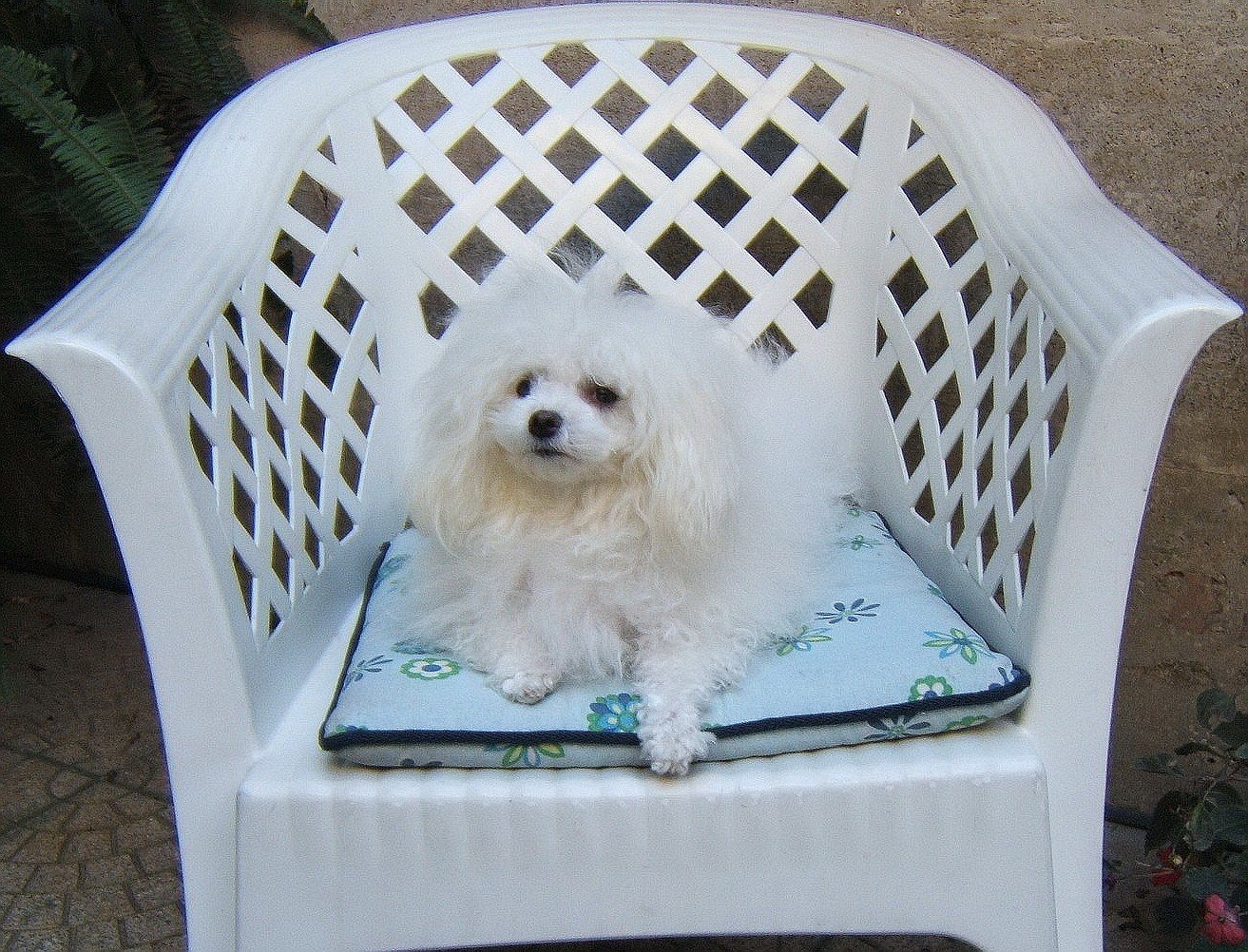
A small, square, entirely white dog wrapped in a distinctive fluffy single coat that falls in tousled waves rather than curls — soft as cotton wool, with dark, round, expressive eyes and a black nose standing out of the white. There is no undercoat and no colour but white; the overall effect is of a cheerful little powder puff with a serious, sweet expression.
Care & daily life
Bolognese need 30 to 60 minutes of gentle exercise a day — short walks and indoor play cover most of it. Coat care is the main commitment: the single, flocked coat mats readily, so brush and comb several times a week to the skin, with regular baths. They form unusually deep attachments and dislike being left alone for long stretches; build up alone-time gradually from puppyhood. Dental care matters in small breeds, so start tooth-brushing early. Otherwise this is an undemanding, adaptable dog to keep.
Health & lifespan
The Bolognese is generally known for the following health watch-points:
- A generally healthy, long-lived breed with no dominant hereditary condition
- Patellar luxation, the usual small-breed knee issue
- Hip dysplasia is occasionally reported despite the small size
- Dental disease, common to toy breeds — home dental care matters
- Cataracts and other eye changes can appear with age
Living with a Bolognese
The Bolognese is an apartment and city dog par excellence: small, quiet, low-exercise, and devoted — built for people who are home. It suits retirees, remote workers, and gentle families, and it travels well. What it cannot do is solitude: choose this breed when companionship is a two-way offer. Given company and modest outings, it is one of the calmest and easiest toy breeds to live with.
History
The Bolognese is an ancient Italian member of the bichon family, developed in Bologna and treasured by aristocracy for centuries — Cosimo de' Medici sent eight of them to Brussels as gifts in the 1600s, and the breed appears in Renaissance paintings and tapestries beside noblewomen. When the aristocracy faded, so did the breed; it was nearly extinct by the mid-1900s and was rebuilt by Italian breeder Gian Franco Giannelli in the 1980s and 90s.