Overview
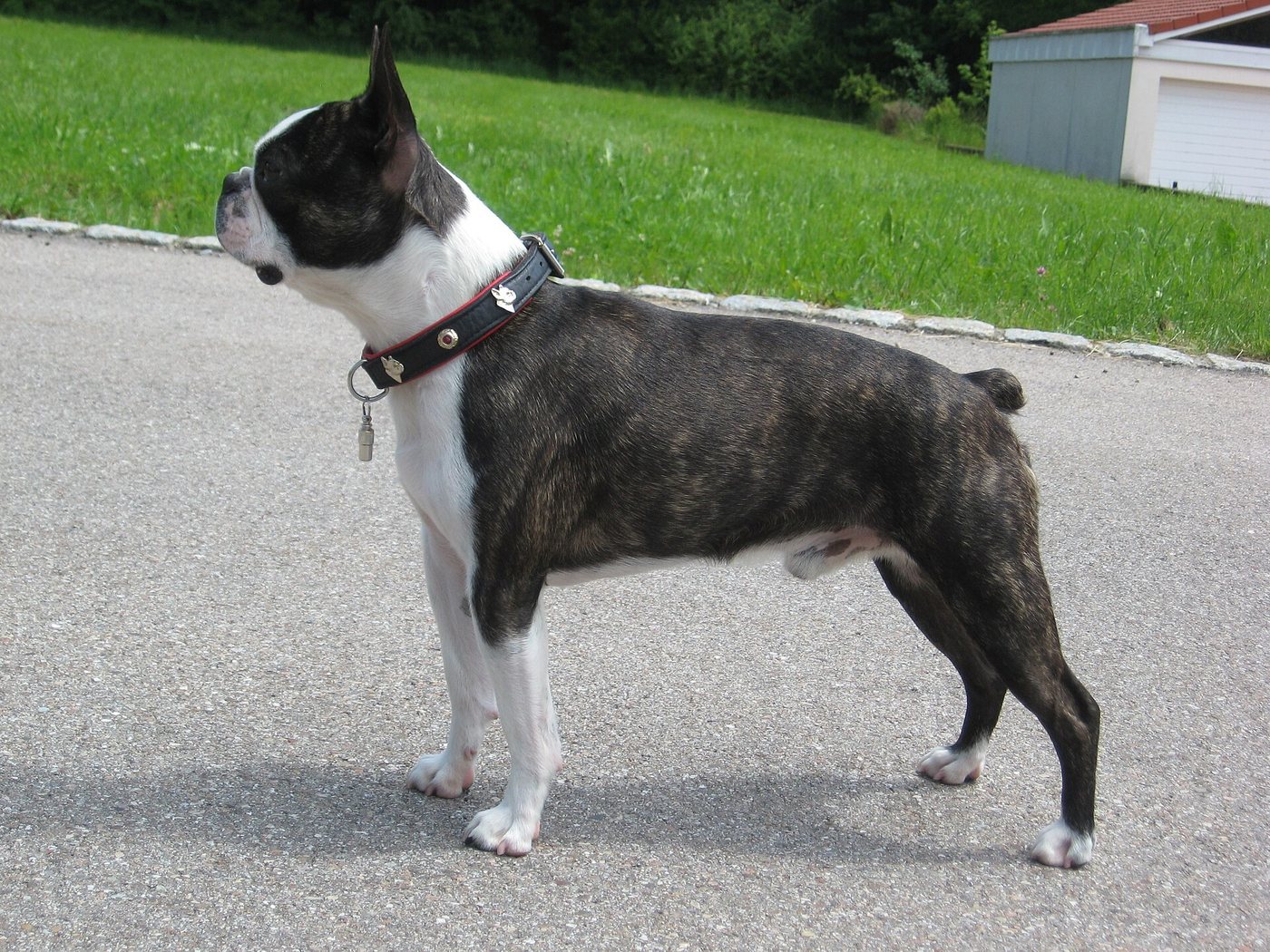
Nicknamed the American Gentleman for its tuxedo markings and lovely manners, the Boston Terrier is one of the few breeds genuinely created in the United States — and one of the most likeable dogs anywhere. It combines a bulldog's solidity with a companion's sweetness, at a portable size, with energy tuned perfectly between couch and park.
Temperament & personality
Friendly, bright, and comical, Bostons are people-dogs that thrive on household involvement. They are smarter and more trainable than their bulldog cousins and less intense than true terriers — a genuinely easy temperament. Most are friendly with strangers, gentle with children, and moderately vocal only when something actually happens.
Appearance
A compact, muscular dog with a distinctive pushed-in but not extreme face, large round eyes, and either upright 'bat' ears or the rarer rose ears. The short coat comes in brindle, fawn, or white, usually with markings. No relation to actual terriers in type — the Boston is a true companion breed wearing a tuxedo.
Care & daily life
About an hour of exercise and play a day, moderated by weather: flat-faced breeds and heat do not mix, so walk in cool hours in summer. Grooming is easy — a weekly brush and attention to the facial fold. Watch weight, since excess pounds burden breathing joints and heart alike.
Health & lifespan
The Boston Terrier is generally known for the following health watch-points:
- Brachycephalic airway issues, milder on average than in Bulldogs but real — buy from breeders who select for open nostrils and exercise tolerance
- Eye problems lead the list: cataracts, corneal ulcers, cherry eye
- Patellar luxation and deafness (especially in mostly-white dogs) occur
- Heat intolerance demands the same care as other flat-faced breeds
- Spinal issues related to the screw tail (hemivertebrae) occur in some lines
Living with a Boston Terrier
Bostons are nearly perfect city and apartment dogs: compact, quiet-ish, moderate in needs, and devoted to their people. They suit first-time owners, families, and singles alike — anyone whose climate control works in summer and whose lifestyle centres on home.
History
The breed began in Boston around 1870 with a dog named Judge — an English Bulldog and white English Terrier cross — whose descendants, refined by Boston fanciers, became the round-headed, tuxedo-marked dog recognised by the AKC in 1893. It was one of the first breeds created in America, and it remains a point of hometown pride: the Boston Terrier is the official state dog of Massachusetts.