Overview
The Brussels Griffon started life ratting in Belgian stables and ended up one of the most characterful toy breeds in the world. Almost everything about it is a study in contrast: a tiny dog with a terrier's boldness, a comical bearded face with a soulful, nearly human gaze, and a personality that swings between self-important little emperor and devoted, needy shadow. Movie fame in the 1990s introduced it to the world, but it remains a connoisseur's breed — uncommon, quirky, and completely engaging.
Temperament & personality
Sensitive, alert, and curious, with a large sense of its own importance. Griffons bond intensely to one or two people and want to be involved in absolutely everything; they are intelligent and trainable but can be stubborn and are easily bruised by harsh handling. Many are charmingly manipulative — the breed has perfected the pleading stare — and most make keen little watchdogs without being especially yappy.
Appearance
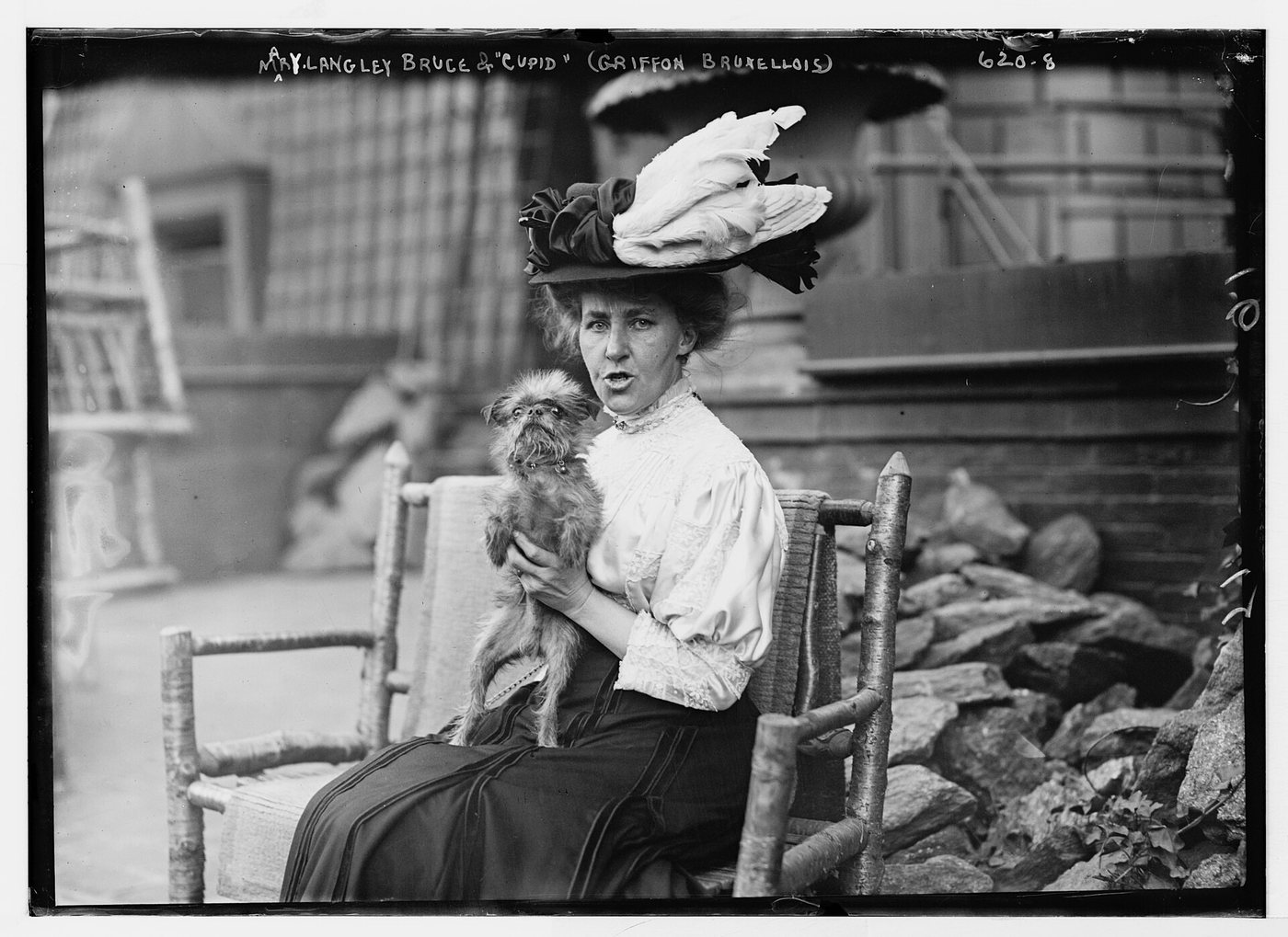
A tiny dog with an enormous personality and an almost human, bearded little face: large round eyes, a short muzzle, a black nose set like a button, and — in the rough variety — a wiry coat with whiskers and eyebrows that give it the famous 'monkey face.' The smooth variety has a short, glossy coat. Colours include black, black and tan, red, and belge (mixed black and red-brown hairs). Ears may be cropped where legal or left natural and small.
Care & daily life
Moderate exercise for a toy — around an hour a day of walks and vigorous play; Griffons are sturdier and more athletic than they look and love a good game. Rough coats need hand-stripping a few times a year or regular clipping (which softens the coat), plus combing of the beard and furnishings; smooth coats need only a weekly brush. The face is short, so take the usual flat-face precautions in heat, and keep teeth brushed — small mouths crowd easily.
Health & lifespan
The Brussels Griffon is generally known for the following health watch-points:
- Hip dysplasia and patellar luxation occur in the breed despite its small size
- Eye problems including cataracts, corneal dystrophy, and lens issues — prominent eyes are injury-prone
- Syringomyelia (a painful spinal cord condition seen in several toy breeds) has been reported
- The short face means some heat and breathing sensitivity, though far less extreme than in a Pug or Pekingese
- Heart murmurs and dental crowding are also seen
Living with a Brussels Griffon
Griffons are indoor shadows: apartments suit them perfectly, provided someone is home most of the day and play and walks are real. They do best with adults and families with older, gentle children — they are small enough to be hurt by rough toddler handling and sensitive enough to dislike it. A Griffon does not do 'independent'; it does 'attached.'
History
The Brussels Griffon began as a stable dog: the rat-catching 'griffons d'écurie' of Brussels, likely blending Affenpinscher, the Belgian street dog, and later Pug and King Charles Spaniel crosses that produced the smooth variety and the shorter face. Queen Henrietta Maria of Belgium — an enthusiast in the late 1800s — popularised the little dogs and shrank them toward the modern toy size. The AKC recognised the breed in 1910.