Overview
The Bulldog (often called the English Bulldog) is one of the most recognisable dogs on earth: massive head, furrowed brow, rolling sailor's gait, and an expression that belies one of the gentlest temperaments in the dog world. Bred down from bull-baiting stock into a placid companion, today's Bulldog wants a cool home, a soft bed, gentle exercise, and maximum proximity to its people.
Temperament & personality
Calm, friendly, and quietly courageous, Bulldogs are famously good-natured with children and other animals. They can be stubborn and are skilled at looking so sorrowful that training collapses into treats — consistency with a sense of humour is the way. They form deep attachments and dislike being left out of family life.
Appearance
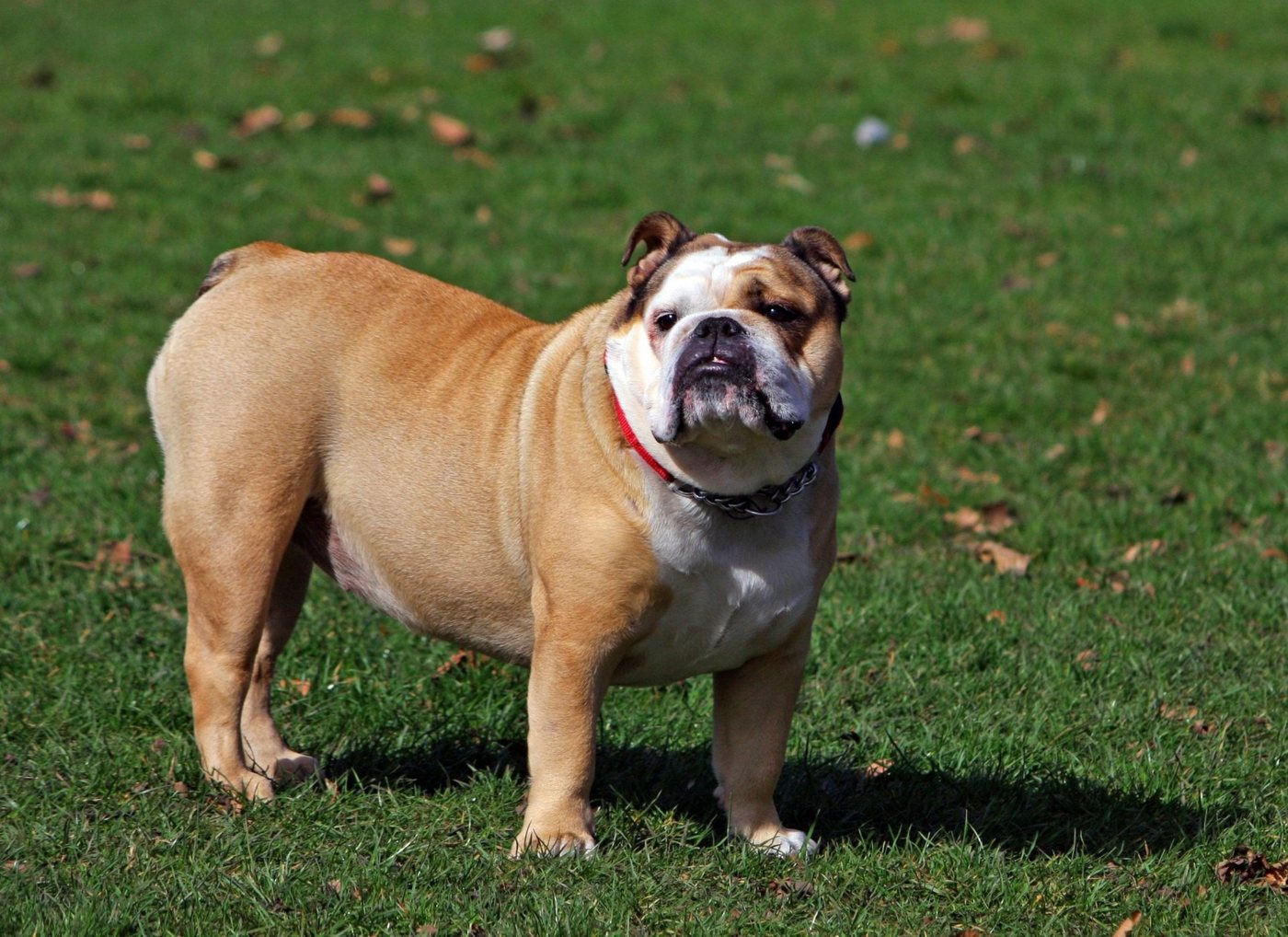
A heavy, low-slung dog with a very large head, undershot jaw, loose wrinkled skin, and a short smooth coat in colours including brindle, fawn, white, and red, often patched. The build is unmistakable — and its breathing, joints, and heat tolerance need a realistic owner's eye from day one.
Care & daily life
Keep exercise gentle: two or three short, easy walks a day, never in heat, and never to exhaustion. This is an indoor dog that must have air conditioning in warm weather. Clean and dry the skin folds daily, watch weight relentlessly, and supervise completely around water — most Bulldogs sink.
Health & lifespan
The Bulldog is generally known for the following health watch-points:
- Brachycephalic obstructive airway syndrome — restricted breathing is the breed's central health issue
- Heatstroke risk is severe; Bulldogs must live in air conditioning in warm weather
- Skin fold infections, cherry eye, and allergies
- Hip dysplasia and joint problems, worsened by extra weight
- Many puppies are delivered by caesarean section because of their large heads
Living with a Bulldog
Bulldogs suit calm households, apartment dwellers, and families wanting a low-energy companion — provided summers are cool indoors and someone is home a good part of the day. They are devoted, often comical housemates that want to be near their people at all times.
History
The Bulldog descends from the dogs used in the English 'sport' of bull-baiting, banned in 1835. When the baiting dogs faced extinction, fanciers bred down the ferocity while keeping the look, producing the gentle companion recognised today — a remarkable temperament reversal accomplished within a few generations.