Overview
The Cane Corso is Italy's great guardian breed: a direct descendant of Roman war dogs, refined over two thousand years into a farm protector of unusual intelligence and restraint. A Corso does not waste energy — it watches, assesses, and acts only when it decides action is needed. That judgement, paired with 100-plus pounds of muscle, makes the breed magnificent with the right owner and a genuine liability with the wrong one.
Temperament & personality
With family, Corsos are affectionate, loyal, and often surprisingly sensitive — they read tone and mood closely and want to be near their people. With strangers they are naturally reserved and territorial. Confidence is the breed's hallmark: a properly raised Corso is calm and self-assured rather than reactive, and that temperament is built through extensive early socialisation, not hoped for.
Appearance
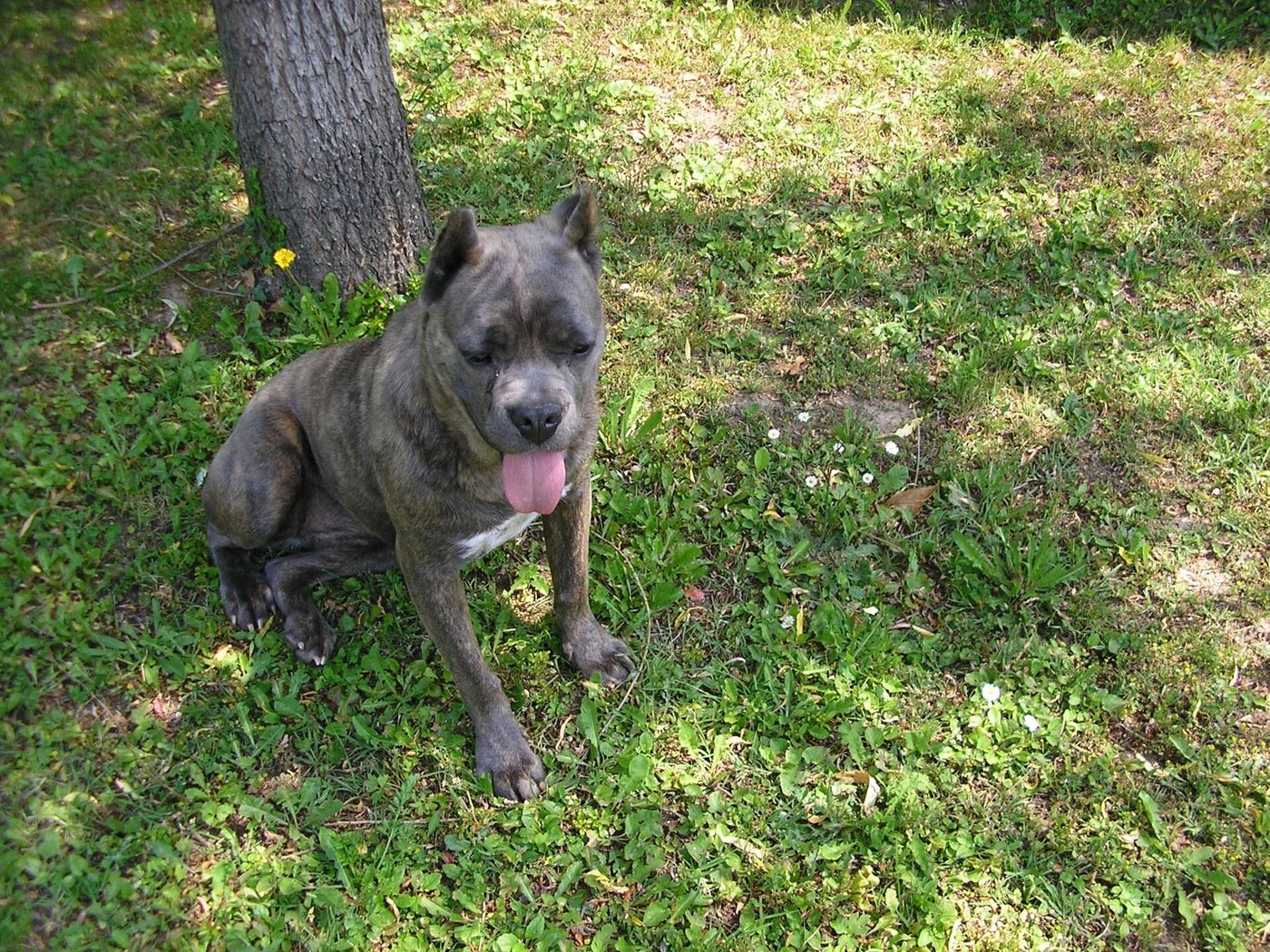
A dog of imposing, athletic power: a large head with a square, blunt muzzle, deep chest, and a short, dense, weather-resistant coat in black, grey, fawn, red, or brindle shades. The eyes are medium, almond-shaped, and intensely watchful. Ears are often cropped in some countries and natural in others; the tail is traditionally docked or left natural depending on local law.
Care & daily life
Plan on one and a half to two hours a day of exercise and purposeful activity — training, tracking, hiking, or structured play. This breed needs a job and a confident routine; idle strength becomes a management problem. The short coat needs only weekly brushing. Train early and consistently with calm, reward-based methods and socialise thoroughly — the goal is a dog that is neutral to the world, not suspicious of it.
Health & lifespan
The Cane Corso is generally known for the following health watch-points:
- Hip and elbow dysplasia — screening is critical in a dog this heavy
- Bloat (gastric dilatation-volvulus), a risk in all large, deep-chested breeds
- Eyelid conditions such as cherry eye, entropion, and ectropion
- Demodex mange and skin issues occur in some lines
- Idiopathic epilepsy and heart conditions are reported in the breed
Living with a Cane Corso
Cane Corsos belong with experienced owners who have space, structure, and time — ideally people who actively enjoy training a powerful dog. They are devoted, quiet household members when their needs are met, but this is categorically not a first dog, not an apartment novelty, and not a breed to buy for its looks alone.
History
The Corso descends from the Roman molossian war dogs, refined over centuries on Italian farms as a catch dog for large game, a cattle mover, and a guardian of property — its name derives from the Latin 'cohors,' meaning protector or guardian of the courtyard. Industrial farming nearly ended the breed by the 1970s; a handful of enthusiasts rebuilt it from surviving farm dogs in southern Italy, and it was recognised by the AKC in 2010.