Overview
If the dog world has a professional best friend, it is the Cavalier. Descended from the toy spaniels painted at the courts of Charles I and II, the breed exists for companionship and performs the job with unmatched sweetness: gentle with children, gracious with strangers, adaptable to nearly any lifestyle. The grave caveat is health — heart disease haunts the breed, and choosing a breeder who screens hearts is the most important decision a buyer makes.
Temperament & personality
Affectionate is an understatement. Cavaliers are soft, eager, tail-wagging dogs that bond to the whole family rather than one person, and they carry a sporting spaniel's playfulness into games and walks. They are poor candidates for homes where everyone is out all day — loneliness is this breed's only real misery.
Appearance
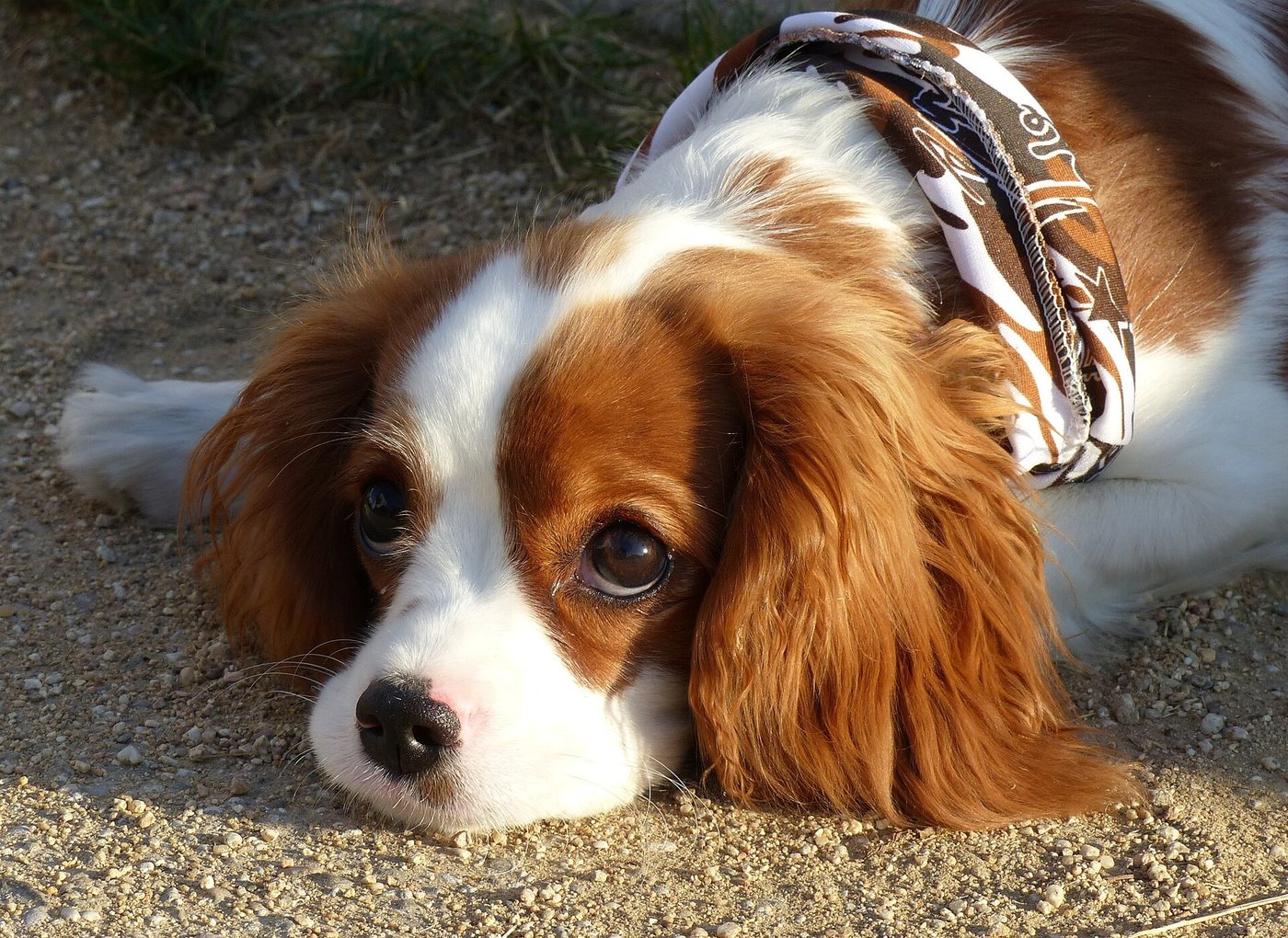
A small, silky-coated spaniel with a melting, gentle expression, large round dark eyes, and long ears framing a slightly domed head. Colours are Blenheim (chestnut and white), tricolour, black and tan, and ruby. Unlike most toys, the Cavalier carries itself with a sporting spaniel's grace rather than toy delicacy.
Care & daily life
About 45 minutes to an hour of walks and play a day suits most Cavaliers — adaptable dogs that match their owner's pace within reason. The silky coat needs brushing two or three times a week and regular ear care. Watch weight: the breed loves food and its heart health benefits from staying lean.
Health & lifespan
The Cavalier King Charles Spaniel is generally known for the following health watch-points:
- Mitral valve disease — the breed's defining health issue; a majority develop a heart murmur with age, and it is the leading cause of death
- Syringomyelia, a painful skull/spinal condition, occurs in the breed
- Hip dysplasia and patellar luxation at small-breed rates
- Ear infections and eye conditions such as dry eye occur
- Episodic falling syndrome is a rare breed-specific condition (DNA-testable)
Living with a Cavalier King Charles Spaniel
Almost any home with people in it: families, seniors, singles, apartments, farms. The Cavalier is the great adapter of the dog world. Its only real requirement is company — this breed was built across five centuries to be with humans, and it measures every day by that standard alone.
History
Toy spaniels were the companions of British royalty for centuries — Charles II was so devoted to his that the type took his name, and Mary Queen of Scots' spaniel famously stayed with her to the end. The modern Cavalier was reconstructed in the 1920s–40s when Roswell Eldridge offered prizes for the longer-nosed, flat-skulled type seen in old paintings, reviving the dog in portraits by Van Dyck and Stubbs.