Overview
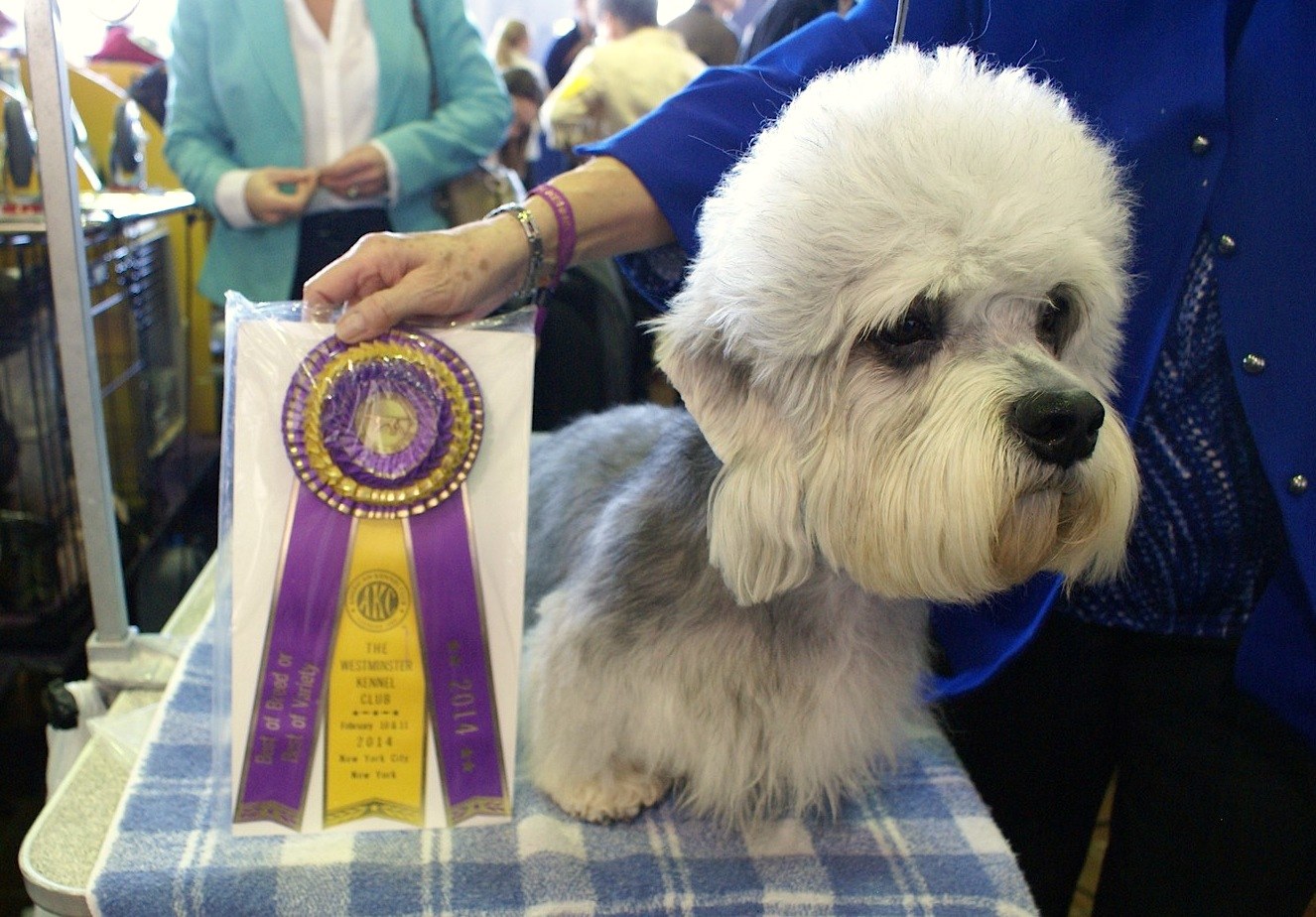
The Dandie Dinmont is the literary gentleman of the terrier world: a long, low Borders working terrier with a silky topknot, a calm and dignified manner unusual in its family, and a name borrowed from fiction. Once a farm dog of the Anglo-Scottish border country, it is today a rare and charming companion for owners who want terrier character in a lower gear.
Temperament & personality
Independent, intelligent, and affectionate without neediness. Dandies tend to bond strongly to their household, keep a certain reserve with strangers, and carry themselves with real dignity — until a squirrel voids the warranty. They are less hyperactive than most terriers and often content to supervise from a good cushion, but training needs patience and humour for a dog that considers instructions carefully before compliance.
Appearance
A long, low, sturdy terrier — notably long-bodied on short legs — crowned with a large head and a dramatic topknot of silky hair falling over the face. The coat is a crisp mixture of hard and soft hair in 'pepper' (blue-grey to silver) or 'mustard' (reddish-brown to fawn). The expression under the topknot is dignified, thoughtful, and slightly melancholy.
Care & daily life
About an hour of exercise a day — walks and play; Dandies are calmer than most terriers but still terriers. The coat needs brushing two or three times a week and professional scissoring or stripping a few times a year to keep the outline and topknot. The long back deserves the usual precautions: keep the dog lean, discourage sofa launches, and use ramps in cars and on beds.
Health & lifespan
The Dandie Dinmont Terrier is generally known for the following health watch-points:
- Intervertebral disc disease — the long spine is the breed's main structural risk
- Glaucoma and primary lens luxation — serious eye conditions; screening is available
- Cushing's disease (hyperadrenocorticism) is reported more often than average
- Hypothyroidism
- Cancer, including chemodectoma (a heart-base tumour), appears in breed health surveys
Living with a Dandie Dinmont Terrier
Dandies are among the calmest terriers and adapt well to town or country living with a moderate daily outing. At home they are dignified, affectionate, and less demanding of attention than many small breeds — but the terrier core remains: expect independence, a deep bark, and firm opinions. A secure garden is wise given the prey drive.
History
Terriers of this type worked the farms of the Scottish Borders from at least the 1700s, hunting otters and badgers. Sir Walter Scott's Guy Mannering (1815) featured a farmer, Dandie Dinmont, whose 'pepper' and 'mustard' terriers were drawn from a real Borders breeder — and the reading public renamed the breed on the spot. It is now one of Britain's rarest native breeds.