Overview
The Glen of Imaal Terrier is Ireland's strong, silent type: a low, muscular farm terrier bred to take on badgers underground yet famous for being the gentlest and quietest of the terrier breeds at home. It is also one of the rarest — a dog most people have never met, kept alive by a small band of devoted breeders.
Temperament & personality
Glens are spirited and bold when there is work or a chase on offer, and notably mellow the rest of the time. They are less quarrelsome with other dogs than many terriers, affectionate with family, and possessed of a dry independence — training goes best with patience and humour. Their strength is easy to underestimate: a Glen pulling toward a squirrel is a serious handful.
Appearance
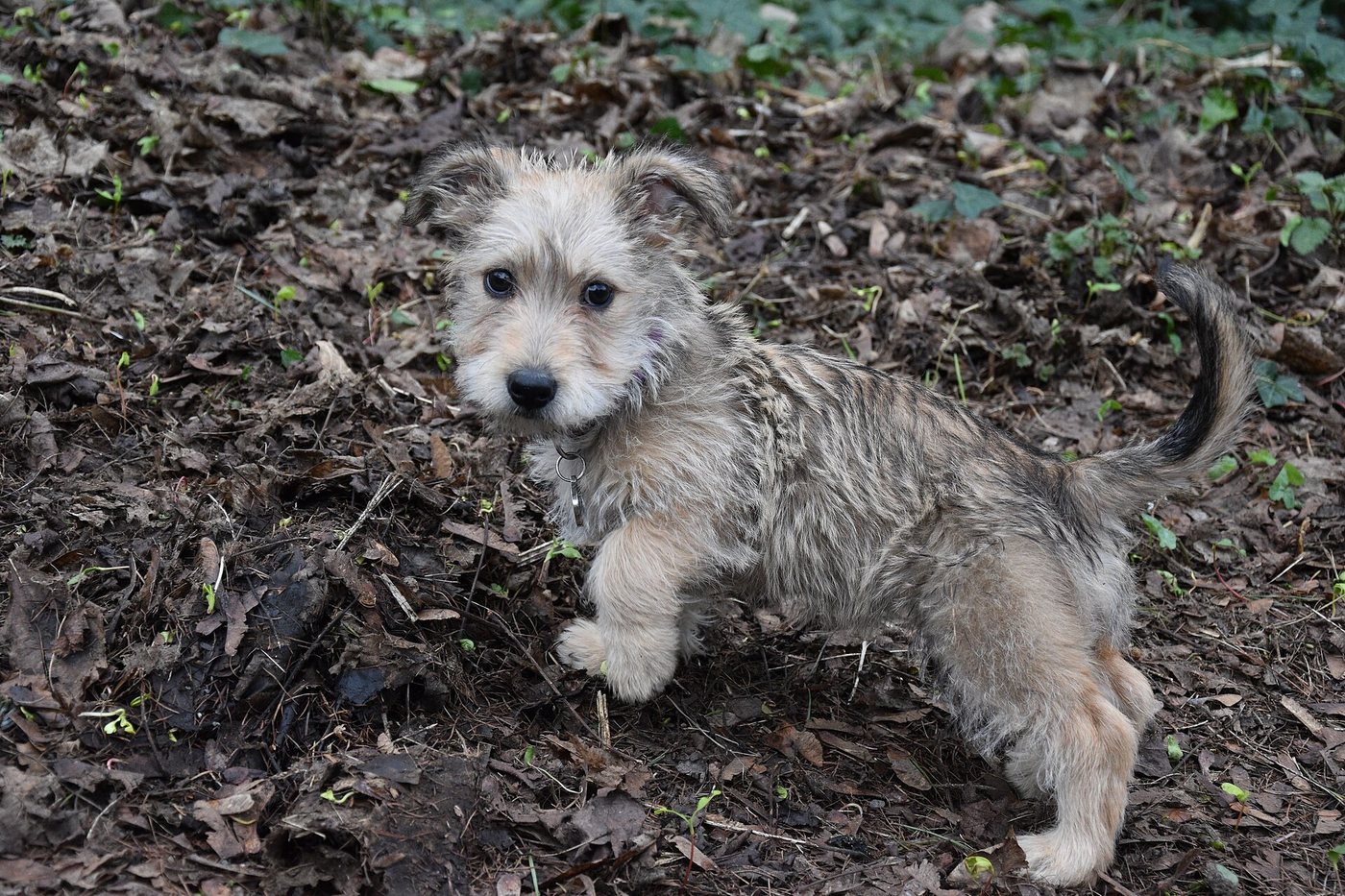
A powerful little dog built long and low: a broad head with a strong jaw, a bowed, muscular front, and hindquarters that sit noticeably higher than the shoulders, giving a distinctive wheeled gait when it moves. The harsh double coat is wheaten, blue, or brindle, and the head carries a soft, silky topknot that contrasts with the rough body coat.
Care & daily life
About an hour of exercise a day suits most Glens — they are sturdy workers but not hyperactive. The harsh double coat needs a weekly brush-through and occasional hand-stripping to keep it tidy; it sheds lightly. Watch the waistline, as Glens gain weight readily, and remember this is a strong dog for its size: leash manners are worth teaching early.
Health & lifespan
The Glen of Imaal Terrier is generally known for the following health watch-points:
- Cone-rod dystrophy (crd3), an inherited eye disease causing progressive blindness — DNA testing has greatly reduced it
- Hip and elbow dysplasia
- Skin allergies and itch can occur
- Generally a hardy breed when bred from health-tested parents
Living with a Glen of Imaal Terrier
Glens fit family life well: sturdy with children, calm indoors, and happier in a house with a garden than in a high-rise. Their prey drive and strength mean secure fencing and a leash in open country are essential. They are a good choice for someone who likes terrier character in a less frantic package.
History
The breed comes from the remote Glen of Imaal in County Wicklow, Ireland, where low-slung, powerful terriers worked farms for centuries — hunting badger and fox, clearing vermin, and, legend insists, turning cooking spits by walking in a wheel. Unrecognised outside its valley until the 1900s, it was shown in Ireland from the 1930s, recognised by the Irish Kennel Club in 1975, and by the AKC only in 2004, making it one of the newest — and oldest — terriers on the books.