Overview
Everything about the Great Dane is large except its lifespan and its exercise demands. Called the Apollo of dogs, the Dane is a German boar-hunting aristocrat turned house companion, famous for leaning against its people, sitting on laps it does not fit, and a patience with children that belies its power. To own one is to accept a decade or less of outsized devotion.
Temperament & personality
Danes are friendly, eager, and notably gentle — true gentle giants rather than merely big dogs. They are alert enough to be useful watchdogs (their size alone deters), devoted to their families, and sensitive to household mood. Training is easy in attitude and essential in practice: a 150-pound dog must be mannerly, so leash skills and polite greetings are taught early and kindly.
Appearance
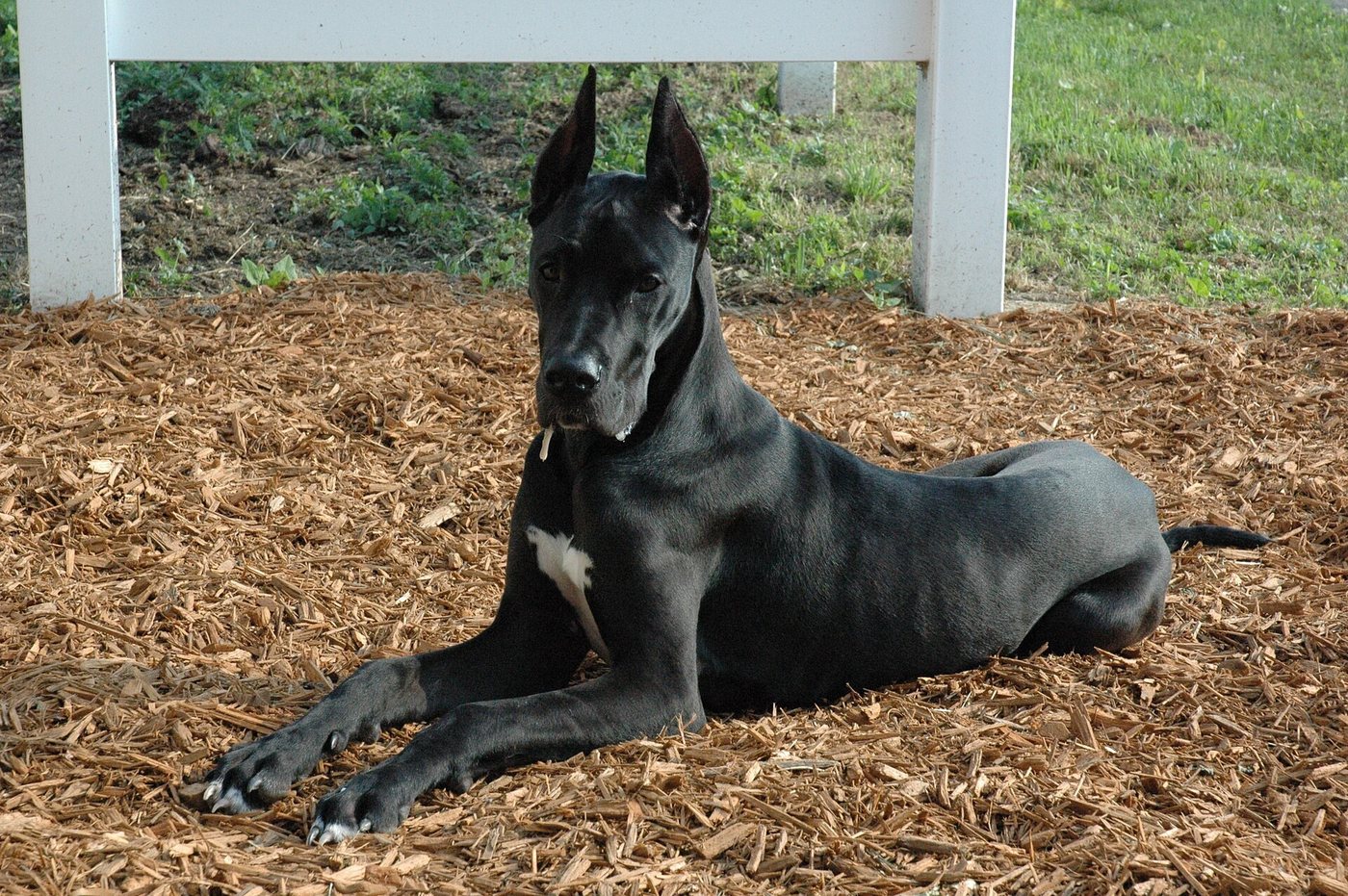
One of the tallest of all breeds, the Dane combines enormous size with genuine elegance: a long, expressive head, deep chest, and a short smooth coat in fawn, brindle, black, blue, harlequin, and mantle patterns. Despite the name, the breed is German, not Danish. Males can stand over six feet on their hind legs.
Care & daily life
Exercise is moderate for the size — about an hour to an hour and a half daily, split up, with care to avoid hard exercise around meals (bloat discipline). Puppies need carefully managed growth: controlled nutrition and limited jumping to protect developing joints. Grooming is easy — weekly brushing — but everything in this breed is supersized, from food bills to the sofa it will occupy.
Health & lifespan
The Great Dane is generally known for the following health watch-points:
- Bloat (GDV) — the breed is among the highest-risk; a leading cause of death
- Dilated cardiomyopathy and other heart conditions
- Hip dysplasia and bone cancer (osteosarcoma) at giant-breed rates
- Wobbler syndrome affects some Danes
- The short lifespan itself is the breed's central health reality
Living with a Great Dane
Danes fit calm, spacious households with owners prepared for giant-breed costs and a giant-breed lifespan's heartbreak. They are devoted, undemanding companions indoors, surprisingly apartment-capable, and best for people who will cherish intensity of bond over length of years.
History
Dogs of Dane type appear in ancient art, but the modern breed was shaped in Germany, where it hunted boar for nobility — the 'Englische Dogge' — before becoming a estate guardian and companion. Germany made it a national dog in 1876; the name 'Great Dane' came from a French naturalist's description of a Danish specimen, and stuck despite the breed being German through and through.