Overview
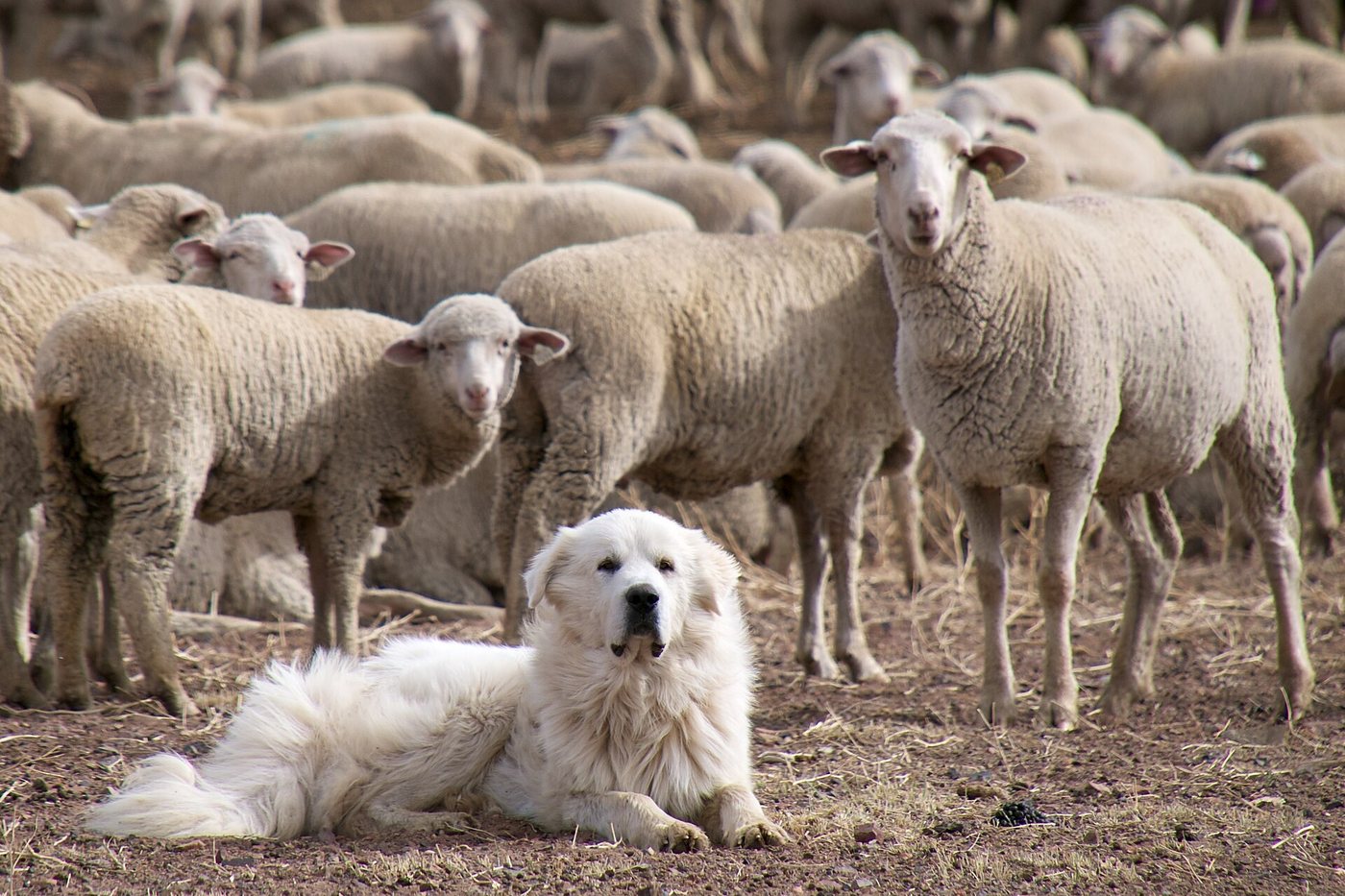
The Great Pyrenees is a livestock guardian of the old school: a huge, serene white dog bred to live among flocks in high mountain country and make its own decisions about threats. That heritage shapes everything — the calm patience with its own family, the suspicion of strangers and strange dogs, the nocturnal patrol instinct, and a streak of independence that new owners often mistake for stubbornness. A Pyr is not disobedient; it is unconvinced, and it works by persuasion, not command.
Temperament & personality
Within the family, Pyrs are famously gentle, tolerant, and devoted, often especially bonded with children and the animals they grow up with. With strangers they are reserved and watchful. They are intelligent but slow to obey — generations of solo decision-making in the mountains saw to that — so training should be patient, consistent, and reward-based, started early. Shouting at a Pyr accomplishes nothing.
Appearance
A majestic, heavily coated white dog with a plumed tail carried over the back, dark almond eyes, and an expression the French call 'Pyrenean' — calm and contemplative. The thick double coat is weatherproof, mostly white with possible markings of grey, badger, reddish brown, or tan, especially on the ears and head. Back double dewclaws on the hind legs are a breed hallmark.
Care & daily life
Moderate exercise — about an hour a day of walks and yard time; these are enduring wanderers, not sprinters, and a Pyr off lead will patrol as far as it can see, so fences need to be tall and secure. The coat sheds considerably and blows out seasonally; brush weekly to prevent mats, more in spring. Feed measured meals and watch for bloat risk habits: no vigorous exercise right after eating.
Health & lifespan
The Great Pyrenees is generally known for the following health watch-points:
- Hip dysplasia
- Bloat (gastric dilatation-volvulus) — a life-threatening emergency in large, deep-chested breeds
- Bone cancer (osteosarcoma), as in many giant breeds
- Patellar luxation and entropion (inward-turning eyelids)
- Addison's disease occurs more often than average
Living with a Great Pyrenees
A Pyr needs room: rural properties, farms, and homes with large, securely fenced yards suit it best, and it still works happily as a livestock guardian today. Apartment living is a poor fit — size, barking, and the need to patrol all argue against it. It suits owners who appreciate an independent dog that thinks for itself rather than obeying instantly.
History
For centuries these dogs guarded sheep in the Pyrenees mountains between France and Spain, working in pairs through winter nights against wolves and bears. French royalty adopted the breed in the 1600s — Louis XIV named it the Royal Dog of France — and it reached North America in the 1800s, where it nearly disappeared before dedicated breeders revived it in the 1930s. The AKC recognised the breed in 1933.