Overview
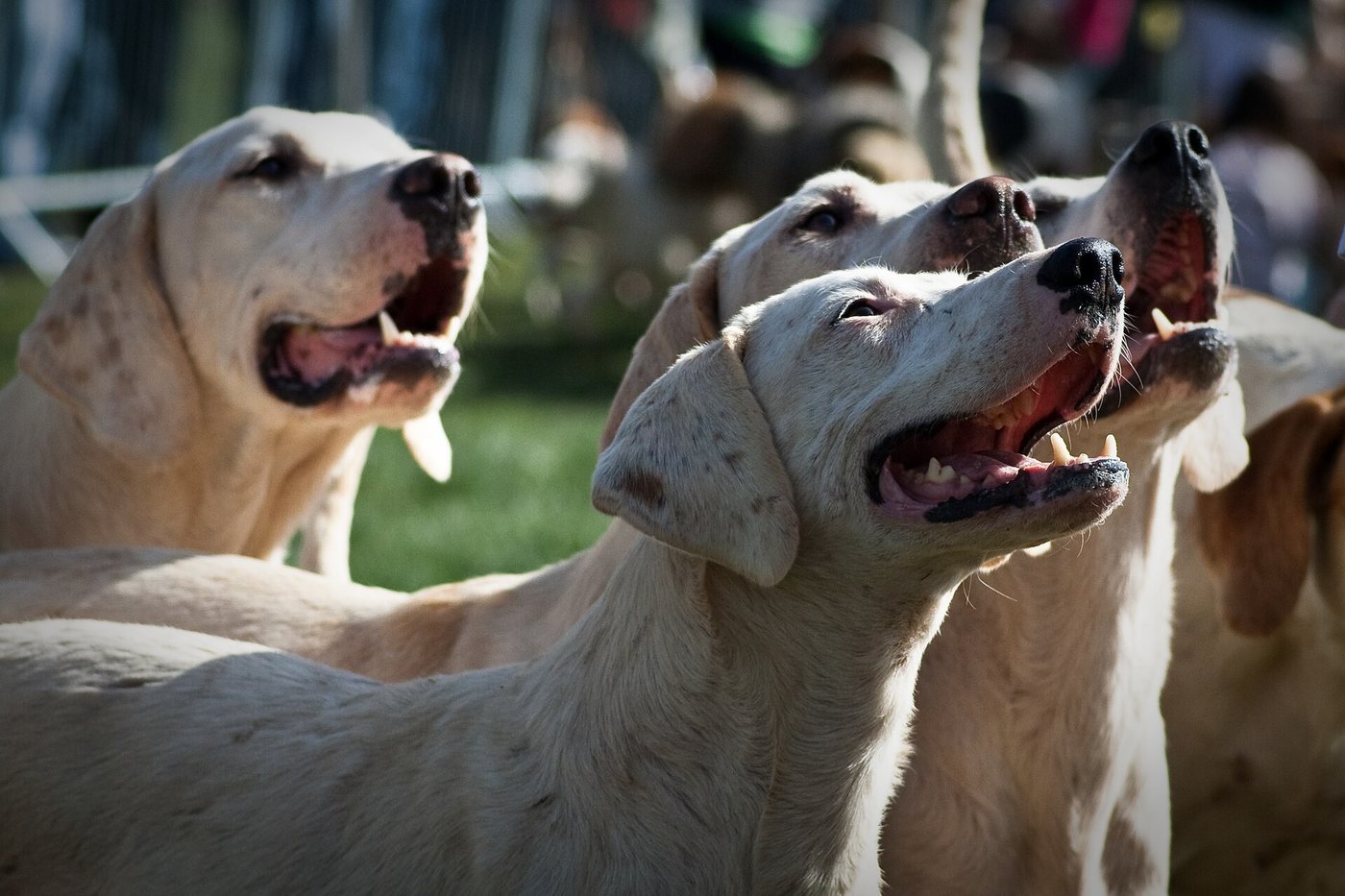
The Harrier is the hare-hunting pack hound of old England: bigger and faster than a Beagle, smaller than a Foxhound, and bred for centuries to run in a cheerful, cooperative pack. Almost all Harriers still live in hunting kennels, which makes the pet Harrier a rare find — and, for the right active household, a friendly, athletic, deeply social dog.
Temperament & personality
Friendly, outgoing, and people-oriented, Harriers carry the pack hound's easy sociability with dogs and humans alike. They are merry rather than intense, stubborn in the hound fashion when a scent intervenes, and famously vocal when excited or bored. Independence means training needs patience and food-based motivation.
Appearance
A classic medium hound in miniature foxhound style: a clean, muscular build, a kind but determined expression, and a short, dense tri-colour coat — usually black, white, and tan, though lemon and blue-mottled patterns appear. Everything is neat, hard-wearing, and built for a day's hunting.
Care & daily life
Harriers need one and a half hours or more of daily exercise, with free running in enclosed areas — a scent hound's recall around game is never guaranteed. The short coat is nearly wash-and-wear: a weekly brush and the occasional bath suffice. Check and clean the drop ears regularly, and manage food carefully, because a pack-bred hound's appetite outruns its needs at pet activity levels.
Health & lifespan
The Harrier is generally known for the following health watch-points:
- Hip dysplasia
- Hypothyroidism
- Eye conditions including progressive retinal atrophy are monitored by breeders
- Generally regarded as a hardy, healthy breed, thanks in part to its working-pack heritage
Living with a Harrier
Harriers need active homes — ideally runners, hikers, or families with other dogs and a securely fenced yard. Their pack nature means they genuinely enjoy canine company and can pine when left alone all day. Town living works only with a serious daily exercise commitment.
History
Hounds for hunting hare — 'harriers' — appear in English records from the 1200s, and packs such as Sir Elias de Midhope's, recorded in 1260, are among the oldest documented in Britain. The modern Harrier was refined in the 19th century as a hound that mounted huntsmen and farmers could follow on foot or horseback after hare. It was one of the first breeds the AKC recognised, in 1885, yet it has always remained rare outside hunting kennels.