Overview
The Havanese is Cuba's gift to the toy group: a small, silky-coated companion with a springy gait, a comedian's timing, and a heart set on being wherever its people are. Unlike many fragile toys, the Havanese was bred as a family dog in the full sense — sturdy, playful, trainable, and happy to join everything from a hike to a homework session.
Temperament & personality
Outgoing, funny, and affectionate, with a watchful streak that makes it a surprisingly good little watchdog — it will report visitors, then charm them. Havanese are intelligent and famously trainable (they were once circus dogs), responding best to positive training and games. They are velcro dogs by nature and bond to the whole family rather than one person.
Appearance
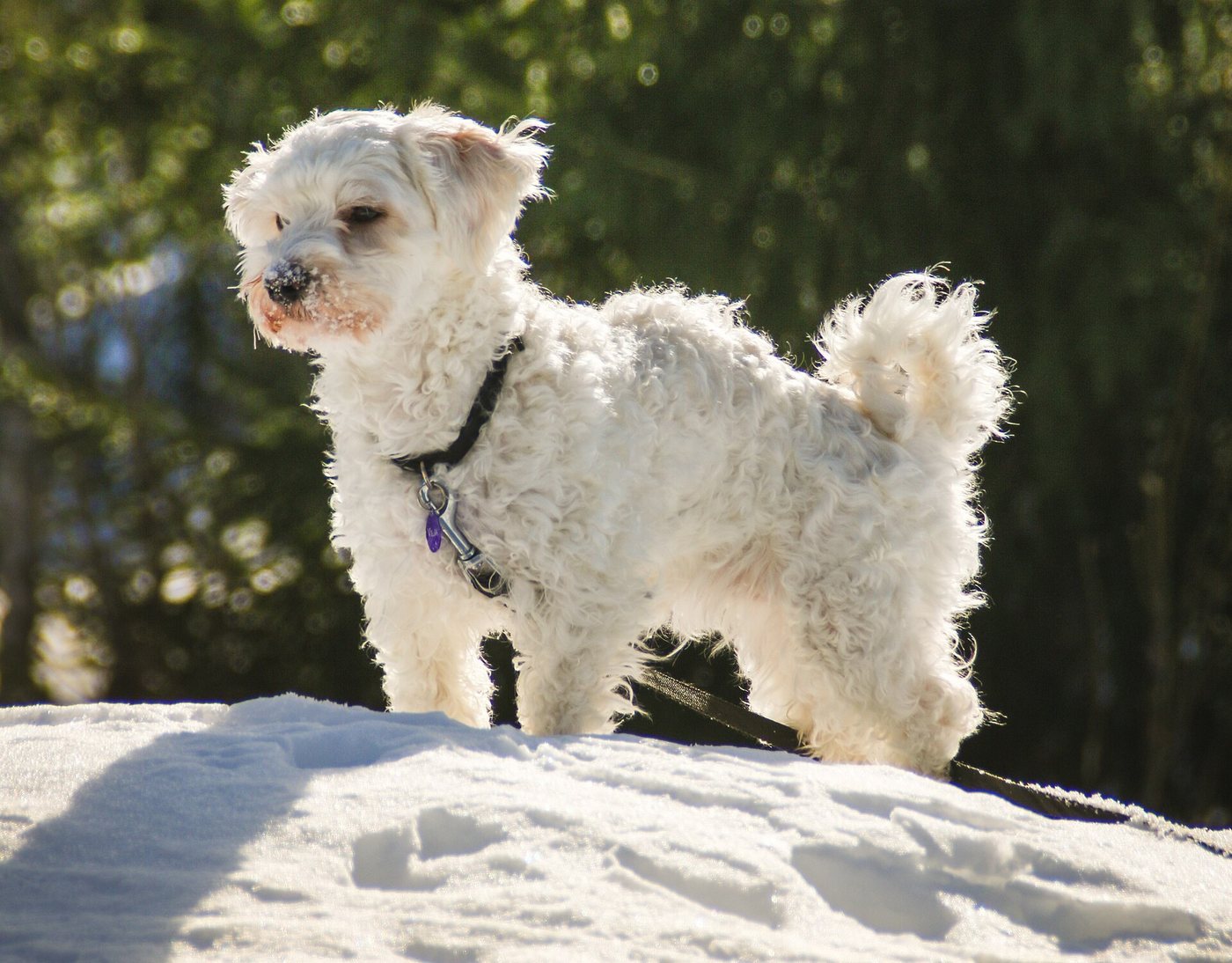
A small, sturdy toy dog with a profuse silky coat that comes in almost every colour and pattern — white, cream, gold, sable, brindle, black, parti-colour, and more. The coat is long and flowing in show trim but often kept clipped short by pet owners; either way the dog beneath is longer than it is tall, with a plumed tail carried over the back and an expression of cheerful mischief.
Care & daily life
About an hour a day of walks and play — Havanese are livelier than most toy breeds and love games, fetch, and learning tricks. Coat care depends on trim: a long coat needs brushing several times a week; a puppy cut needs far less. Despite the tropical origin, they are indoor dogs that dislike cold; despite the small size, they are not fragile and enjoy real activity.
Health & lifespan
The Havanese is generally known for the following health watch-points:
- Hip dysplasia and patellar luxation
- Cataracts and other eye conditions — annual eye exams are recommended for the breed
- Congenital deafness occurs; puppies should be BAER hearing-tested
- Chondrodystrophy (shortened legs) is present in the breed and linked to some joint issues
- Heart murmurs and liver shunts occur in some lines
Living with a Havanese
Havanese adapt to apartments and houses equally happily and are among the best toy breeds for families, thanks to their sturdiness and humour. Their one non-negotiable is company — this is a dog that wants to be with its people all day, every day, and is a poor fit for long, empty houses.
History
The Havanese descends from the little Tenerife dogs brought to Cuba by Spanish colonists in the 1500s and refined in Havana as the companion of aristocratic families. After the Cuban revolution, a handful of dogs reached the United States with emigrating families, and nearly all Havanese today descend from those few founders. The AKC recognised the breed in 1996, and it has since become one of the most popular toy breeds.