Overview
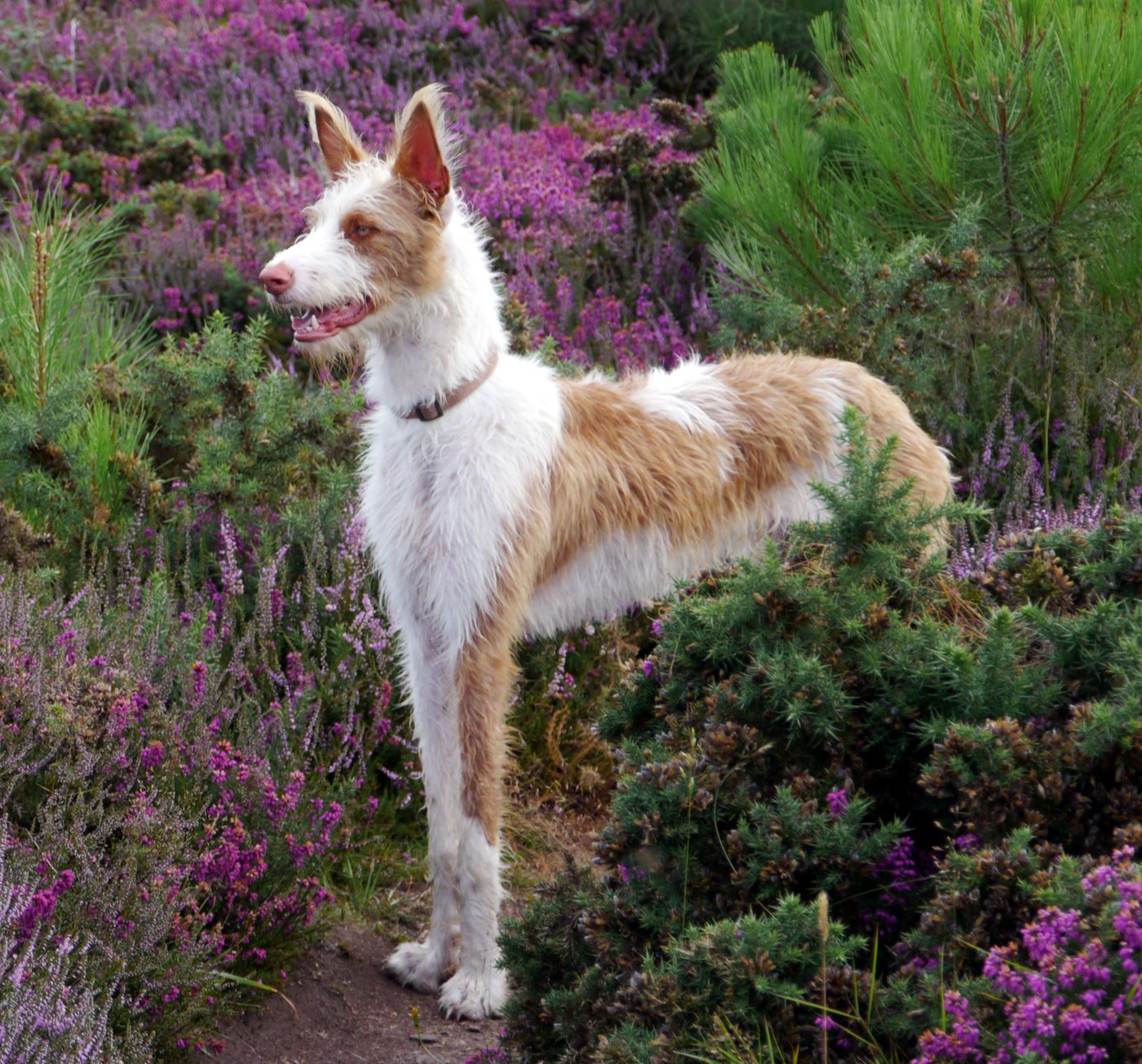
The Ibizan Hound is a living antique: a tall, elegant rabbit hunter from the island of Ibiza whose type appears in art thousands of years old. A sighthound that also hunts by scent and sound, the Ibizan is famous for two things — an almost supernatural ability to jump, and a clownish, playful streak that contrasts with its dignified, statue-like looks.
Temperament & personality
Even-tempered, polite, and sweet-natured, Ibizans are gentle and reserved with strangers and devotedly playful at home. Owners describe a cat-like independence combined with sighthound sensitivity: they notice everything, forgive slowly, and respond only to kind, patient training. Many have a mischievous sense of humour and a habit of standing on tables to survey their kingdom.
Appearance
One of the most striking of all dogs: tall, elegant, and deer-like, with huge upright ears, a long fine head, and almond eyes set in white, red, or white-and-red coats. Two coat types exist — smooth, and a wiry rough coat that looks windswept. The overall impression is of an ancient statue come to life, all angles and grace.
Care & daily life
Ibizans need an hour to an hour and a half of daily exercise, including chances to sprint in a securely fenced area — and the fence must be tall, because this breed can jump extraordinary heights from a standstill. They are sensitive to cold and appreciate a coat in winter. Grooming is minimal for both coat types: a weekly brush for the smooth, a little more attention for the wire. Training must be gentle; this is a soft, sensitive breed that shuts down under pressure.
Health & lifespan
The Ibizan Hound is generally known for the following health watch-points:
- Congenital deafness occurs in the breed — puppies should be BAER hearing-tested
- Axonal dystrophy, a rare inherited neurological condition
- Retinal dysplasia and other eye conditions; breeders screen eyes
- Seizures and allergies are reported; overall a healthy, long-lived hound
Living with a Ibizan Hound
Ibizans suit calm, gentle households that can offer a very secure, high-fenced garden and daily running. They are quiet, clean housemates, polite with respectful children and usually good with other dogs, but small pets outdoors are fair game to a sighthound's instincts. They dislike harsh handling and long solitude.
History
Dogs of this exact type were depicted in ancient Egyptian tombs, and Phoenician traders are believed to have carried them to the Balearic Islands over two thousand years ago. On Ibiza, isolated for centuries, farmers kept them as rabbit hunters that worked by sight, scent, and hearing at once. The breed reached Britain and the United States in the 20th century — Colonel and Mrs. Consuelo Gardner introduced them to America in the 1950s — and the AKC recognised the breed in 1979.