Overview
The Keeshond is the national dog of the Netherlands and perhaps the friendliest of all the spitz breeds. Once the companion and watchdog of Dutch canal barge captains, it is a medium-sized dog with a huge personality: outgoing, clownish, and deeply attached to its family. Unlike many spitz breeds, the Keeshond was never a hunter or guard dog of consequence — it has always been, first and foremost, a companion.
Temperament & personality
Cheerful, intelligent, and eager to be involved in everything. Keeshonden are quick learners with a mischievous streak, and they make excellent watchdogs — they will announce anything unusual at volume, then greet the visitor happily once admitted. They are sensitive to their owners' moods and do best with kind, consistent training.
Appearance
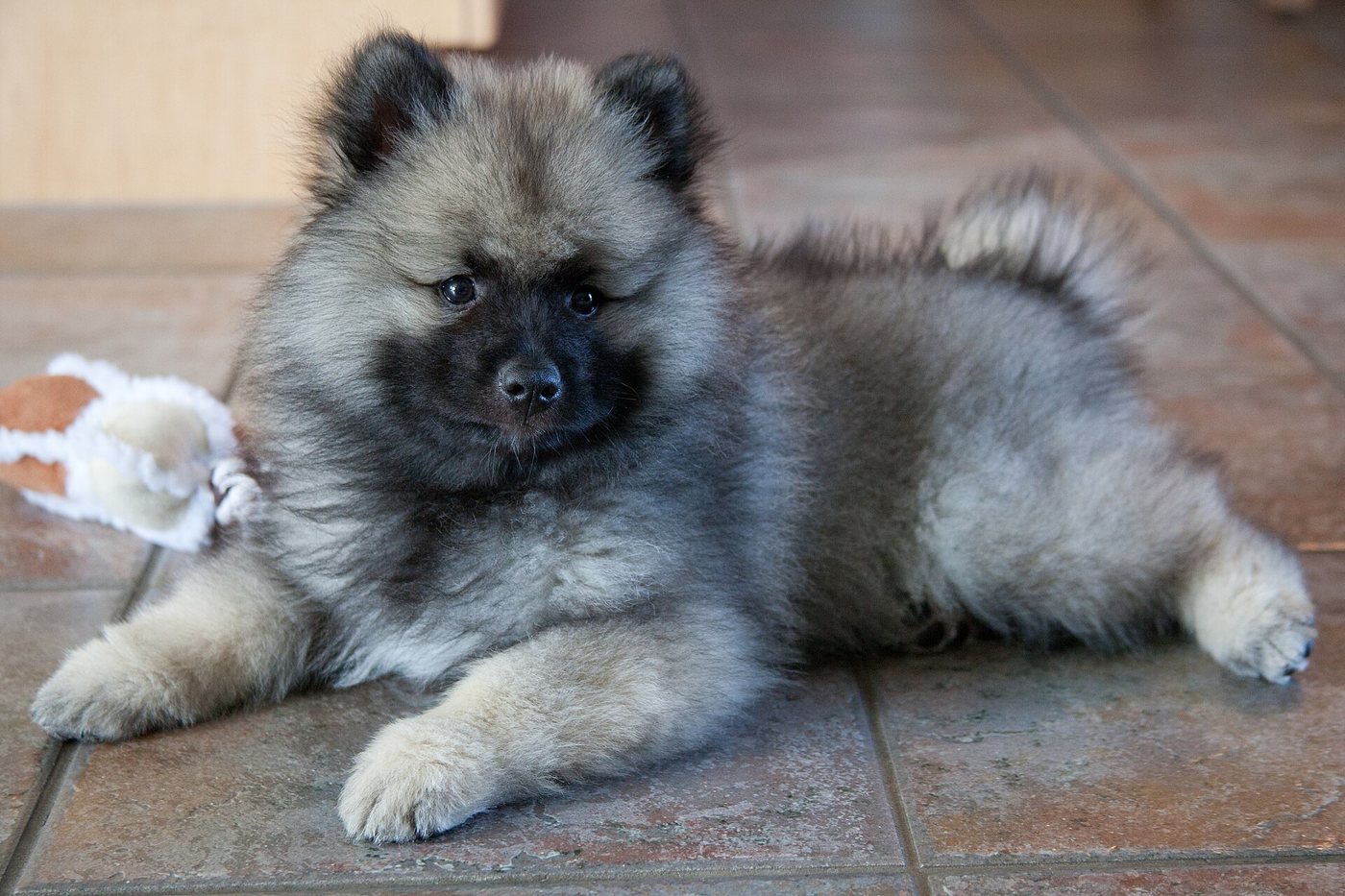
A compact, fox-like dog wrapped in a spectacular double coat: a soft, dense undercoat and harsh straight outer coat in cream, grey, and black, with the famous 'spectacles' — pale markings framing the eyes — that give the breed its name (keeshond means little barrel dog, and the markings look like glasses). The tail curls tightly over the back and the whole dog seems to smile.
Care & daily life
About an hour of exercise a day — walks, play, and training games — suits this people-oriented breed; they are happiest included in everything. The coat needs real attention: brush to the skin once or twice a week to prevent the undercoat matting, and expect impressive shedding. Never shave a Keeshond; the coat insulates against heat as well as cold.
Health & lifespan
The Keeshond is generally known for the following health watch-points:
- Hip dysplasia
- Patellar luxation
- Primary hyperparathyroidism — an inherited calcium disorder in the breed; a DNA test exists and good breeders screen for it
- Epilepsy occurs in some lines
- Skin and coat problems and hypothyroidism are also seen
Living with a Keeshond
Keeshonden adapt readily to apartments and houses alike provided they get daily exercise and — above all — company. This is a breed bred to live at close quarters with its people, and it pines when excluded. It is a fine choice for families and first-time owners comfortable with serious shedding.
History
The Keeshond was the barge dog of Holland, riding the canals as companion, watchdog, and rat-catcher. In the 1780s it became the symbol of the Dutch Patriots' party, named for their leader Cornelis 'Kees' de Gyzelaar; when the Patriots lost, the breed nearly vanished with them. Revived in the early 1900s by Baroness van Hardenbroek, it was recognised by the AKC in 1930.