Overview
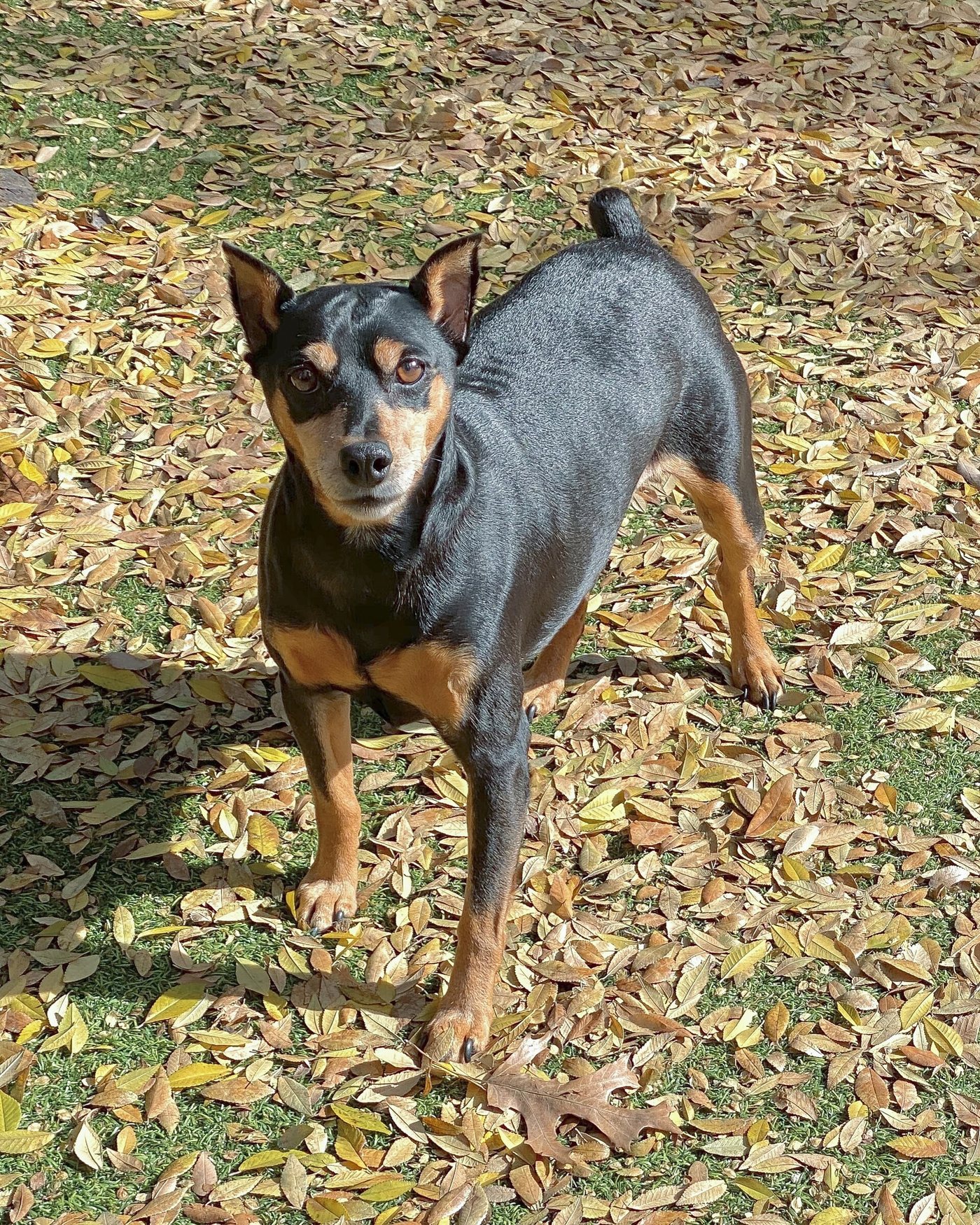
The Miniature Pinscher is proof that confidence is not measured in pounds. Developed in Germany as a ratter, the 'King of Toys' struts through life with a high-stepping gait and total self-assurance, combining a watchdog's vigilance with an athlete's energy in an eight-pound frame. It is one of the most characterful of the toy breeds — and one of the least suited to owners expecting a quiet accessory.
Temperament & personality
Fearless, curious, and perpetually busy. Min Pins are escape artists, investigators, and comedians who bond intensely to their people. They train well with food and fun but have an independent streak that laughs at half-hearted rules. Early socialization keeps their natural vigilance from sharpening into suspicion of every visitor.
Appearance
A tiny, proud athlete with a short, gleaming coat in red, black-and-tan, or chocolate-and-tan, a slightly domed skull, large erect ears, and the breed's signature hackney-like, high-stepping gait. Everything about the Min Pin is scaled-down elegance — fine bone, arched neck, and a tail carried high. It looks like a Doberman in miniature, though the two breeds are not directly related.
Care & daily life
About an hour a day of exercise and play — Min Pins are tiny furnaces of energy and need real outlets, or the house becomes their racetrack. The short coat needs almost no grooming, but the breed feels the cold and appreciates a sweater in winter. House-training takes patience and consistency, and secure fencing is essential: Min Pins are escape artists with no traffic sense and a strong prey drive off-leash.
Health & lifespan
The Miniature Pinscher is generally known for the following health watch-points:
- Patellar luxation (slipping kneecaps) — the common toy-breed issue
- Legg-Calvé-Perthes disease (hip joint deterioration in young dogs)
- Mucopolysaccharidosis VI (MPS VI) — a DNA-testable storage disorder in the breed's screening panel
- Progressive retinal atrophy and cervical disc problems are reported
- Generally a hardy breed overall
Living with a Miniature Pinscher
Min Pins are natural apartment dogs in size and exercise needs, but not in attitude — they suit owners who want a real dog's energy and ego in a travel-sized package. They bond fiercely, often to one person, and they are a poor match for homes with very small children (fragile legs) or owners who want a placid lap ornament.
History
The Miniature Pinscher — the Zwergpinscher — was developed in Germany as a farm and household ratter, most likely from the German Pinscher with Dachshund and Italian Greyhound crosses refining size and elegance. German breeders organised the Pinscher Klub in 1895 and wrote the first standard; the breed arrived in the United States in the 1920s and quickly earned its 'King of Toys' billing.