Overview
The Nova Scotia Duck Tolling Retriever is the smallest retriever and the most theatrical: it earns its keep by performing. Romping and splashing at the shoreline, it tolls — lures — waterfowl into range the way foxes fascinate ducks, then retrieves from water cold enough to empty most beaches. Intelligent, intense, and affectionate, the Toller is a specialist's dog that rewards owners who give it work, water, and room to scream with joy.
Temperament & personality
Intelligent, outgoing with its own people, and more thoughtful than the typical retriever. Tollers assess strangers before befriending them, learn routines at alarming speed, and can be inventive when under-employed. They are affectionate family dogs and keen, driven workers, with a sensitive streak that responds to fair, positive training rather than pressure.
Appearance
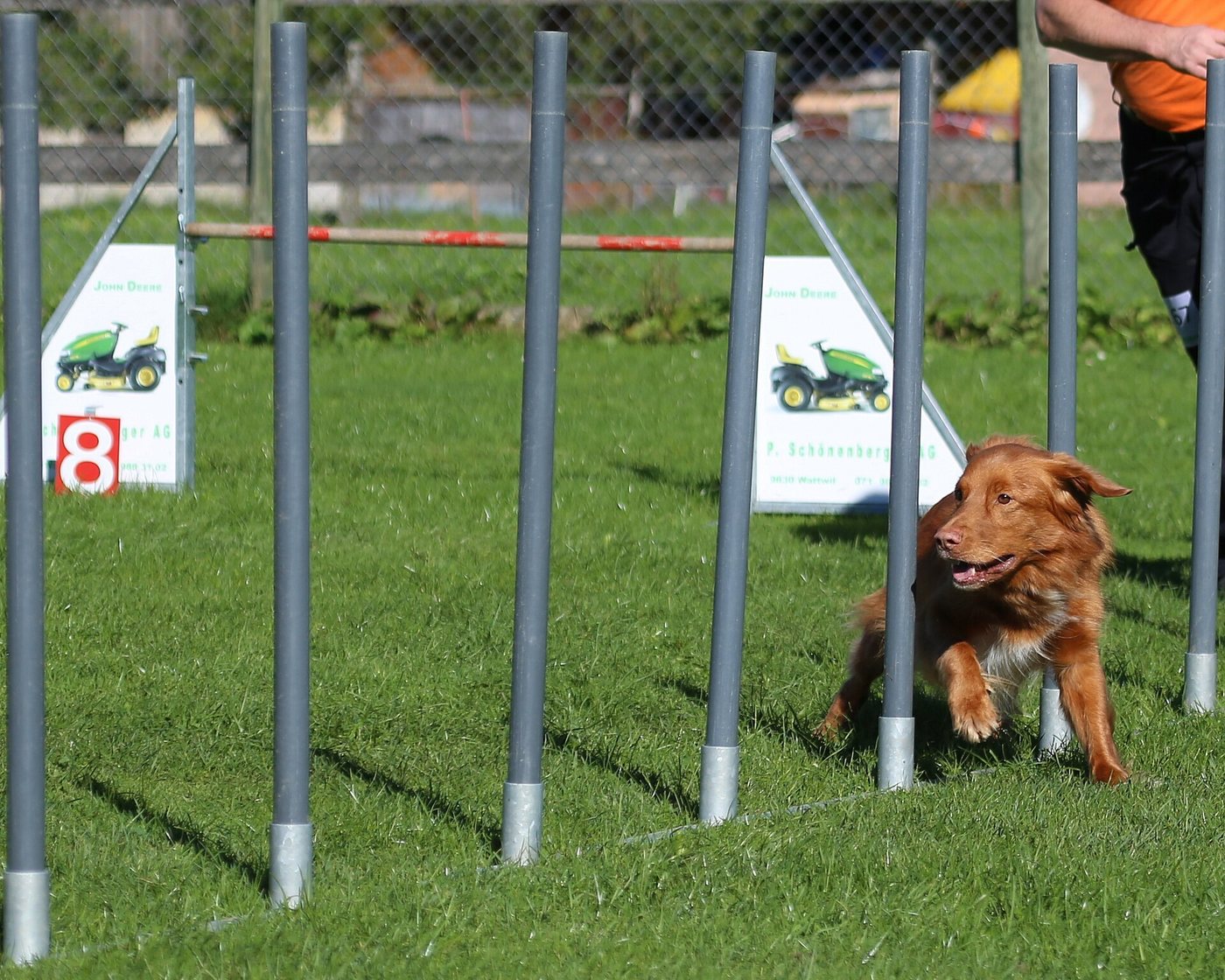
A medium, flame-red retriever with white markings on the chest, feet, tail tip, and often the face, a medium-length water-repellent double coat, webbed feet, and an alert, almost fox-like expression. The resemblance to a small Golden Retriever crossed with a fox is no accident — tolling imitates a fox's movements to lure curious waterfowl within range.
Care & daily life
One to one and a half hours a day, ideally including retrieving and swimming — Tollers were built for icy Atlantic water and have energy to match their intelligence. Mental work is as important as miles: training, scent games, and jobs. Brush weekly, daily during the seasonal sheds. One breed signature to budget for emotionally: the 'Toller scream,' a high-pitched yowl of excitement when the fun starts — alarming to the uninitiated, normal for Tollers.
Health & lifespan
The Nova Scotia Duck Tolling Retriever is generally known for the following health watch-points:
- Inherited conditions are concentrated by a small gene pool, so DNA panels matter: prcd-PRA and collie eye anomaly are standard tests
- Juvenile Addison's disease — a breed-specific, DNA-testable form appearing in young dogs
- Cleft palate and degenerative encephalopathy are also on the breed's DNA panel
- Autoimmune disorders are reported at higher rates than average
- Hip dysplasia — ask for hip scores
Living with a Nova Scotia Duck Tolling Retriever
Tollers suit active, dog-savvy homes — hunters, sport trainers, and outdoorsy families — and they can be reserved with strangers where a Lab or Golden is everyone's friend. They are not ideal first retrievers for sedentary owners, and their scream and energy rule out thin-walled apartments unless the exercise is genuinely delivered. In the right home they are devoted, versatile, endlessly entertaining athletes.
History
The Toller was developed in the 19th century in Nova Scotia's Little River district of Yarmouth County, where hunters crossed retrievers, spaniels, setters, and possibly farm collies to create a dog that could toll and retrieve in icy water. The type was recognised by the Canadian Kennel Club in 1945 as the Nova Scotia Duck Tolling Retriever and by the AKC in 2003 — the smallest of the retriever breeds and Canada's gift to gundog work.