Overview
The Rottweiler is one of the oldest and most capable working breeds: cattle drover, cart dog, guard, and police dog across two thousand years of history. Modern Rottweilers are calm, self-assured, and deeply loyal, with a natural guarding instinct that needs no encouragement. This is a serious dog for serious owners — in experienced hands, few breeds are more steadfast.
Temperament & personality
The well-bred Rottweiler is not a lunging brute but a watchful, thinking dog that prefers to assess before acting. With family it is affectionate and often surprisingly gentle and clownish. Its loyalty and strength make socialization the central project of its first year: a confident, widely-exposed puppy becomes a stable adult.
Appearance
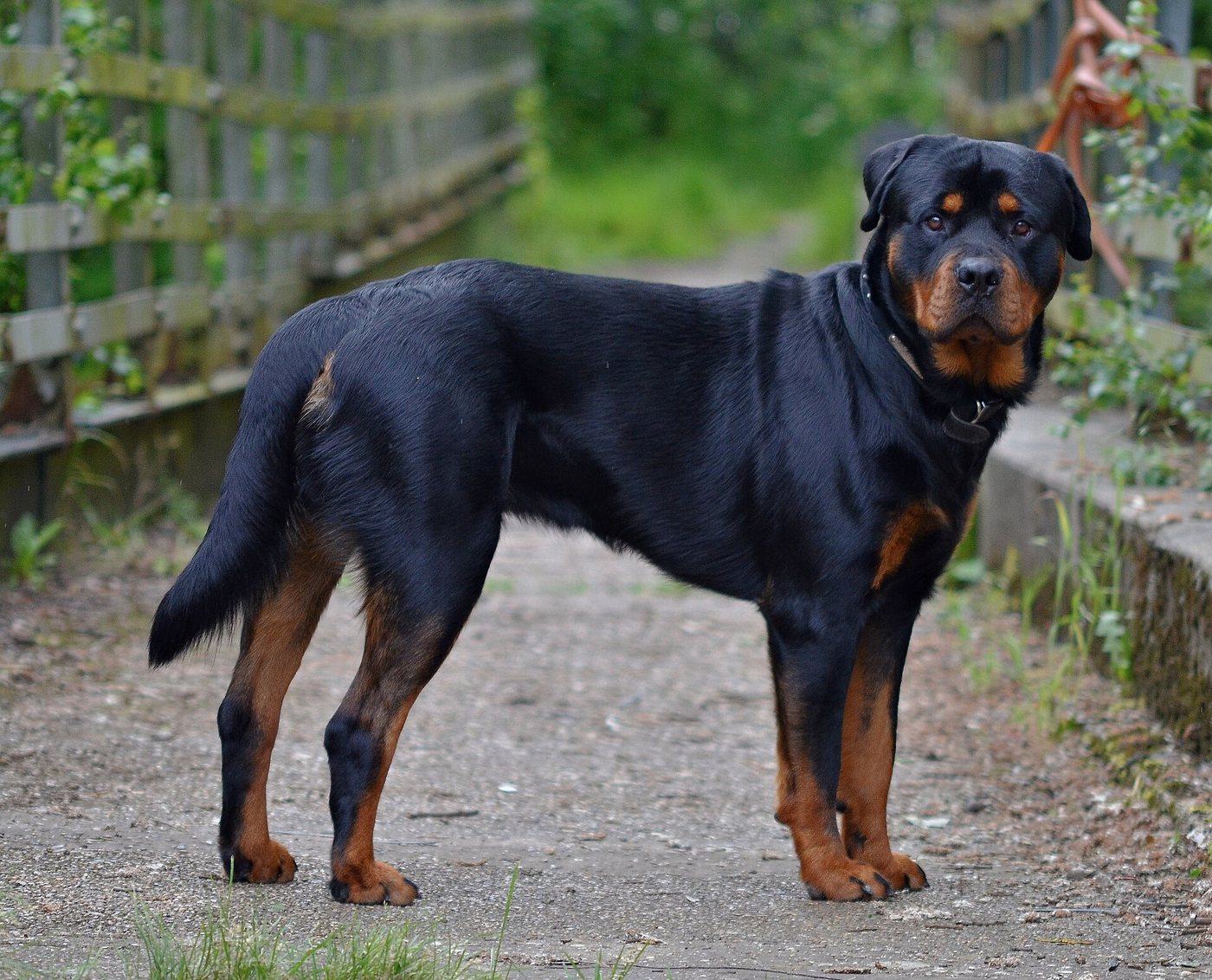
A large, robust, muscular dog with a slightly domed broad head, deep chest, and a short black coat with clearly defined rust markings over the eyes, on the cheeks, chest, legs, and under the tail. Males are noticeably larger and more massive than females.
Care & daily life
Plan on one and a half to two hours of exercise and purposeful activity daily — obedience work, tracking, carting, or hiking all suit the breed's working heritage. Early training and socialization are essential, not optional, and should continue through adolescence. The short coat needs only weekly brushing, though shedding season is real.
Health & lifespan
The Rottweiler is generally known for the following health watch-points:
- Hip and elbow dysplasia
- Osteosarcoma (bone cancer) occurs at elevated rates
- Heart conditions including subaortic stenosis
- Cruciate ligament tears and obesity-related strain in a heavy breed
- Entropion and other eye issues in some lines
Living with a Rottweiler
Rottweilers belong in experienced homes with space, structure, and time — ideally owners who want a training partner, not just a pet. Insurance and local breed regulations are worth checking in some areas. Raised right, a Rottweiler is a steady, devoted, almost solemn family companion.
History
The breed descends from the drover dogs that moved cattle with Roman armies into what is now Germany. In the market town of Rottweil they drove herds, pulled carts, and guarded the proceeds — butchers' dogs that famously carried money pouches around their necks. Rail transport nearly ended the breed in the 1800s before police and military work revived it.