Overview
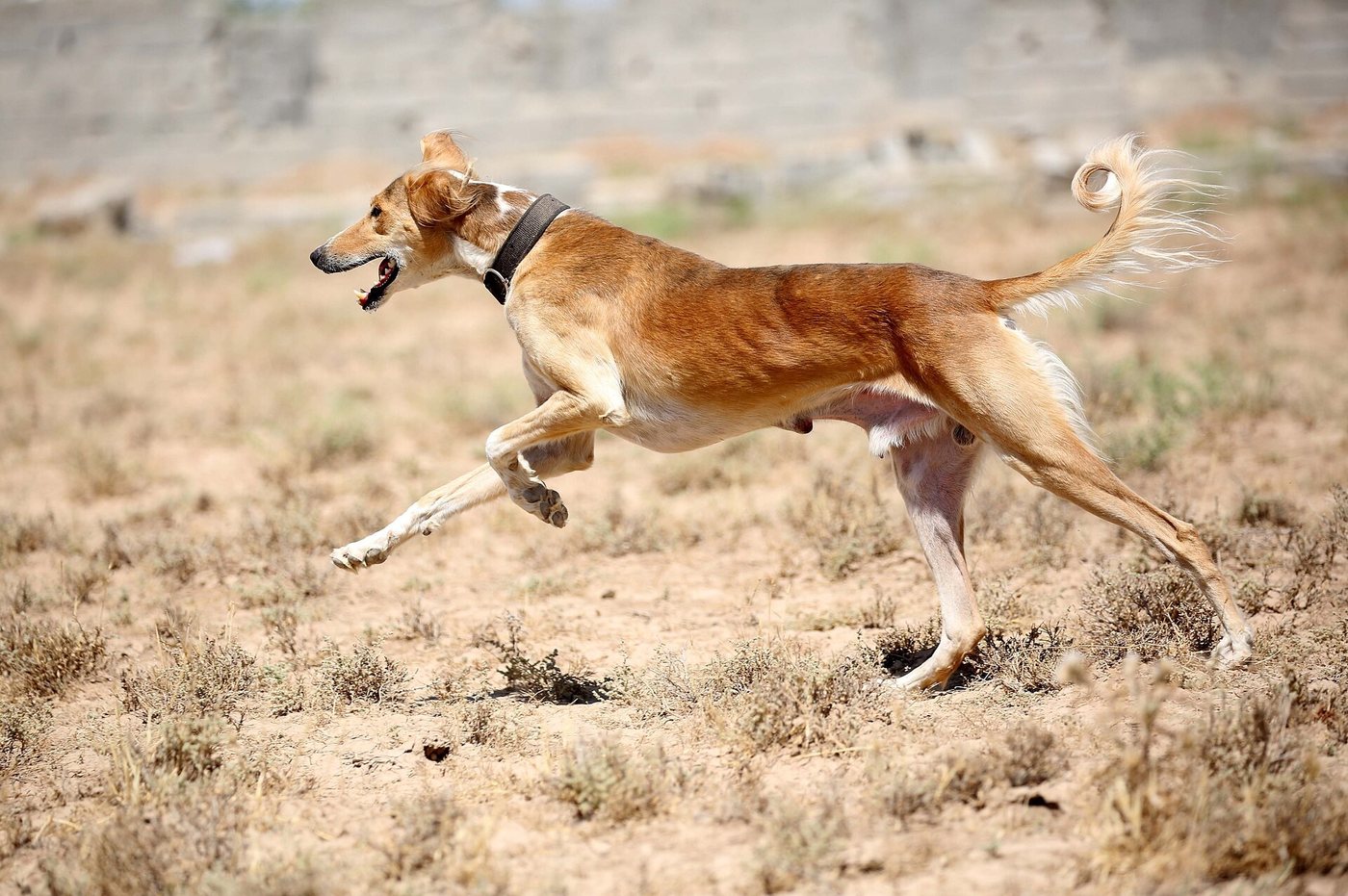
The Saluki is the royal dog of the desert: a feathered sighthound bred by nomadic tribes to run down gazelle over sand and rock at speeds few animals on Earth can match. It is also one of the most ancient recognisable types of dog. As a companion it is gentle, quiet, and self-contained — an aristocrat that chooses its moments of affection.
Temperament & personality
Gentle, dignified, and deeply independent. Salukis form strong bonds but are not fawning; affection is given on their terms and is the more valued for it. They are sensitive to raised voices and rough handling, reserved with strangers, and quietly devoted at home. Their chase instinct is absolute — generations of selection mean a Saluki that sees game is gone, whatever your training.
Appearance
One of the most elegant dogs alive: a feathered sighthound with a long, narrow head, large dark eyes, and silky feathering on the ears, tail, and backs of the legs. The smooth coat comes in nearly every colour and pattern — fawn, cream, white, red, black, and particolour among them. Everything about the Saluki reads as designed by wind: deep chest, tucked waist, and long, effortless lines.
Care & daily life
Salukis need one and a half to two hours of activity daily with opportunities to sprint in a large, securely fenced area — a sighthound at full stretch covers ground frighteningly fast and must never run loose near roads. The silky feathering needs a brush two or three times a week to prevent tangles. They are thin-skinned and feel the cold; most appreciate a coat in winter and soft beds year-round.
Health & lifespan
The Saluki is generally known for the following health watch-points:
- Heart conditions, including cardiomyopathy, are screened for in the breed
- Cancer, particularly haemangiosarcoma and osteosarcoma, occurs more often than average
- Hypothyroidism and autoimmune conditions are reported
- Anaesthetic sensitivity is noted in lean sighthounds generally — worth mentioning to your vet
- Overall a sound breed; breeders commonly screen hearts, thyroid, and eyes
Living with a Saluki
For quiet, gentle households that can provide serious sprinting space and a soft sofa. Salukis are reserved with strangers, devoted in a quiet way to their family, and almost cat-like in their cleanliness and independence at home. They are a poor match for noisy, chaotic homes or anyone wanting an obedient, eager dog.
History
Saluki-type dogs coursed gazelle across the Fertile Crescent for thousands of years; similar dogs appear in Egyptian tomb art dating back well over 4,000 years, and Bedouin tribes valued the dogs as gifts of God, hunting partners that shared tent and table. The breed reached the West in the late 1800s and was recognised by the AKC in 1929. Whether it is the world's oldest breed is unprovable — but it is certainly among the most ancient types still coursing today.