Overview
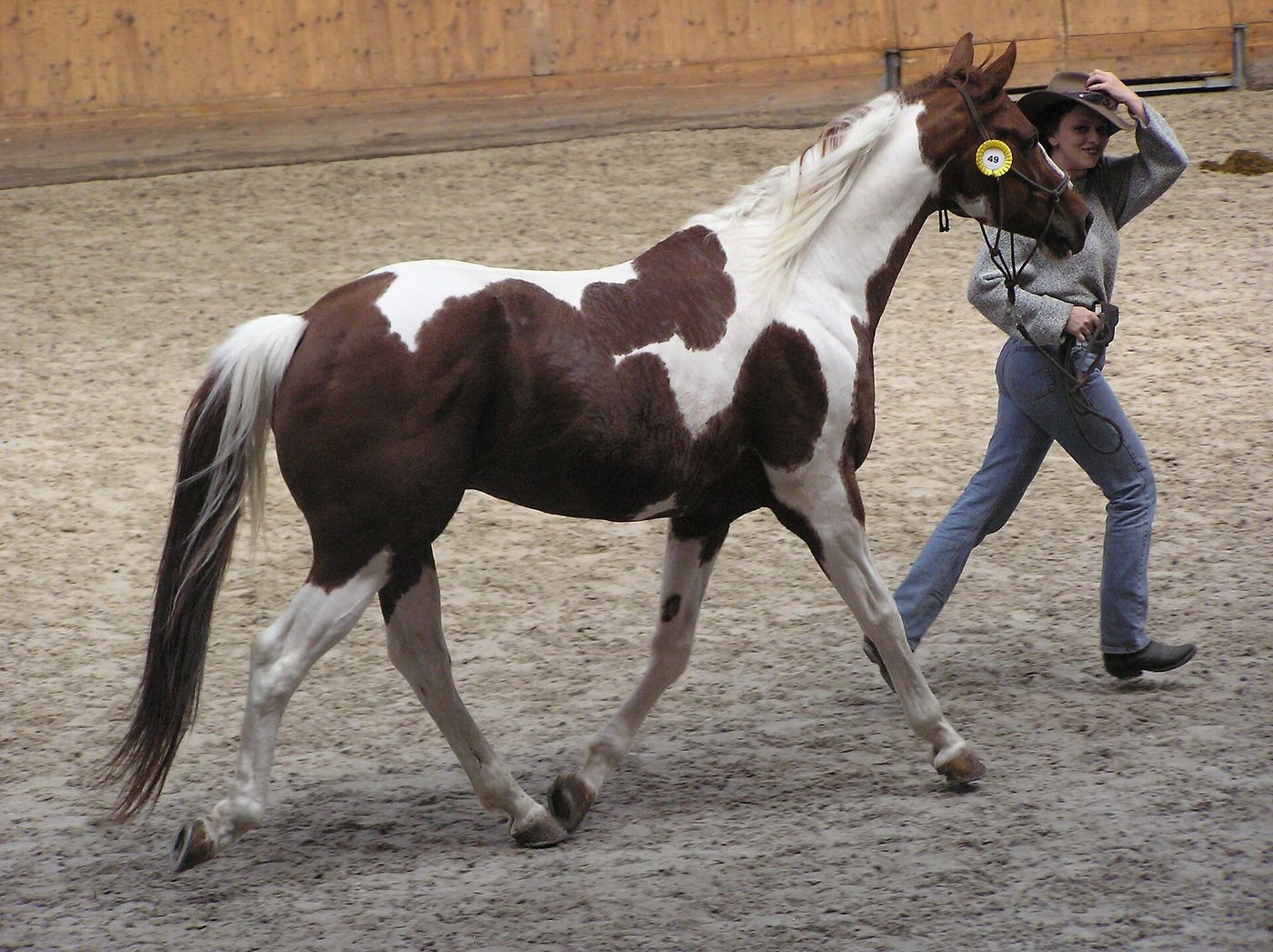
The American Paint Horse is what happened when America's stock-horse world admitted its most colourful members: a breed built on Quarter Horse and Thoroughbred bloodlines, defined by pinto coat patterns — bold tobiano, overo, and tovero designs in which no two horses are marked alike. Stock-horse calm, athleticism, and versatility under the flashiest coat in the business made the Paint the second great American show breed: the American Paint Horse Association runs one of the largest registries on Earth and a show circuit famous for amateur and youth competition.
Temperament & personality
Paints carry the stock-horse mind: calm, bright, willing, and people-oriented, bred for amateur and youth riders as much as for professionals. They are level-headed partners for the show pen and the trail alike — sensible enough for families, athletic enough for serious competition. As with the Quarter Horse, individual variation exists, but the breed's centre of gravity is an easy, trainable disposition.
Appearance
Stock-horse substance wearing a unique painting: the conformation is pure Quarter Horse type — muscular hindquarters, deep chest, refined head — under coats divided into tobiano (white crossing over the back, dark head, white legs), overo (white that stays off the back, often with bald faces and blue eyes), and tovero combinations. Each pattern distributes differently according to its genetics, and every foal's markings are one of a kind.
Care & daily life
Care is standard stock-horse management — forage-led feeding with easy-keeper vigilance, regular hoof care, and exercise matched to discipline. Two Paint-specific items: pink skin under white facial markings sunburns and needs shade and sunscreen habits, and white legs show every cut and scrape (a cosmetic rather than medical issue). For breeding animals, genetic panel testing — above all for the frame overo gene — is not paperwork but welfare, and any responsible Paint programme runs it before mating.
Health & lifespan
The American Paint Horse is generally known for the following health watch-points:
- Overo lethal white syndrome (OLWS) — the breed's defining genetic duty. Foals that inherit the frame overo gene (EDNRB) from BOTH parents are born all-white with an undeveloped, non-functioning colon; they cannot survive and die or are euthanised within days. The DNA test is definitive: never breed two frame carriers untested. Statistically, one in four foals of two carriers is affected
- GBED (glycogen branching enzyme deficiency) — an inherited condition of stock breeds, fatal in foals; DNA-testable and carried in some Paint lines
- HERDA — an inherited skin fragility disorder of certain cutting-bred lines; DNA-testable, and carriers should be bred only with full knowledge
- HYPP and PSSM1 also occur through Quarter Horse ancestry — the standard genetic panel (the 'six-panel') covers all of these; ask sellers and stallion owners for panel results
- Sunburn and elevated skin-cancer vigilance on unpigmented pink skin, especially around the eyes and muzzle
Living with a American Paint Horse
Paints suit amateur and youth show competitors, pleasure and trail riders, and families who want stock-horse sense in a one-of-a-kind coat. Running costs are moderate and ordinary across a 25–30-year life; the breed-specific responsibilities belong to breeders, for whom panel testing — OLWS above all — is an absolute obligation. For owners, the only extras are sun care for pink skin and a lifetime of strangers asking about the markings.
History
Spotted horses have run through American history since the Spanish imports — celebrated by Native nations and cowboys alike — but pinto horses were excluded from the Quarter Horse registry for 'excess white'. Owners of those horses organised their own registries in the early 1960s, and the American Paint Horse Association was founded in 1962, consolidating the Paint registries by the middle of the decade. The breed grew explosively on two assets — Quarter Horse quality and unmatched colour — becoming one of the world's largest breed registries and a mainstay of amateur showing.