Overview
The Andalusian — formally the Pura Raza Española, the pure Spanish horse — was the mount of kings and the foundation of classical equitation: the horse of the Spanish court, the bullring, and the riding schools that became Vienna's Spanish Riding School. Compact, powerful, and theatrically beautiful, with its arched neck and flowing mane, the breed remains the world's reference for collected, high-school dressage movement and for sheer riding-horse presence.
Temperament & personality
Andalusians are proud but biddable — a combination riders describe as noble. They are brave (the bullring selected for it), sensitive without hotness, quick to learn, and deeply people-oriented, often bonding visibly with their rider. Their intelligence and pride punish coarse handling and repay classical patience: an Andalusian that trusts you will offer movements that other breeds must be taught stride by stride.
Appearance
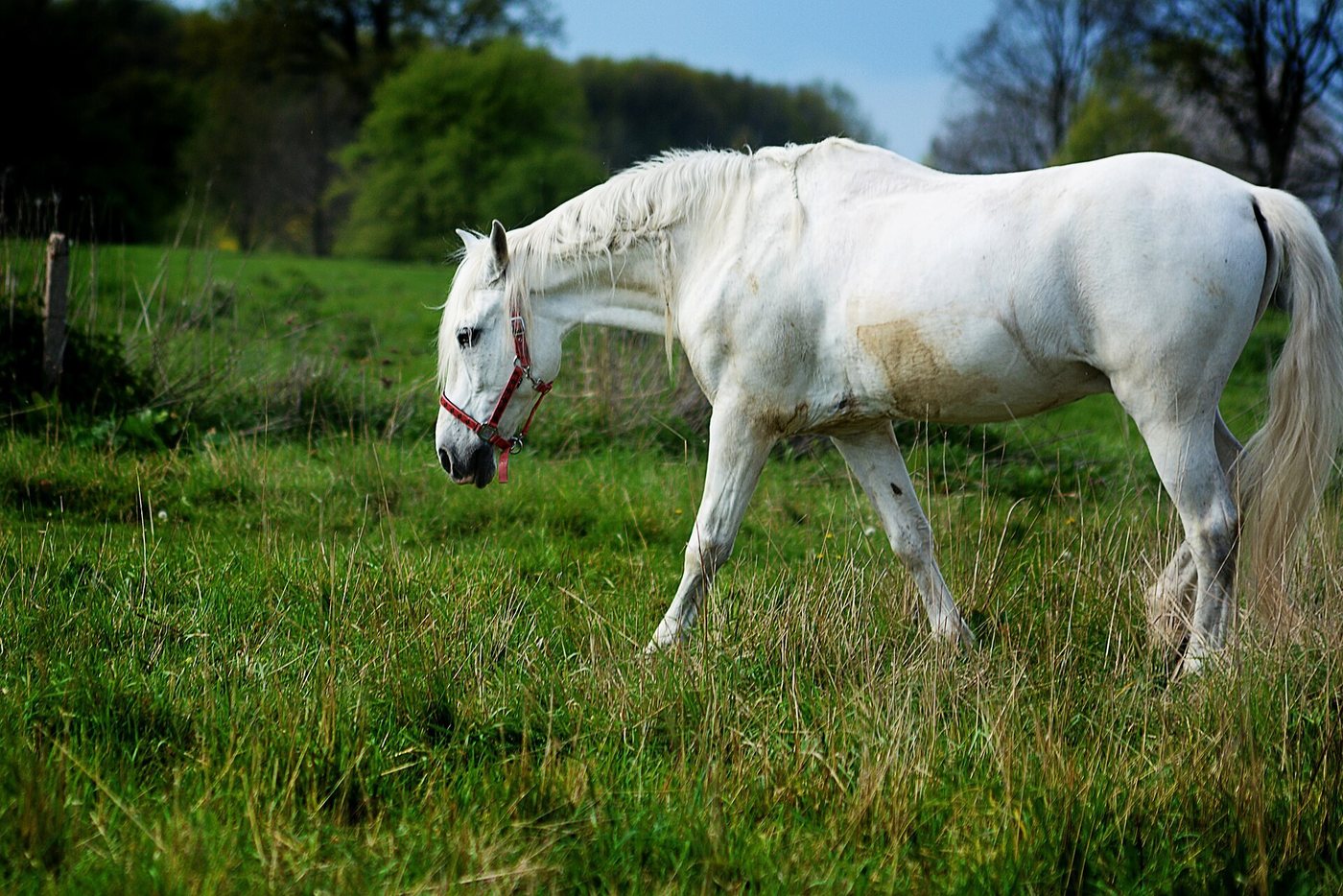
A baroque, noble horse of unmistakable Spanish type: a long, slightly convex head with expressive eyes, a thick arched neck, a luxurious mane and tail, a compact powerful body, and proud, elevated movement. Grey is the iconic colour — most Andalusians grey out from dark foals to near-white adults — with bay and black also recognised.
Care & daily life
Andalusians are generally hardy, easy-keeping horses: forage-based feeding with restraint (they gain readily), daily turnout, and regular hoof care. Young horses mature slowly — traditional Spanish practice starts them late, and their joints benefit from patience. The glorious mane and tail need regular detangling and care to avoid breakage; show horses often wear the mane in the traditional long style or roached. Training should be quiet and classical; harsh methods sour this breed's pride quickly.
Health & lifespan
The Andalusian is generally known for the following health watch-points:
- Grey horses of all breeds carry elevated melanoma risk — Andalusians should be checked regularly, especially under the tail and around the head, from middle age
- Metabolic tendencies: like other easy-keeping baroque breeds, they are prone to obesity and its complications on rich feeding
- Generally a sound, hardy breed with no single dominant inherited disease identified in the PRE population
- Standard performance-horse issues (joint wear, colic risk under intensive stabling) apply as with any breed
Living with a Andalusian
Andalusians suit dressage riders, classical equitation devotees, and romantics prepared for a proud, sensitive horse that thrives on partnership rather than domination. Ownership costs are moderate by sport-horse standards across a 25–30-year life; the breed's rarity keeps purchase prices high. In return: a horse that looks like a painting and works like a colleague.
History
Horses of Iberian type are among Europe's oldest — cave paintings in Spain depict their profile 20,000 years ago. The Andalusian, formalised as the Pura Raza Española ('pure Spanish breed'), was shaped by royal studs such as Córdoba's (founded 1570 by Philip II) and by Carthusian monks, whose Cartujano line is considered the purest strain. For centuries it was the horse of European royalty and classical riding academies — the Spanish Riding School's Lipizzaners descend in part from these lines. Export was restricted for much of the 20th century, keeping the breed rare outside Iberia until recent decades.