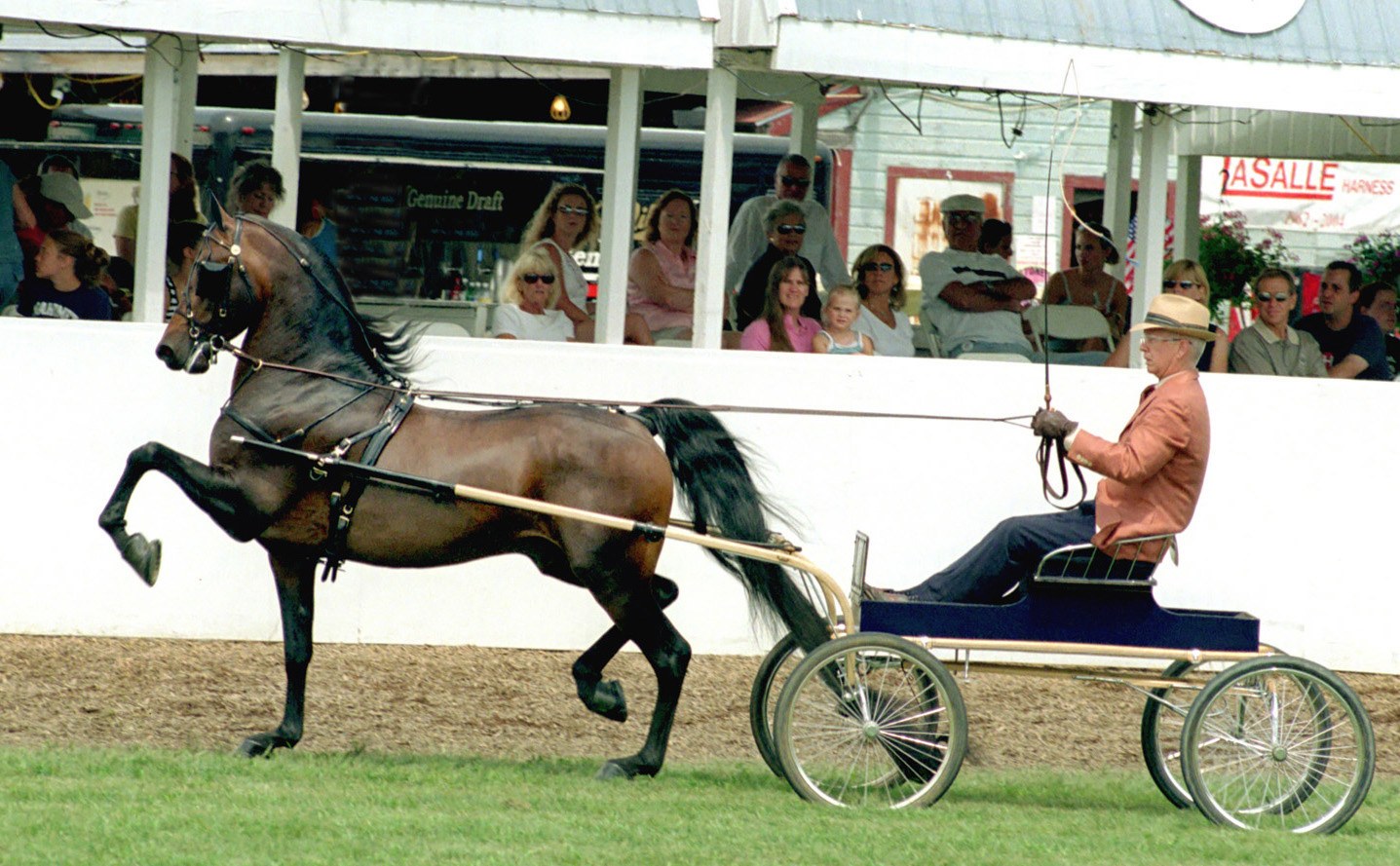
Overview
The Morgan is the horse one stallion built. Every Morgan alive descends from a single small bay horse — Justin Morgan's Figure, foaled in 1789 — whose prepotency was so extraordinary that he stamped generations of New England horses with his compact power, animated gaits, and indestructible constitution. From that root grew America's first documented breed and a foundation influence on the Standardbred, Tennessee Walker, and American Saddlebred. The modern Morgan remains what Figure was: a beautiful, tough, all-purpose horse that does everything and lives forever.
Temperament & personality
Morgans combine sparkle with sense: spirited, expressive, and eager, yet tractable and famously bonded to their people. They are intelligent problem-solvers who need jobs and interaction — a Morgan with work to do is the barn favourite; a Morgan bored in a stall is a project manager of mischief. Their courage and stamina suit competitive riders, while their tractability keeps them in lesson barns and family pastures.
Appearance
The Morgan look is 'proud and compact': an expressive head with a straight or slightly dished profile, wide-set eyes, and small ears; a deep, crested neck; a short, strong back; and a round, muscular hindquarter carried with natural animation. The mane and tail are famously thick and wavy. Two broad types exist — the up-headed, high-stepping 'park' Morgan and the stockier, old-style 'foundation' Morgan — but the breed's stamp of quality and presence unites them.
Care & daily life
Morgans are classic easy keepers — true to their Vermont farm roots, they thrive on plain forage, fresh air, and work, and the chief care task is restraint: unlimited rich pasture or grain invites obesity and laminitis. Feet are typically excellent, and the breed's soundness is legendary; most Morgans need nothing exotic beyond routine hoof care, dental work, and vaccinations. They mature into their best selves with consistent handling from youth and are commonly ridden and driven well into their twenties.
Health & lifespan
The Morgan is generally known for the following health watch-points:
- A notably sound, long-lived breed with no dominant inherited disease — a genuine selling point of the Morgan
- Easy-keeper metabolism: obesity, equine metabolic syndrome, and laminitis are the practical health risks, managed by forage discipline rather than medication
- PSSM1 has been reported at low frequency in the breed; testing is available if a horse shows muscle symptoms
- Hoof quality is typically excellent and lameness rates are low by sport-horse standards
- Show-ring practices in the park divisions are tightly regulated under current welfare rules; buy and show within them
Living with a Morgan
Morgans suit owners who want one horse that does it all — show on Saturday, trail ride on Sunday, drive the kids on Monday — and who will keep it for decades, because the horse will likely be sound and willing for all of them. Costs are modest by horse standards: small feed bills, hard feet, and few veterinary dramas across a 25–30-plus-year life. The commitment is time and engagement, not money and management.
History
Figure was foaled in West Springfield, Massachusetts, in 1789 and taken to Randolph, Vermont, by schoolmaster and composer Justin Morgan, whose name the horse — and then the breed — took. Figure out-pulled, out-trotted, out-ran, and outlasted every challenger in New England while working farms and clearing land, and his sons and daughters spread his type across America. Morgans became the US Cavalry's favoured mount, the Vermont farmer's everything-horse, and a foundation of several later American breeds. The breed registry dates to 1894, and the Morgan is Vermont's state animal.