Overview
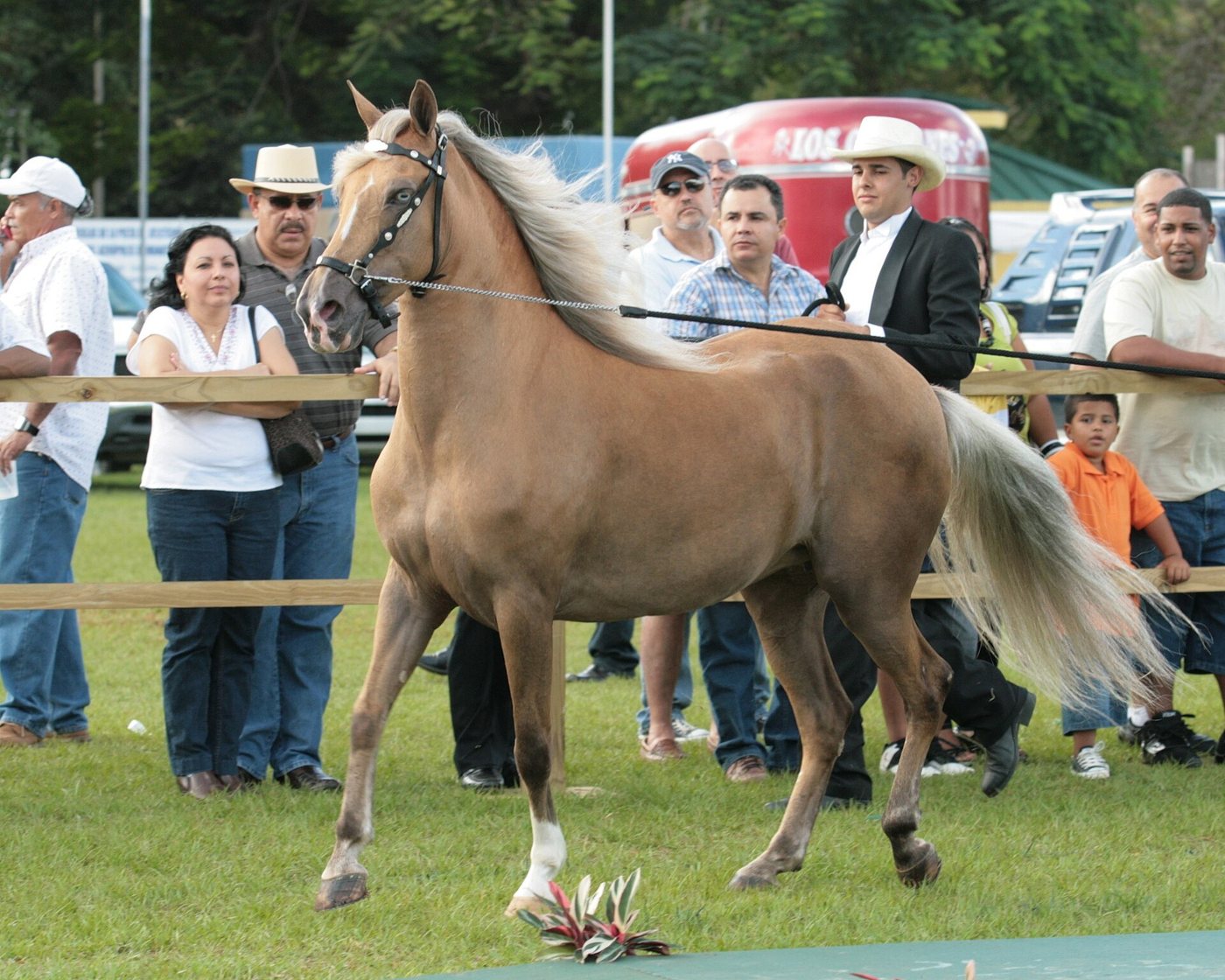
The Paso Fino — 'the horse of the fine step' — descends from the horses Columbus and the conquistadors brought to the Caribbean and South America: Andalusians, Barbs, and the now-vanished Spanish Jennet, whose ambling gait the Paso inherited. Isolated for centuries in Puerto Rico and Colombia, the breed refined that gait into the smoothest ride in the horse world, performed in three speeds and shown on sounding boards so judges can hear the flawless four-beat rhythm — a rapid tick-tick-tick-tick, like castanets. Compact, proud, and electric with brio, the Paso Fino is a luxury trail horse with five centuries of pedigree.
Temperament & personality
The Paso temperament is summed up in one Spanish word: brio — spirit, energy, and heart, held willingly under the rider's hand. Paso Finos are sensitive, intelligent, and forward without being frantic; they bond closely and respond to light, tactful riding. Rough handling insults them; quiet partnership unlocks a horse that will gait smoothly all day and still be dancing at the end of the trail.
Appearance
A small, elegant, unmistakably Spanish horse: a fine head with a straight or slightly convex profile, large expressive eyes, a proud arched neck, a compact body, and a long, flowing mane and tail. Movement is the true signature — collected, rapid, low footfall with virtually no bounce transmitted to the rider, the front legs flashing in the fino's rapid-fire rhythm while the horse appears almost still.
Care & daily life
Pasos are hardy, easy-keeping horses: forage-first feeding with care against obesity, regular hoof care (the gait performs best on balanced, sensibly trimmed feet), and steady exercise. Their sensitivity rewards light aids and consistent routines. Owners should keep records of soundness history, ride on varied but not punishing terrain, and give young horses time — Paso gaits stay purest in horses trained without gimmicks, weighted shoes, or haste.
Health & lifespan
The Paso Fino is generally known for the following health watch-points:
- A generally hardy, exceptionally long-lived breed with no single dominant inherited disease
- Degenerative suspensory ligament desmitis (DSLD) has been reported in Paso Finos and is an active research topic in several gaited breeds — ask about family soundness history and have the suspensory ligaments evaluated at a pre-purchase exam
- Easy-keeper metabolism: obesity and laminitis on rich feed and pasture
- The gait should be protected, not manufactured: heavy shoes, action devices, and forced training damage legs and ruin purity of gait — their absence is a welfare marker in a seller
- Standard small-horse longevity care: dental attention matters into the thirties
Living with a Paso Fino
Paso Finos suit riders who value comfort above size: trail riders, pleasure riders, older riders, and gait purists, including many whose backs or knees ruled out trotting horses. Running costs are modest — a small horse and an easy keeper — across an unusually long 25–30-plus-year working life. In return they ask for tact: light hands, clear cues, and an owner who appreciates finesse over force.
History
Spanish horses reached the Caribbean on Columbus's second voyage in 1493 and spread through the colonial world; breeding stations in Puerto Rico and in what is now Colombia selected the smoothest amblers for officers and landowners who spent whole days in the saddle. For centuries these horses were island and mountain treasures, essentially unknown outside. American servicemen stationed in Puerto Rico after the Second World War 'discovered' the breed; imports followed, the US association was founded in 1972, and Colombian and Puerto Rican lines — the Colombian often showier in gait, the Puerto Rican famed for the finest fino — now share one North American breed.