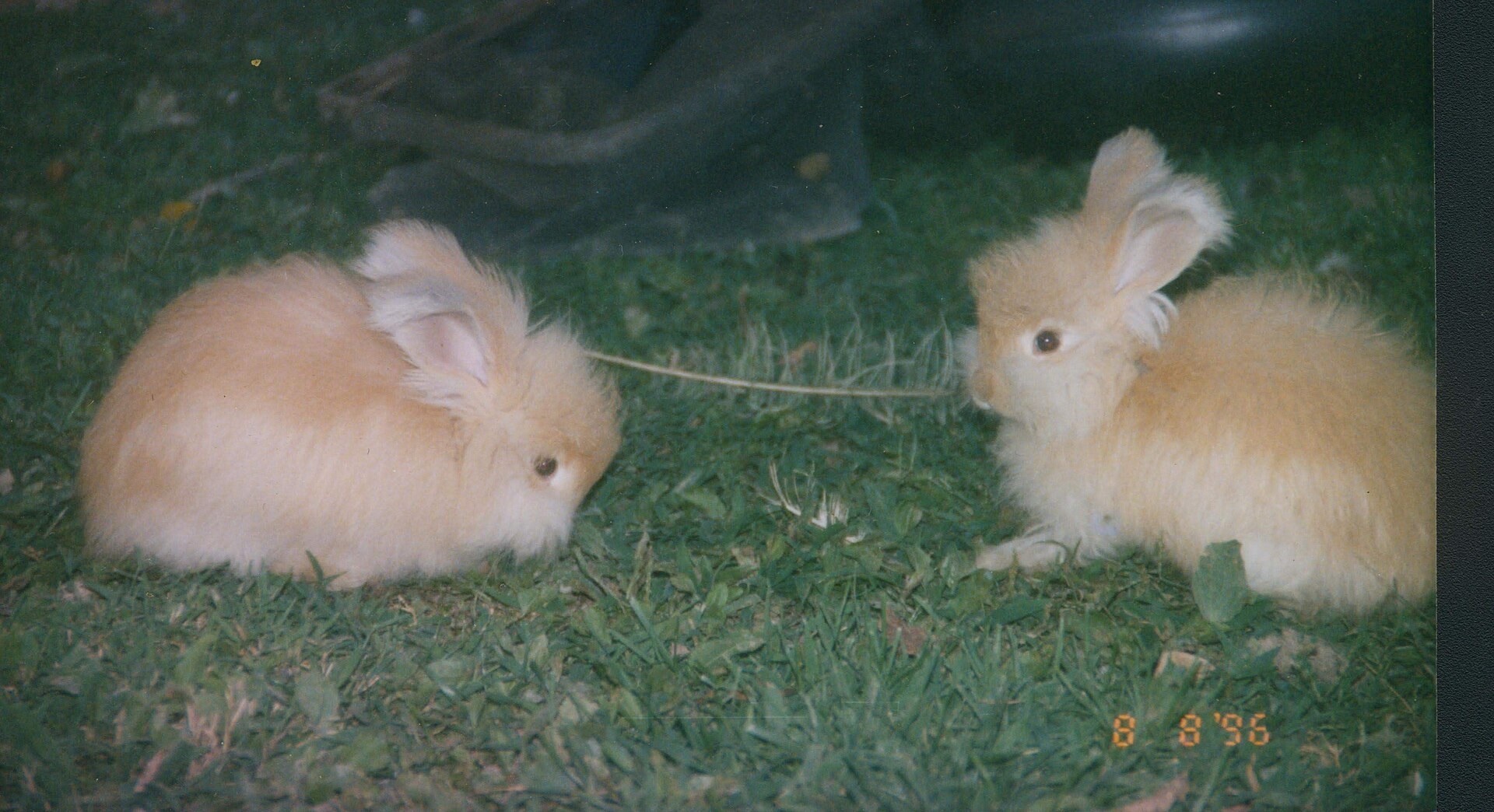
Overview
The English Angora is less a rabbit with long fur than a small, walking wool harvest that happens to be a rabbit: five or six inches of the softest fibre in the animal kingdom, growing over the face, feet, and tasselled ears, renewed on a roughly 90-day cycle. Developed in England from French Angora stock, it is the smallest of the Angora breeds and was purpose-bred for temperament as much as fleece — an animal that must tolerate a lifetime of handling and grooming is an animal selected, generation after generation, for calm.
Temperament & personality
Sweet and unflappable are the breed watchwords. English Angoras are calm, docile, and remarkably tolerant of the handling their coats require, provided grooming is gentle and routine from youth. They are not high-energy rabbits; their style is a serene flop, a slow investigation, a patience with brushing that other breeds would never sign for. Owners fall into two camps — those who find the coat ritual meditative and those who quietly rehome the rabbit; the breed hopes you know which you are before the first harvest comes due.
Appearance
A rabbit wearing a fur coat several sizes too romantic: dense wool up to 5–6 inches long grows over the whole body including the face, giving a round, powder-puff silhouette with only the nose and the tips of furnishings — tasselled ears, woolly feet — hinting at the rabbit inside. The four Angora breeds differ in detail; the English is the smallest and the woolliest-faced. Colours span the full rabbit palette, and the wool, when harvested, is among the softest animal fibres on Earth.
Care & daily life
An English Angora is a grooming contract, full stop. The wool must be kept mat-free by blowing out the coat with a pet blower or gentle combing — most keepers work through the coat weekly and fully every few weeks — and harvested (plucked or sheared) roughly every 90 days as it naturally releases, both for the rabbit's comfort and because a coat left to felt becomes a welfare problem. Diet is the rabbit universal (unlimited hay above all — fibre is the defence against swallowed wool — measured pellets, daily greens), with extra protein support during heavy coat growth per breeder practice. House cool: a full-coated Angora overheats easily in summer and may need its coat kept short in hot climates. This is daily-hands-on rabbit keeping, closer to owning a sheep in miniature than a short-haired pet.
Health & lifespan
The English Angora is generally known for the following health watch-points:
- Wool block — swallowed wool obstructing the gut; the breed-defining risk, fought with unlimited hay and relentless coat care
- Heat stress — a full coat in a hot summer is genuinely dangerous; keep coats shorter and housing cool in hot weather
- Mats and felting if grooming slips, with skin damage and hidden flystrike underneath
- Dental disease and molar spurs, as in all rabbits
- GI stasis — stop-eating is a same-day vet emergency
- Uterine cancer in unspayed does
Living with a English Angora
English Angoras suit a specific, happy minority: fibre artists, spinners, and hands-on keepers who actively want a weekly grooming ritual and a wool harvest four times a year, in exchange for one of the calmest rabbits alive. They are indoor rabbits for cool-to-moderate climates. They are the wrong rabbit for anyone seeking low maintenance, for hot homes without cooling, or as a child's first pet — the coat doesn't forgive being forgotten.
History
Angora rabbits are among the oldest fancy breeds: wool-bearing rabbits reached France from the Ankara (Angora) region of Turkey — the same source as Angora goats and cats — by the early 1700s and were kept by French peasants for their fibre. English breeders took the type and produced the smallest, most heavily furnished of the four ARBA Angora breeds, complete with tasselled ears and a wool-covered face. Angora wool remains a luxury fibre, many times warmer than sheep's wool, and the modern English Angora is both a fibre animal and a notably gentle pet — provided the keeper actually wants the fibre work.