Overview
Dwarf hamster is an umbrella term, and honest advice has to treat the species separately. The Roborovski is a tiny desert sprinter that most owners watch rather than hold; Campbell's and Winter Whites are rounder, slower, and more handleable; the Chinese hamster is a slender climber with an unusually long tail. They share a reputation for living happily in pairs — and that reputation is shaky. Some pairs work; many don't, and the failures happen fast and at night.
Temperament & personality
Busy, bold for their size, and very individual. Winter Whites are often the most placid in the hand; Campbell's can be territorial about their cage; Roborovskis are shy speedsters who would almost always rather flee than bite. All of them cram their cheeks, redecorate constantly, and treat a sand bath as the highlight of the day.
Appearance
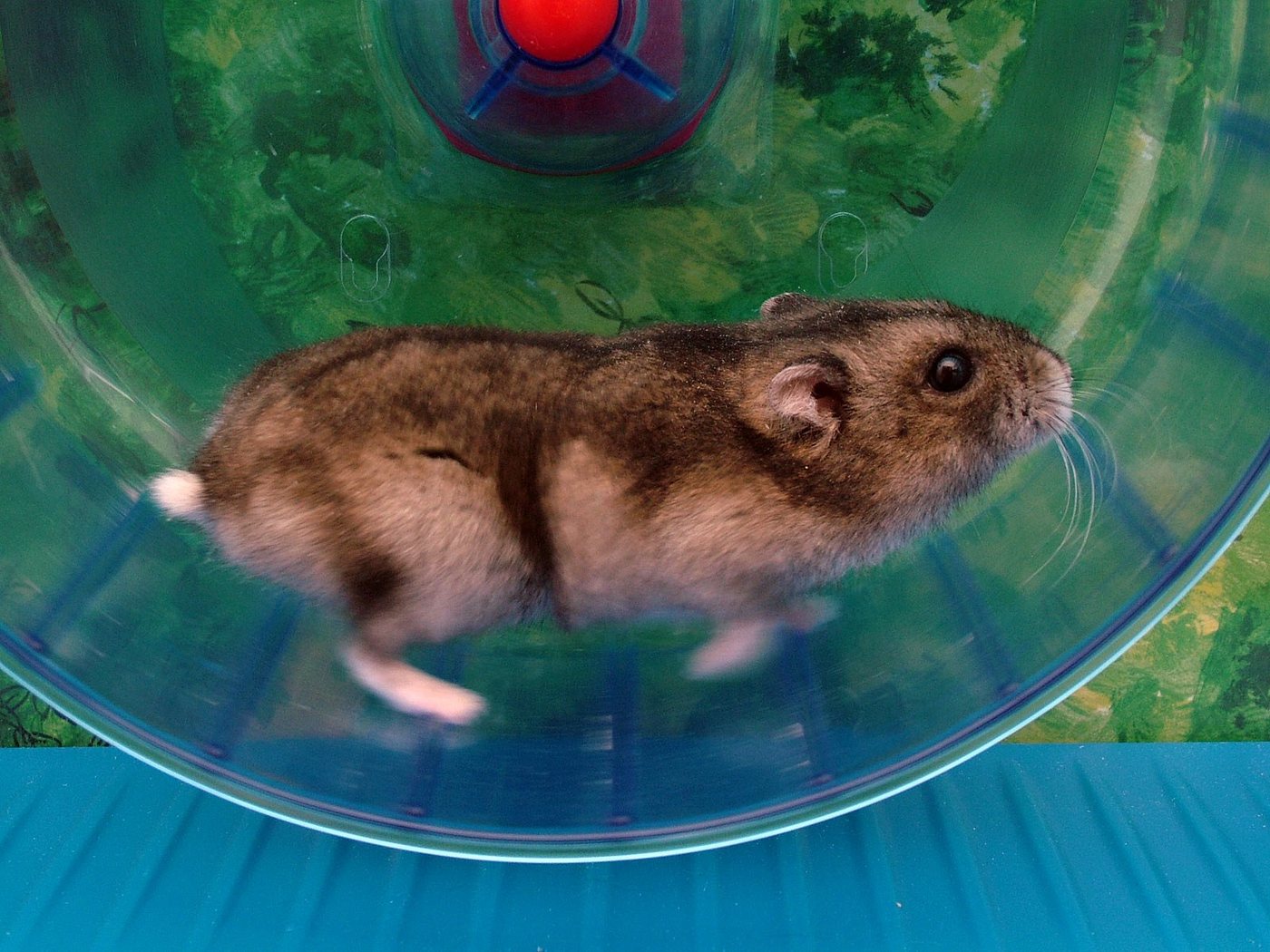
Not one animal but a group of small hamster species. Campbell's and Winter White (Djungarian) hamsters are plump, round, 3–4 inch balls of fur with a dark stripe down the back; the Winter White famously pales toward white in winter light. The Roborovski is the tiniest at about 2 inches, sandy-coloured with white 'eyebrows' and no back stripe. The Chinese hamster is slimmer and longer, with a noticeably longer tail. Many pet-shop dwarfs are Campbell's × Winter White hybrids.
Care & daily life
Feed a dwarf-specific seed mix and go easy on fruit and sweet treats — Campbell's and hybrids are prone to diabetes, so sugar matters more than it does for Syrians. A wheel of at least 20 cm (8 inches), deep bedding, a sand bath, and small hides suit all of them. Roborovskis are fast and fragile: handle over a box, or enjoy them as watch-first pets. If you keep a pair, use a big cage, double up on wheels, hides, and food stations, and separate at the first sign of real fighting.
Health & lifespan
The Dwarf Hamster is generally known for the following health watch-points:
- Diabetes — a major risk in Campbell's hamsters and Campbell's × Winter White hybrids; limit sugar
- Wet tail and other stress diarrhoeas, as with Syrians
- Glaucoma and cataracts in some Campbell's lines
- Obesity when wheels are small and mixes are fatty
- Falls and fractures — small bodies and high speed are a risky combination
Living with a Dwarf Hamster
Dwarfs suit people who enjoy observation as much as handling: a big, cluttered tank of tunnels, sand, and scatter-feeding is endlessly busy at dusk. Roborovskis in particular are a watcher's pet. All dwarfs are evening-and-night animals and fragile in small hands, so they fit older children and adults best. Keep the room quiet by day for sleeping.
History
These are steppe and semi-desert animals from Central Asia. Winter Whites come from Siberia and Kazakhstan — the coat change that gives them their name is a winter camouflage response to shortening days. Roborovskis inhabit sand deserts around Mongolia and were only imported to the West in the 1970s–90s, which is part of why they remain the least domesticated in behaviour. Because Campbell's and Winter Whites can interbreed, much of the pet trade is hybrid stock, with the health baggage (especially diabetes) that comes with it.