Overview
The Syrian is the classic hamster — the one most people picture. It is also the largest of the pet species, big enough to handle comfortably, and generally the easiest to tame. What surprises new owners is how completely solitary it is: in the wild, adults meet only to mate, and a cage-mate is not a friend but a rival. Kept alone in a big, deep-bedded cage, a Syrian is a busy, entertaining, mostly nocturnal companion.
Temperament & personality
Curious, methodical, and self-contained. Syrians have strong routines — a favourite sleeping corner, a hoard behind it, a nightly running schedule — and they like their world predictable. Most tame well with patient, brief handling sessions and become placid about being scooped up. Being grabbed while asleep is the fastest way to get nipped.
Appearance
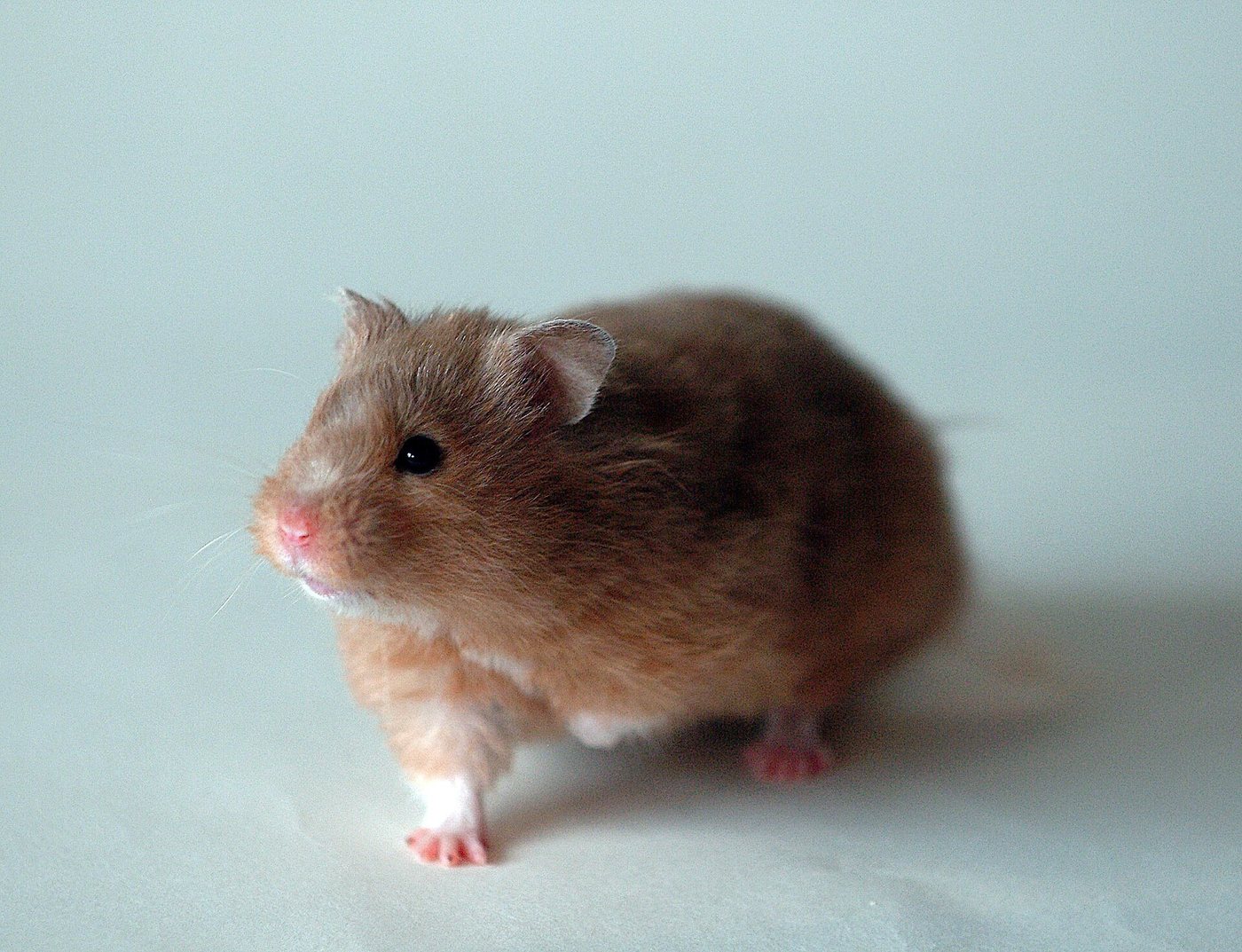
The largest pet hamster: a stocky, round-bodied animal with short legs, big cheek pouches, tiny rounded ears, and a barely-there stub of a tail. The original colour is the rich golden-brown that gives it its other name, the Golden Hamster, but decades of breeding have produced creams, blacks, whites, banded and tortoiseshell patterns, and long-haired 'teddy bear' varieties.
Care & daily life
Feed a quality seed-and-lab-block mix with small amounts of fresh vegetables and an occasional protein treat such as a mealworm or a little cooked egg. Provide deep bedding for burrowing, a solid-surface wheel of at least 28 cm (11 inches), a sand bath, and plenty of chew toys. Spot-clean daily and do a full clean every week or two, keeping some old bedding so the cage still smells like home. Handle gently and let a new hamster settle for a few days first.
Health & lifespan
The Syrian Hamster is generally known for the following health watch-points:
- Wet tail (proliferative ileitis) — a serious bacterial diarrhoea seen mainly in stressed young hamsters; a veterinary emergency
- Diabetes and obesity, especially on sugary shop-bought mixes and treats
- Cheek pouch injuries and impactions from sharp or sticky foods
- Respiratory infections, often triggered by dusty bedding or draughts
- Tumours and skin problems are common in old age
Living with a Syrian Hamster
A Syrian suits a quiet room away from daytime noise, since it sleeps deeply during the day and wheels, digs, and forages at night. It makes a good pet for older children, teenagers, and adults who are home in the evenings. It is a poor choice for a young child's bedroom if the child is a light sleeper — a busy hamster on a wheel at 2 a.m. is not quiet.
History
In 1930, zoologist Israel Aharoni collected a wild golden hamster and her pups near Aleppo, Syria, and bred them at the Hebrew University of Jerusalem. Nearly every pet Syrian hamster in the world descends from that single litter — a famous (and true) piece of pet history. Wild Syrians are now considered vulnerable in their desert-steppe home.